Who wins when AI shifts from chatbot to collaborator? The creative stack faces a new reality where agents don’t just generate content—they reason about it. This shift demands we rethink ownership, workflow friction, and the value of human curation in an era of autonomous systems.
Google has returned with force this year, releasing its annual summary and trend outlook report under the leadership of Jeff Dean and Demis Hassabis. The message is clear: 2025 was defined by AI agents, deep reasoning, and scientific discovery.
This was a year for AI Agents, reasoning, and scientific discovery.

The report doesn’t just look back; it looks forward, outlining eight key research directions to answer a more critical question:
As large models enter the era of reasoning, what is AI becoming?
From Gemini’s enhanced reasoning and multimodal understanding to agents, robotics, scientific research, and physical world modeling, Google is painting a picture of an intelligent system that can collaborate, act, and even begin to participate in scientific discovery.
The model’s reasoning, multimodal understanding, generation capabilities, and efficiency have seen significant improvements.
AI has been widely integrated into Google’s core products.
Creative AI tools saw comprehensive enhancements in 2025.
AI achieved multiple breakthroughs in science and mathematics, particularly excelling in math and programming competitions.
Google continues to emphasize safety, responsibility, and an open ecosystem for collaboration.

Below is the original summary from this website, appropriately polished and refined without altering the original meaning:
Demystifying the Biggest AI Winners of 2025: A Year-End Review by Hassabis and Jeff Dean
Google’s Year in Review: From Tool to Utility
Looking back at 2025, I see a year defined not just by speed, but by substance. It was a period of extraordinary progress across research fields, where artificial intelligence clearly shifted from being merely a tool to becoming a practical utility—evolving from something people use into something that can be deployed for work.
If 2024 laid the multimodal foundation for this era, then 2025 marked the year AI truly began to think, act, and explore the world alongside humans. In quantum computing, Google also made strides toward practical applications. Broadly speaking, across all domains, Google is helping transform research into reality, enabling more powerful and practical products and tools to positively impact people’s lives.
Breakthroughs in Foundational Model Capabilities
First, this year Google achieved breakthrough progress in reasoning, multimodal understanding, model efficiency, and generative capabilities, significantly enhancing overall model performance. This series of advancements began with the release of Gemini 2.5 in March, continued with the launch of Gemini 3 in November, and culminated in December with the introduction of Gemini 3 Flash.
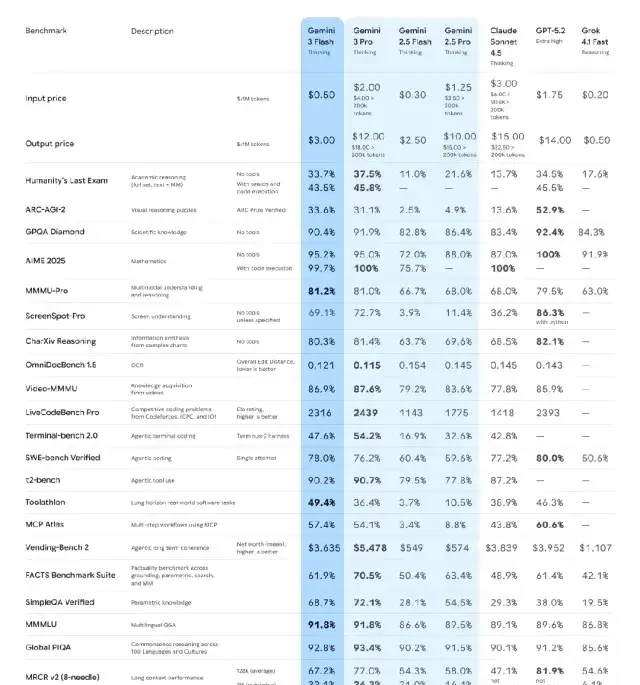
Leveraging state-of-the-art reasoning technology, Gemini 3 Pro is Google’s most powerful model to date, designed to help users turn ideas into reality. It tops the LMArena leaderboard and has redefined multimodal reasoning by achieving breakthrough scores on human ultimate exams and benchmarks such as GPQA Diamond. It also set a new standard for frontier models in mathematics, recording 23.4% on MathArena Apex.
Subsequently, Google introduced Gemini 3 Flash, which combines the professional-grade reasoning capabilities of Gemini 3 with the latency, efficiency, and cost advantages characteristic of the Flash series, making it the highest-performing model in its size class. Gemini 3 Flash surpasses the capabilities of Google’s previous Gemini 2.5 Pro scale models in quality, yet comes at a fraction of the price and with significantly reduced latency, continuing the trend established by the Gemini era:
Next-generation Flash models outperform previous-generation Pro models.
Additionally, Google committed this year to making practical AI technology more accessible through state-of-the-art open-source models. Google’s Gemma series models are not only lightweight but also open source. This year, they successfully introduced multimodal capabilities, significantly expanded context windows, broadened multilingual support, and improved efficiency and performance.
I think open weights democratize access but complicate attribution for those building on top of them. For creators, faster inference means less waiting, yet it doesn’t solve the issue of model ownership.
Deep Integration and Innovation in AI Products
In 2025, Google continued to drive the shift of AI from a tool to a practical utility, transforming its existing product portfolio with new, powerful Agent capabilities. Google reimagined software development, moving beyond auxiliary coding tools to introduce robust Agent systems that collaborate with developers. The launch of Gemini 3’s advanced coding capabilities and Google Antigravity marks a new era in AI-assisted software development.
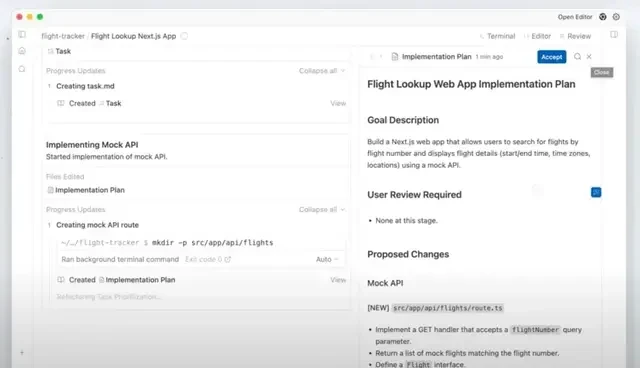
This evolution is also clearly visible in Google’s core products, from AI features on Pixel 10 and updates to AI modes in Search, to innovative AI products like the Gemini app and NotebookLM, all of which now include advanced features such as Deep Research.
On licensing, agent systems promise efficiency but risk obscuring the human author behind the output. I think integrated workflows reduce friction, yet they often lock creators into specific vendor ecosystems.
Empowering Creativity with AI
2025 was also a year of transformative change in generative media, providing creators with entirely new and unprecedented capabilities. Generative media models and tools for video, images, audio, and virtual worlds became more efficient and widely applied. Notably, the breakthrough Nano Banana and Nano Banana Pro demonstrated unprecedented capabilities in native image generation and editing.
Google collaborated with creative industry professionals to develop tools like Flow and Music AI Sandbox, enabling them to better support creative workflows. Furthermore, Google expanded creative possibilities through new AI-driven experiences at the Google Arts & Culture Lab, major upgrades to image editing features in the Gemini app, and the introduction of powerfu

I read through Google’s year-end review, and it’s clear that the creative stack is shifting under our feet. While DeepMind’s Demis Hassabis and Jeff Dean highlight scientific triumphs, the real story for us is how these tools reshape the workflow—and who gets paid for them.
This year, Google Labs also conducted several highly engaging experiments, including:
- Pomelli: AI for brand marketing content;
- Stitch: Transforms prompts and image inputs into complex UI designs and frontend code within minutes;
- Jules: An asynchronous coding Agent that serves as a collaborative partner for developers;
- Google Beam: A 3D video communication platform leveraging AI to expand the possibilities of remote presence.
For creators, stitch’s ability to generate frontend code from images threatens junior developer roles and devalues manual prototyping skills.
Advancing Science and Mathematics
2025 was also a landmark year for AI-driven scientific progress, with significant advancements in life sciences, health, natural sciences, and mathematics facilitated by AI.
Throughout the year, Google made strides in building AI resources and tools that empower researchers to understand, identify, and develop new treatments in healthcare.
Advancing Research in Computing and the Physical World
Google also made significant discoveries this year in quantum computing, energy, and breakthrough technologies, attracting unprecedented attention.
Progress in quantum computing for real-world applications has been particularly notable, exemplified by projects such as Quantum Echoes.
Notably, Google employee Michel Devoret, along with former Google employee John Martinis and UC Berkeley’s John Clarke, was awarded the 2025 Nobel Prize in Physics to recognize their foundational quantum research conducted in the 1980s.
In 2025, Google continued to advance the core infrastructure powering AI, focusing on breakthroughs in hardware design and improvements in energy efficiency. This included the launch of Ironwood, a new TPU designed for the inference era using the AlphaChip methodology. Simultaneously, Google remained committed to measuring technology’s environmental impact.

Google’s research in robotics and visual understanding has also brought AI agents into both physical and virtual worlds. This includes the foundational Gemini Robotics model, the more advanced Gemini Robotics 1.5, and the launch of Genie 3, which established Genie 3 as a new frontier in universal world modeling.
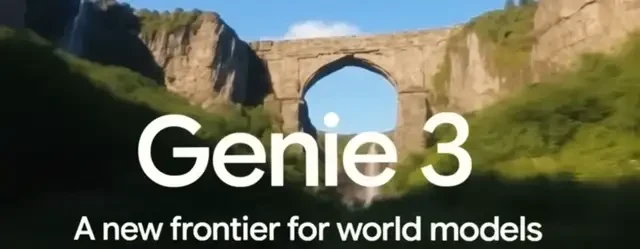
On licensing, genie 3’s universal world modeling raises serious questions about the ownership of synthetic environments trained on real-world footage.
Addressing Global Challenges and Opportunities
Google’s work this year clearly demonstrated how AI-driven scientific progress can be directly applied to solving the world’s most critical and pervasive challenges.
By leveraging state-of-the-art foundation models and agent reasoning, Google has significantly deepened its understanding of Earth and its systems, while delivering impactful solutions in areas such as climate resilience, public health, and education.
For instance, Google is utilizing advanced foundation models and agentic reasoning to enhance our understanding of the planet across various domains, including weather forecasting, urban planning, and public health. Currently, Google’s flood forecasting information covers over 2 billion people in more than 150 countries.
Google’s most advanced and efficient forecasting model, WeatherNext 2, generates forecasts eight times faster with a resolution of up to one hour. Through this technology, Google supports meteorological agencies in making effective decisions via experimental cyclone prediction.

Google is also collaborating with partners to bring AI-driven scientific advancements closer to patients, opening new pathways for disease management and therapy development.
Furthermore, AI has proven to be a powerful tool in education. Through guided learning features in LearnLM and Gemini, it fosters new forms of understanding and stimulates greater curiosity among students.
This year, Google integrated Gemini’s most powerful translation capabilities into Google Translate, enabling smarter, more natural, and accurate translations. The company also piloted new voice-to-voice translation
Demystifying the Biggest AI Winners of 2025: A Year-End Review by Hassabis and Jeff Dean
The creative stack is shifting again, but this time the narrative isn’t just about raw power—it’s about who controls the guardrails. As Google positions itself as the steward of “responsible” AGI, creators are left wondering if safety protocols will stifle innovation or simply protect their livelihoods from unchecked automation.
Prioritizing Responsibility and Safety
Google is weaving responsibility directly into its research breakthroughs, a move that signals a maturation in how they view model deployment. As capabilities scale, the company claims to be evolving its tools and security frameworks to anticipate risks before they materialize.
Gemini 3 stands as the centerpiece of this strategy, described by Google as their safest model to date following the most comprehensive security evaluation yet. This isn’t just a marketing claim; it represents a significant investment in red-teaming and safety layers that previous iterations lacked.
Beyond immediate product launches, Google is charting a responsible path to AGI. This long-term vision prioritizes preparatory work and proactive risk assessment, suggesting they intend to lead the conversation on AI governance rather than just participating in it. They are also leaning heavily on collaboration with the broader AI community to set these standards.
I think safety filters may inadvertently block legitimate artistic expression during beta phases. For creators, proactive risk assessments often mean slower rollout cycles for new creative features.
Fostering Cross-Sector Collaboration and an Open Ecosystem
Google’s stance is that advancing the frontiers of artificial intelligence responsibly requires collaboration across all sectors of society. This isn’t just rhetoric; in 2025, they partnered with leading AI laboratories to establish the Agentic AI Foundation. Their goal? To support open standards that ensure a responsible and interoperable future for agentic systems.
In the education sector, the strategy is equally collaborative. Google worked with institutions to help students master AI skills while engaging in research partnerships with top universities like UC Berkeley, Yale University, and the University of Chicago. These alliances are designed to drive frontier research together, blending academic rigor with industrial scale.
The ripple effect extends into science and art. Google is collaborating with various laboratories to transform scientific research methodologies. Simultaneously, they are working directly with filmmakers and creative developers, providing top-tier AI tools to explore new narrative methods in the age of artificial intelligence. This suggests a deliberate effort to integrate creators into the loop early on.
Looking ahead to 2026, Google aims to continue advancing frontier technologies safely and responsibly for the benefit of humanity. The question remains whether this “benefit” includes fair compensation and attribution for the human creativity that fuels these models.
On licensing, open standards might reduce vendor lock-in but could lower barriers for cheap, low-effort content flooding platforms. I think partnerships with filmmakers set a precedent for high-end creative use cases we should watch closely.
Comments
Sign in to join the discussion and leave a comment.
Sign in with Google