I think deepModeling’s valuation surge signals that AI for science is no longer a niche experiment but a capital-intensive enterprise play. My sense is the State Council’s explicit prioritization of “AI + Scientific Research” creates a clear regulatory tailwind for domestic players. What concerns me is that investors are betting on infrastructure, not just applications; the burden of proof lies in proving ROI at scale.
DeepModeling has closed its Series C funding round with over 800 million RMB ($112 million USD), a move that underscores the intensifying competition in the AI for Science (AI4S) sector. The capital was secured through a consortium including Genesis Capital, Jingguo Rui Fund, Beijing Artificial Intelligence Industry Investment Fund, Beijing Pharmaceutical and Health Industry Investment Fund, Lenovo Capital, and Yuanhe Puhua.
As Enterprise AI & Governance Editor, I view this not merely as a financial transaction but as a strategic realignment of resources toward scientific infrastructure. The company has stated that these funds will be directed toward recruiting top-tier talent and iterating its “Scientific Discovery Intelligent Engine.” This engine aims to bridge the gap between original technological innovation and practical industry solutions across basic sciences, life sciences, and physical sciences.
Global Policy Shifts Redefine Accountability in Scientific R&D
The completion of this financing coincides with a broader geopolitical consensus on AI’s role in scientific advancement. In August 2025, the State Council issued guidelines implementing the “Artificial Intelligence+” initiative, placing “AI + Scientific Research” at the forefront of national strategy. This directive explicitly calls for accelerating scientific discovery to transform R&D models and enhance efficiency—a clear signal that compliance with state-backed AI standards will be critical for future market access in China.
Globally, similar trends are emerging. Europe’s Horizon program has prioritized AI-empowered research, while the United States’ Genesis Mission—elevation of which is compared to the Manhattan Project—focuses on accelerating breakthroughs through AI. Major tech entities like Google DeepMind, NVIDIA, and Microsoft continue to pour resources into this domain, indicating that the race for scientific dominance is now a multi-stakeholder endeavor involving both public policy and private enterprise.
The Four Pillars of AI-Driven Scientific Reconstruction
Behind this global consensus, four core tasks have emerged as the framework for AI4S: AI activates scientific data, AI reshapes scientific software, AI drives scientific experiments, and AI creates scientists.
Historically, scientific productivity was constrained by inefficient tools and limited human intellectual capacity. Now, AI agents are becoming new participants in discovery, fundamentally reconstructing the scientific framework. This shift moves beyond simple automation to systemic augmentation, where AI handles data activation and experimental design, allowing human researchers to focus on higher-order interpretation.
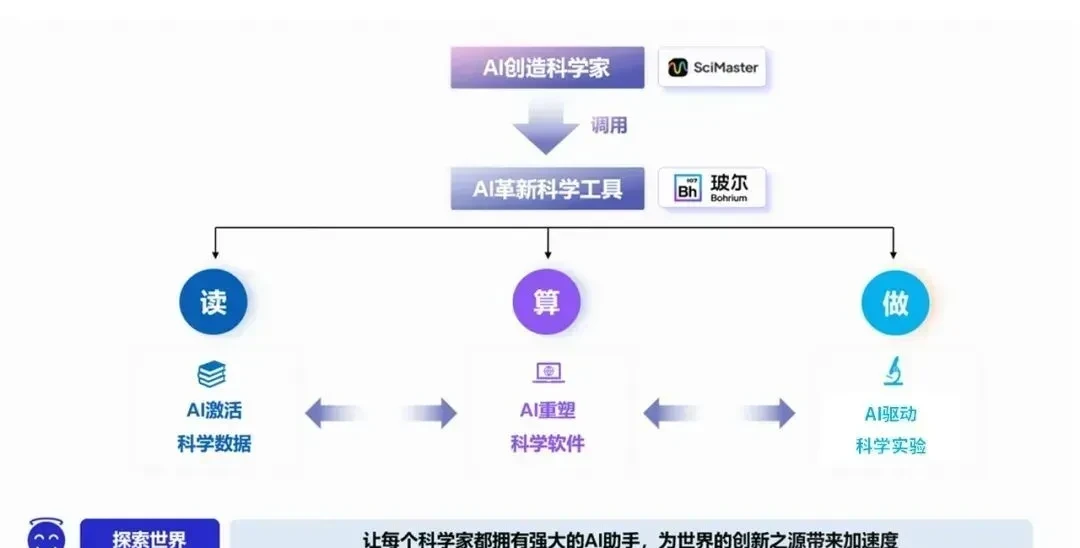
From Tools to Infrastructure: How DeepModeling Builds “AI Scientists”
As the Enterprise AI & Governance Editor, I track how capital flows into infrastructure that claims to automate scientific discovery. DeepModeling’s latest $800 million funding round closes a Series C, signaling strong investor confidence in its “Science as a Service” (SaaS) model. The burden of proof now shifts to enterprises adopting these tools: they must verify whether the promised efficiency gains are reproducible or merely marketing metrics.
DeepModeling positions itself as a global leader in AI for Science (AI4S), leveraging years of industry immersion to build an ability system centered on its “Bohr Research Space Station.” This ecosystem encompasses four core functions: “Read, Compute, Do, and Intelligence.” The result is a comprehensive SaaS matrix designed to serve scientists and R&D organizations in basic research, life sciences, and physical sciences.
Key components of this offering include:
- Bohr Science Navigator
- Bohr Lebesgue Intelligent Computing and Hermite®, Piloteye® series of micro-scale R&D software
- Bohr Cyber Lab
- SciMaster Scientific Agent
- “Large-Scale Facilities” for scientific discovery and R&D services
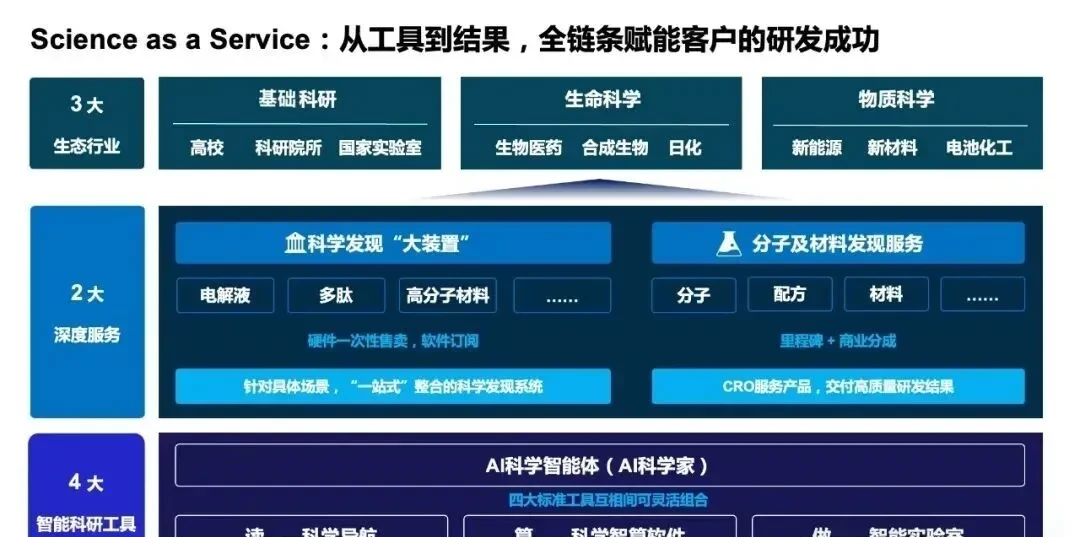
The scale of adoption is significant. To date, the Bohr Science Navigator has served over 3 million scientists across more than 1,000 universities and organizations globally. Nearly 100 prestigious institutions—including Peking University, Shanghai Jiao Tong University, and Wuhan University—have fully onboarded to the platform. The system supports thousands of research projects, answers approximately 12 million scientific questions annually, and claims to save scientists over 2 billion minutes of working time.
In the commercial sector, DeepModeling’s solutions have assisted in the intelligent upgrade of R&D systems for more than 150 advanced R&D enterprises. It has deeply empowered more than 70 life science companies, including Fosun Pharma, Sinopharm, Hansoh Pharmaceutical, Huadong Medicine, Dongyue Group, Qilu Pharmaceutical, Unilever, and Yunnan Baiyao. These partnerships span more than 100 R&D pipelines. The company also serves physical science clients such as Suzhou Laboratory, CNPC, China Iron & Steel Research Institute Group, CATL, BYD, and GAC Aion, helping partners create over 50 high-value scientific assets.
According to partner calculations, upgrading R&D systems via AI is highly cost-effective. It can improve the efficiency of literature review and organization by a hundredfold. The introduction of AI computing methods has reduced wet lab requirements and costs by 76%, while smart labs have increased experimental instrument usage efficiency and throughput by more than three times. “AI Scientists” reportedly reduce scientists’ trivial and repetitive workloads by approximately 70%.
I think the 76% cost reduction claim requires independent audit before enterprises commit budget. My sense is “AI Scientists” are tools, not replacements; human oversight remains the legal liability anchor. What concerns me is that enterprises must verify data provenance in the 170 million articles cited by Bohr Navigator.
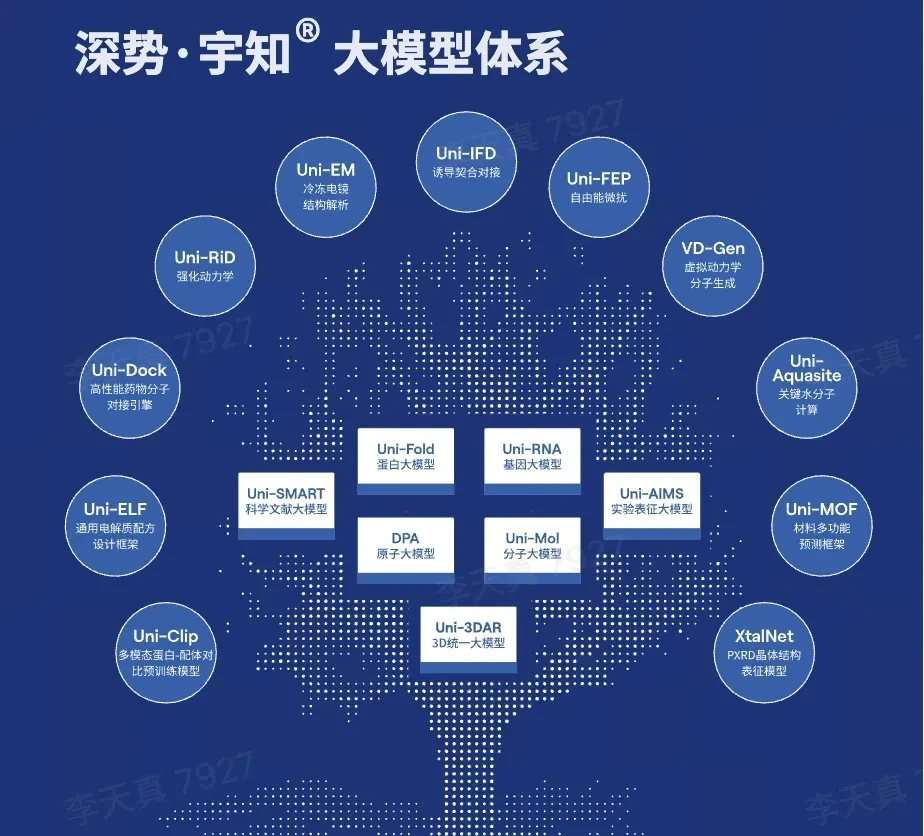
The foundation supporting this ecosystem is DeepModeling’s “DeepModeling · Yuzhi®” infrastructure, built over seven years. Initially a pre-trained large model system for science, it has been upgraded into an Intelligent Engine for Scientific Discovery.
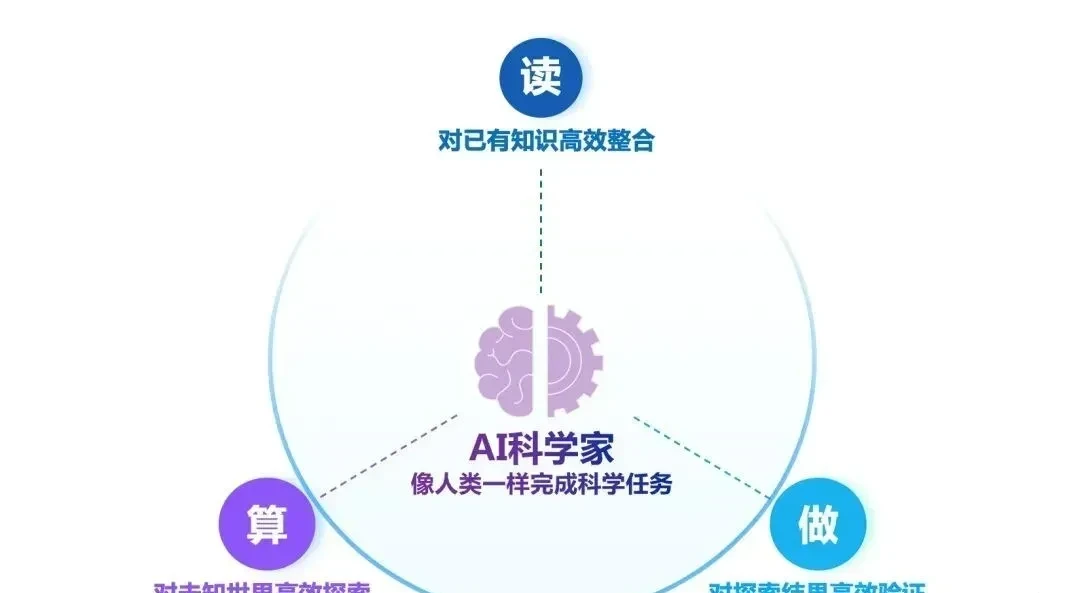
Driven by scientific agents, the engine connects the closed loop of “Read—Compute—Do,” aiming to construct the shortest path to humanity’s unknown knowledge in AI4S scenarios:
- “Read” integrates existing knowledge.
- “Compute” explores and generates unknown spaces.
- “Do” completes the verification loop.
This transforms the “AI Scientist” into a discovery entity capable of learning, thinking, executing, and providing feedback. Centered around this engine, DeepModeling unifies scientific data, computing, and experimental capabilities into callable R&D infrastructure:
- Bohr Science Navigator has integrated knowledge content from over 170 million high-quality English literature articles, more than 200 million patents, and 80 million Chinese literature articles;
- Vertical application models built on AI4S large models for directions such as atoms, molecules, genes, and proteins have exceeded one thousand;
- Relying on Bohr Cyber Lab (the operating system), over 100+ frequently used experimental instruments have been integrated;
- Through automated compilation and deploymen
The Ecosystem Play: Why DeepModeling’s $800M Bet is on Infrastructure, Not Just Models
The narrative around DeepModeling has shifted from a promising startup to an entrenched infrastructure provider. Having completed its Series C and secured another $800 million in funding, the company is no longer just selling software; it is building the operating system for scientific discovery. As Enterprise AI & Governance Editor, I see this as a critical pivot point where the burden of proof moves from model accuracy to ecosystem stability and data governance.
Scaling the Agent Economy
The core value proposition DeepModeling is presenting now is scale and interoperability. Their platform supports the unified invocation of more than 50,000 scientific tools in an Agent-Ready format. This is not a minor update; it represents a massive aggregation of fragmented scientific workflows into a single, accessible interface.
More telling is the adoption metric: the platform is currently serving more than 3 million scientist users from over 1,000+ universities and research institutions globally. This volume of usage creates a feedback loop that smaller competitors cannot easily replicate. Continuous usage and feedback in real scientific tasks are gradually forming an ecological cycle where “research tools—research content—research personnel” mutually promote each other.
I think three million users is a moat, but only if the data governance around those interactions is transparent to enterprise auditors. My sense is the shift from single-point models to multi-agent systems increases liability complexity for any institution adopting these tools. What concerns me is that enterprises must verify who owns the IP generated by these “Master Agents” before integrating them into proprietary R&D pipelines.
From Tools to Intelligent Production Systems
Relying on the capabilities and ecosystem accumulated through the “DeepModeling · Yuzhi®” Intelligent Engine for Scientific Discovery, DeepModeling is driving “AI Scientists” from single-point applications toward an intelligent system of scientific production. This distinction matters because it moves beyond automation into autonomous reasoning within constrained domains.
By collaborating with ecological partners, they abstract research processes and methodologies from different disciplines into combinable agent modules. This allows scientific agents to be rapidly constructed, continuously evolved, and constantly giving rise to new “Master Agents.” The implication is a reduction in the time-to-discovery, but also a centralization of control over how science is conducted digitally.
As a representative achievement, ML-Master has achieved leading performance in top-tier evaluations such as HLE and MLE. MatMaster, jointly released with Suzhou Laboratory, demonstrates the system’s implementation and extension capabilities in specific disciplines. These are not just benchmarks; they are proof-of-concept deployments that validate the platform’s ability to handle complex, multi-step scientific reasoning.
I think joint releases with state-backed labs like Suzhou Laboratory suggest a strategic alignment that may influence data sovereignty considerations for global partners. My sense is the “Master Agent” concept requires rigorous validation protocols to ensure these autonomous systems do not hallucinate in high-stakes research environments.
The Barrier to Entry: Closed-Loop Infrastructure
The resulting efficiency advantage stems from the long-term accumulation of closed-loop infrastructure and real-world usage feedback, forming a core barrier that is difficult to replace with single-point models or isolated tools. This is the key takeaway for competitors and enterprise buyers alike. DeepModeling is not competing on algorithmic novelty alone; they are competing on the depth of their operational history.
DeepModeling’s $800M Bet on Autonomous Science: Governance Meets Ambition
What concerns me is that the scale of this funding signals that AI4S is moving from experimental labs to enterprise infrastructure. I think investors are betting on long-cycle returns, which raises questions about immediate ROI transparency. My sense is enterprises must verify data provenance before trusting “AI Scientists” with proprietary R&D.
As search engines optimized the path to known information and large language models condensed global knowledge, AI for Science (AI4S) is now positioning itself as the conduit for humanity’s unknown knowledge. DeepModeling, a leading domestic AI4S startup, has secured another $800 million in funding following its Series C completion. This capital injection underscores a strategic pivot: treating scientific discovery not merely as an academic exercise, but as a scalable, industrialized workflow.
The core ambition is explicit. DeepModeling aims to build “AI Scientists” and intelligent systems capable of autonomous discovery, effectively making the process of finding new science as intuitive as using a search engine. By automating complex, repetitive labor, the company argues it can liberate human scientists for creative work. This shift targets the nearly $2.8 trillion annual global investment in scientific research and R&D—funding that supports approximately 100 million full-time jobs worldwide—with the goal of systematically accelerating innovation efficiency.
The Infrastructure Argument: Why Now?
The timing of this funding round is framed as critical. With China’s “Artificial Intelligence+” initiative gaining state traction, AI4S has been elevated to a frontline priority in global technological competition. DeepModeling views its work not just as a niche track, but as foundational infrastructure for the next few decades of scientific progress.
Zhang Linfeng, Founder and Chief Scientist at DeepModeling, emphasized that their approach centers on “real scientific problems” and “real industrial needs.” From the DeepModeling · Yuzhi® large model system to domain-specific tools like PharmMaster (life sciences) and MatMaster (materials science), the company is building a self-consistent “Intelligent Engine for Scientific Discovery.”
In DeepModeling’s view, AI for Science is not just an emerging track but a foundational infrastructure project for scientific discovery over the next few decades. From the DeepModeling · Yuzhi® large model system to research platforms and solutions tailored for different domain scenarios, and further to domain-specific “AI Scientists” like PharmMaster and MatMaster, DeepModeling has always maintained long-term investments centered on “real scientific problems” and “real industrial needs.”
What DeepModeling aims to achieve is a self-consistent Intelligent Engine for Scientific Discovery, ensuring that AI serves not merely as an accelerator for specific links.
Through this round of financing, DeepModeling will focus on enhancing the usability and evolutionary capacity of this engine in real-world research scenarios. On one hand, it will promote the continuous emergence of frontier scientific capabilities; on the other, it will accelerate its implementation and application in life sciences, physical sciences, and other fields, fostering the continuous emergence of “AI Scientists” across various domains.
Sun Weijie, Founder and CEO, noted that this round validates DeepModeling’s phased progress while signaling trust in their next-phase mission. The company aims to grow from a Chinese origin into a global leader, ensuring that next-generation intelligent scientific infrastructure exerts international influence.
This round of financing occurs at a critical stage where the state is deeply implementing the “Artificial Intelligence+” initiative and AI for Science has been elevated to the forefront of global technological competition. It is not only an acknowledgment of DeepModeling’s phased progress but also a trust in our mission for the next phase.
In the future, DeepModeling will continue to uphold the philosophy of “accelerating scientific discovery and releasing scientific value.” With the long-term goal of creating “AI Scientists” and “Intelligent Systems for Scientific Discovery,” we will further accelerate the value creation of AI for Science in basic research and industrial R&D. We strive to grow into a tech company originating from China but leading globally, allowing next-generation intelligent scientific infrastructure to exert greater international influence.
Commercial Validation and Investor Confidence
The involvement of major institutional investors highlights the perceived maturity of DeepModeling’s commercialization path. Wang Dakui, Managing Director of Genesis Capital, described DeepModeling as a “scarce, hardcore target” that has crossed the threshold from technology to market. He noted that their scientific intelligence discovery engine has already served hundreds of clients, providing validation for its business model.
DeepModeling is a scarce, hardcore target in the “AI for Science” track and a platform-level enterprise defining research paradigms. The company possesses deep core barriers and has already crossed the critical step from technology to market. Its constructed scientific intelligence discovery engine has served hundreds of clients, validating its commercialization path.
As a platform company, it faces the challenge of simultaneously advancing deep penetration and large-scale replication in long-cycle industries such as pharmaceuticals and materials. Fortunately, the company’s top-tier “Academician-Scientist-CEO” team provides valuable trial-and-error space and ecological synergy for the enterprise within complex industries. The team’s long-term strategic vision and efficient execution have further strengthened our confidence in its future development.
The Beijing Artificial Intelligence Industry Investment Fund and the Beijing Pharmaceutical and Health Industry Investment Fund, both existing investors, reaffirmed their support as long-term observers of DeepModeling’s trajectory. Their continued backing suggests that while AI4S is a long-cycle industry, the convergence of state policy, capital availability, and technological readiness has created a viable ecosystem for platform-level enterprises.
What concerns me is that regulatory frameworks must evolve to handle liability when autonomous systems propose novel chemical compounds or materials. I think the “Academician-Scientist-CEO” structure is unique; enterprises should assess if this governance model scales across borders.
DeepModeling Closes $800M Series C, Cementing Its Role in China’s AI for Science Push
By Priya Sharma, Enterprise AI & Governance Editor
The financial waters around Artificial Intelligence for Science (AI4S) are shifting rapidly. Beijing-based DeepModeling has secured another $800 million in funding following the completion of its Series C round. This injection capitalizes on what investors describe as the company’s profound accumulation and breakthroughs in applying AI to basic scientific research.
For enterprises monitoring this sector, the key takeaway is not just the valuation, but the explicit narrative being constructed: that DeepModeling is transitioning from a technological innovator to a critical infrastructure provider for global scientific discovery. The burden of proof now lies with the company to demonstrate how these funds will translate into tangible industrial outputs rather than just academic papers.
Investor Confidence in the “Intelligent Acceleration Era”
The funding round highlights strong institutional belief in DeepModeling’s full-chain empowerment capabilities. Investors argue that this approach provides a clear view of AI-driven basic research moving from laboratory settings to industrialization.
Zhu Ping, Managing Director of Jingguo Rui Fund, emphasized this trajectory:
“DeepModeling’s full-chain empowerment capabilities allow us to see a clear picture of AI-driven basic research moving from laboratories to industrialization. We believe that DeepModeling is not only an enterprise focused on technological innovation but also a key leader driving global scientific research into an ‘Intelligent Acceleration Era.’”
Zhu Ping further noted the strategic advantage of DeepModeling’s location:
“Rooted in Beijing, DeepModeling deeply leverages the city’s abundant scientific resources, rapidly transforming frontier theories from laboratories into industrializable technology platforms. It has become a typical sample of the closed loop of ‘industry-academia-research-application.’ We are confident in its long-term value and will continue to accompany the company’s growth, jointly witnessing the great process of AI reshaping scientific discovery.”
My sense is the “closed loop” narrative is attractive but risky; enterprises must verify if these platforms handle proprietary data securely. What concerns me is that investors are betting on scale over niche utility, which increases systemic risk in the supply chain. I think beijing’s resource concentration creates a moat, but also a single point of failure for global partners.
Building the Scientific Discovery Engine
DeepModeling is positioning itself as a leader in the new paradigm of “AI for Science.” The company claims its innovative scientific intelligence discovery engine is generating fundamental impacts across industries such as biomedicine and energy materials.
The deep integration of AI and scientific research is viewed by investors as a global trend. DeepModeling attributes its position to a top-tier interdisciplinary team and a solid technical foundation, arguing it is well-positioned for the next round of technological revolution. The goal is to promote the industrialization of cutting-edge technologies and contribute to national innovation strategies.
Lenovo Capital’s Strategic Push
Wang Guangxi, Vice President of Lenovo Group and Managing Partner at Lenovo Capital, framed this investment within a broader strategic context:
“AI for Science is ushering in a ‘Age of Discovery’ for scientific research. This not only represents a reconstruction of the scientific research paradigm but also presents a strategic opportunity to enhance national innovation capabilities.”
Wang highlighted DeepModeling’s technical architecture, specifically its “Scientific Discovery Intelligent Engine” and the “Bohr” product matrix. He stated that these tools have built full-stack capabilities ranging from underlying models and intelligent tools to industrial applications. According to Wang, these solutions are widely validated in both academic and industrial circles, demonstrating significant potential in driving a revolution in research efficiency and empowering industrial upgrades.
Lenovo Capital’s involvement signals a convergence of hardware infrastructure and AI software. Wang noted:
“Lenovo Capital has long focused on AI-driven industrial intelligence transformation. Leveraging Lenovo Group’s global supply chain and industrial ecosystem advantages, we will continue to support DeepModeling in accelerating the improvement and application expansion of intelligent scientific infrastructure, jointly pushing China’s AI for Science to the forefront globally.”
My sense is lenovo’s involvement ties this software play to hardware supply chains, creating complex dependency risks. What concerns me is that “National innovation strategy” alignment may trigger stricter export controls or data sovereignty reviews abroad.
Product Ecosystem and Resources
DeepModeling’s ecosystem includes several key platforms that serve as the interface for these scientific discoveries:
- Bohr Research Station:
- SciMaster:
- Hermite®:
- Piloteye®:
- PharmMaster:
- MatMaster:
As DeepModeling moves forward, the market will be watching to see if this $800 million injection successfully bridges the gap between theoretical AI models and reliable, compliant industrial applications.
Comments
Sign in to join the discussion and leave a comment.
Sign in with Google