I watched Lightelligence step out of the lab and into the boardroom on March 25, 2025. The release of their new photonic-electronic hybrid computing card, “Lightelligence Tianshu,” signals a shift from theoretical promise to commercial reality. Dr. Yichen Shen, Founder and CEO, told me at the launch that this marks the first application of such technology in complex commercial models. He believes it will drive a revolution in computational power for AI, large language models, and smart manufacturing.
I think new hardware standards may force creators to retrain their pipelines for non-standard precision. For creators, if EOPP replaces FLOPS, benchmarking tools we rely on become instantly obsolete. On licensing, proprietary packaging limits who can actually service or upgrade these specialized cards.
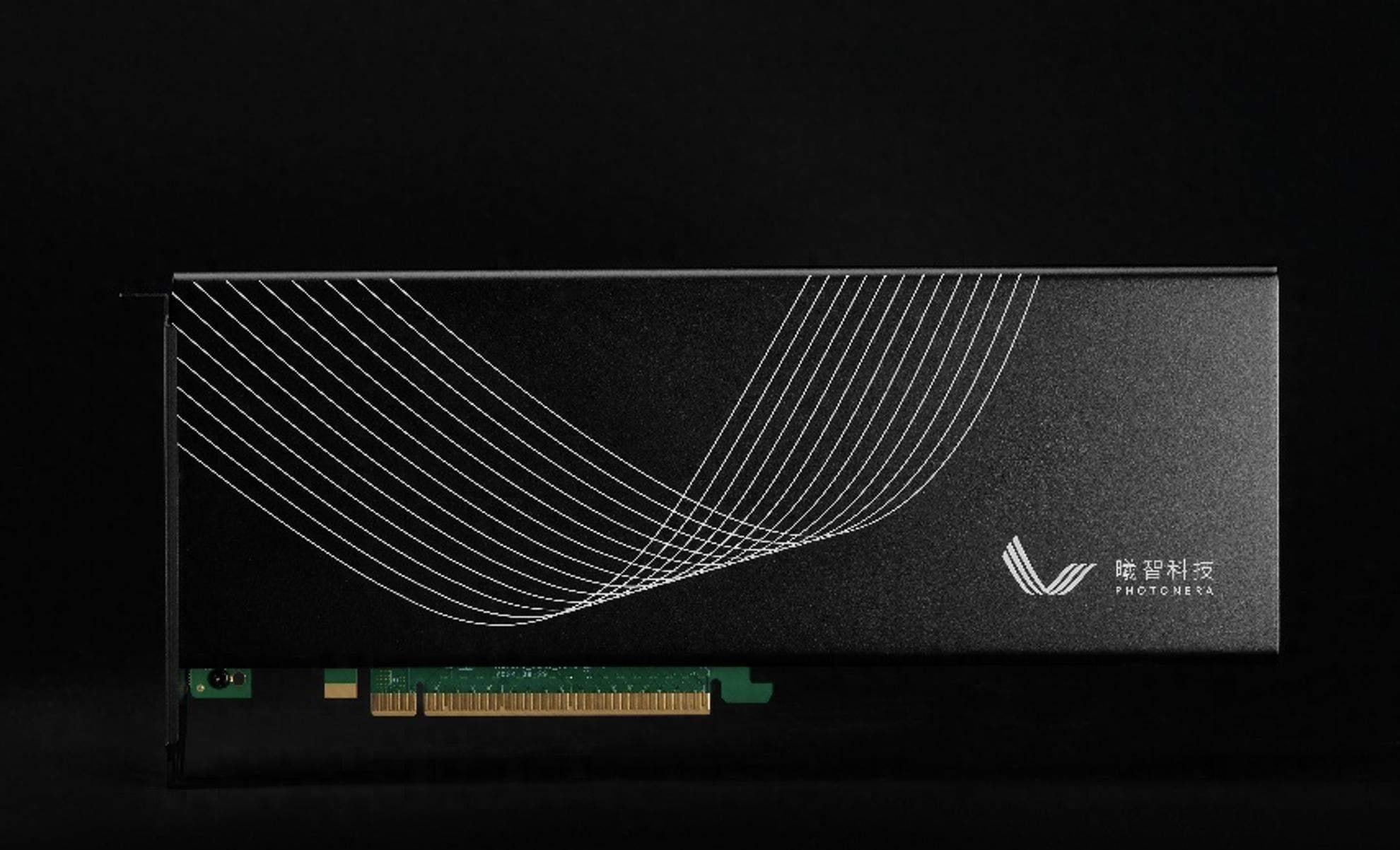
Lightelligence Photonic-Electronic Hybrid Computing Card “Tianshu”
I read the technical details closely, and what stands out is the integration. Tianshu combines optical and electronic chips using advanced 3D packaging. This isn’t just a speed bump; it improves optoelectronic integration density, photon matrix scale, precision, and programmability. While it still supports scientific tasks like Ising algorithms, Lightelligence has strengthened support for commercial applications such as ResNet50. This enhances general adaptability without losing the inherent advantages of optical computing.
This release follows a long arc. In December 2021, Lightelligence first unveiled similar products, demonstrating speeds hundreds of times faster than mainstream GPUs for specific algorithms. Today’s Tianshu shows that photonic-electronic technology has made a massive leap in product realization. The architecture is incoherent, which facilitates scalability and offers excellent anti-interference capabilities with higher computational precision.
The core processor pairs an Optical Processing Unit (OPU) with an Electronic Application-Specific Integrated Circuit (ASIC). They operate at 1GHz clock speed with 8-bit output precision. The optical chip area has grown to 600 square millimeters—three times the previous generation. It houses over 40,000 devices, with reduced dimensions and significantly improved integration density. Tianshu supports a maximum matrix scale of 128×128, four times its predecessor. This doubles computational power and flexibility. Users can configure calculation matrix coefficients via APIs, offering greater optimization potential.
Photonic computing operates passively; tasks complete as light passes through the photonic matrix. This subverts the operational logic of traditional CMOS electronic chips. Performance depends on photon matrix scale, clock speed, and wavelength count, not transistor density or manufacturing process advancements. At the event, Dr. Huaiyu Meng, Chief Technology Officer, introduced a new standard: Effective Optical Processing Power (EOPP).
I think licensing models for these cards could restrict how we distribute trained model weights. For creators, high energy efficiency gains might shift cost centers from compute to hardware acquisition.
EOPP considers matrix scale, output precision, weight refresh speed, and other factors. Dr. Meng noted that compared to current mainstream electronic chip metrics, EOPP better aligns with the principles of photonic computing. “Photonic-electronic hybrid computing is the future trend in computational power,” he said. “We hope the industry will have a more objective standard for measuring photonic computing power.”
To achieve efficient integration, Tianshu uses photonic-electronic hybrid 3D TSV (Through Silicon Via) + FlipChip packaging technology. Dr. Meng explained that TSV significantly reduces transmission delay between optoelectronic chips while enhancing signal integrity and thermal performance. This saves chip area and provides greater flexibility for design. From its inception, Lightelligence recognized the importance of packaging for photonic-elect
I watched Lightelligence finally bridge the gap between silicon photonics and practical deployment with Tianshu. The company claims this is the world’s first next-generation photonic-electronic hybrid computing card, a title that hinges on solving the physical bottlenecks of traditional packaging. They achieved this through Through-Silicon Via (TSV) integration, which they argue resolves interconnect limitations and offers value to the entire industry.
On licensing, tianshu’s focus on edge inference could disrupt current cloud-heavy AI workflows for independent developers.
The software stack is where the real flexibility lies. Tianshu comes equipped with a photonic-electronic hybrid computing suite that includes RVV (RiscV Vector) operators, electronic matrix (dMAC) acceleration, and optical matrix (oMAC) acceleration. It supports CV-class and LLM-class models, alongside non-AI operators like Ising and LineSolver. I noted that users can build efficient application models via the Lightelligence compiler or define custom operators using OpenCL C/C++, which expands algorithmic flexibility significantly.
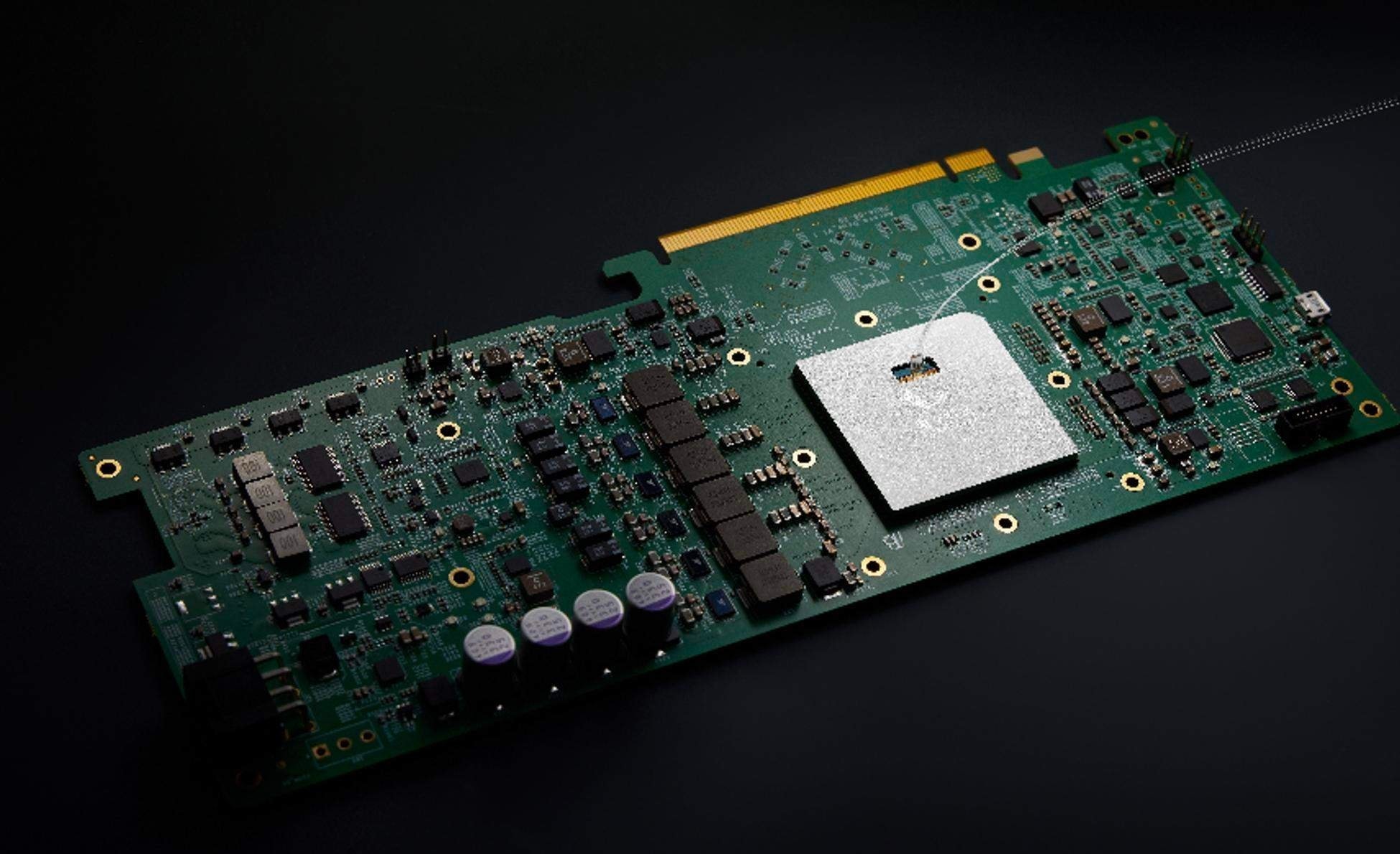
Lightelligence Photonic-Electronic Hybrid Computing Card “Tianshu”
Integration with mainstream tools is critical for adoption. The software stack integrates deeply with PyTorch and ONNX, allowing customers to accelerate models directly or compile them for edge inference via the Lightelligence framework. What stood out to me was their claim of successfully running ResNet50 and LLaMA 2 on this hardware. This marks the first implementation of photonic-electronic hybrid computing in commercial scenarios, moving beyond theoretical benchmarks.
I think direct PyTorch integration lowers the barrier for creators already invested in standard AI development pipelines.
Mr. Long Wang, Chief Operating Officer, emphasized that Tianshu represents a collaborative effort across silicon photonics, digital systems, analog circuits, packaging, and software teams. He stated: “We hope to attract more developers and ecosystem partners to explore broader application scenarios for photonic-electronic hybrid computing with us, moving forward together toward the commercialization of this technology.”
Looking ahead, Dr. Yichen Shen, Founder and CEO, confirmed that R&D on next-generation products has already begun. He added: “Future products will further enhance computational capabilities to support more complex commercial application scenarios, providing new types of computational power support for artificial intelligence and data centers.”
For creators, as hardware evolves, creators must stay agile to leverage these specialized optical accelerations before they become standard.
Comments
Sign in to join the discussion and leave a comment.
Sign in with Google