MediaTek’s push for agent-based AI at its MDDC 2025 conference signals a strategic pivot that will likely reshape how Southeast Asian and Indian OEMs integrate on-device intelligence into mass-market hardware.
I think this move shifts the competitive focus from raw cloud compute to efficient edge processing, challenging Western-centric AI narratives. From an APAC angle, by targeting 2 billion devices, MediaTek is effectively setting the de facto standard for consumer-grade agent deployment in emerging markets. Globally, the emphasis on “wisdom” over mere intelligence suggests a maturation of the market beyond simple chatbot integrations.
I followed the announcements from the Dimensity Developer Conference 2025 (MDDC 2025) today, where MediaTek positioned itself at the center of a new industrial transformation. Under the theme “AI on Chip, Applications Without Boundaries,” the company outlined its vision for agent-based AI experiences, moving beyond theoretical concepts to practical deployment. The centerpiece of this strategy is the newly launched “Dimensity Agent-Based Experience Navigation Plan,” which aims to accelerate the popularization of these technologies through global collaboration.
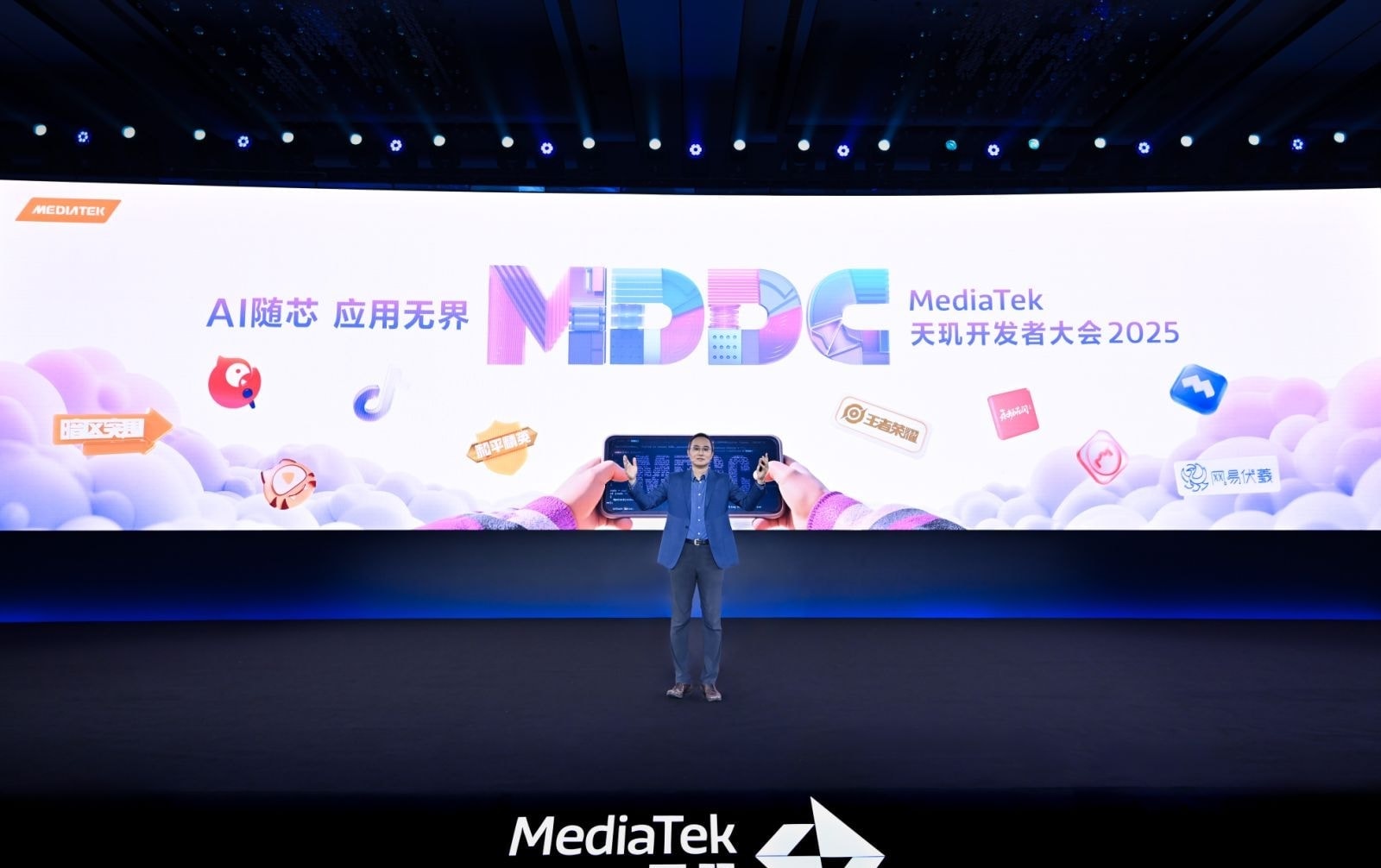
Chen Kuan-chou, Director, General Manager, and CEO of MediaTek, emphasized the scale of this transition: “The AI industry is accelerating growth across the board, giving rise to entirely new forms of AI experiences. The next wave of the AI tide belongs to agent-based AI. MediaTek has consistently led the development of cutting-edge AI technologies and ecosystems, transforming agent-based AI from a technical concept into an accessible experience for everyone through 2 billion edge devices annually. We empower countless applications to achieve a leapfrog upgrade from intelligence to wisdom.”
To operationalize this vision, MediaTek partnered with a diverse coalition including Alibaba Cloud Tongyi Qianwen, Transsion, ModelBest (Mianbi Intelligence), Motorola, OPPO, Honor, vivo, Microsoft, and Xiaomi. This alliance aims to drive innovation in agent-based AI technologies across the region. The conference also served as a platform to recognize past successes, with an award ceremony for the “Dimensity AI Pioneer Program Innovation Awards.” Notable recipients included Alibaba Cloud Tongyi Qianwen, Cocos, Douyin, Kugou Music, Kuaishou, Meitu, ModelBest (Mianbi Intelligence), WeSing, Tencent GiiNEX, Tencent Meeting, Tencent Hunyuan, and Trip.com.
Tools for the Edge
A key technical unveiling was the Dimensity Development Studio, a one-stop visual intelligent development tool spanning AI applications and gaming. It comprises Neuron Studio and Dimensity Profiler, designed to provide developers with a full-link, intelligent, and efficient workflow.
Neuron Studio allows for precise analysis throughout the entire AI application development process. Developers can view execution details for each model in real time, utilizing cross-model full-link analysis features that provide global perspectives and execution flows. This significantly reduces model analysis time. The tool also supports automated neural network tuning, automatically optimizing performance and memory usage to ideal configurations. Furthermore, Neuron Studio offers one-stop development integration by incorporating ML Kit tools, helping developers complete model development using a single toolset.
MediaTek is also focusing heavily on game developers, committing to more efficient game performance optimization solutions in key areas such as gaming performance analysis and smoothness.
MediaTek Hosts MDDC 2025: Accelerating Agent AI with New Chips and Tools
As I followed the announcements from MDDC 2025, it became clear that MediaTek is no longer just selling silicon; they are building an ecosystem for on-device intelligence. This shift toward “Agent AI” signals a broader industry move to keep heavy computational loads off cloud servers and directly onto mobile devices—a trend with significant implications for global data center demand and privacy regulations.
To support this transition, the company highlighted its ongoing investment in optimization, energy efficiency, and image quality enhancement for Dimensity platforms. The goal remains delivering superior experiences for both developers and players, but the methods are becoming increasingly sophisticated.
A New Standard for Performance Analysis
At MDDC 2025, MediaTek took the lead in launching a one-stop system-wide performance analysis tool: Dimensity Profiler. This tool covers core performance metrics including CPU, GPU, NPU, memory, FPS, temperature, power consumption, and network. It offers four analysis modes—“real-time,” “replay,” “frame-by-frame,” and “deep replay”—providing comprehensive game tuning support for developers. This fully unleashes the performance potential of Dimensity platforms, making mobile game optimization easier than ever before.
I think standardized profiling tools reduce fragmentation in the Android ecosystem, benefiting global app developers who struggle with device-specific quirks.
Upgrading the Gaming Experience
In addition to the release of Dimensity Profiler, the MediaTek Dimensity StarSpeed Engine has undergone a comprehensive upgrade. Leveraging Dimensity Frame Boost technology, the game Infinity Nikki will soon deliver a smooth 60-frame experience with low power consumption. The Dimensity StarSpeed Engine’s adaptive regulation technology, favored by game developers, empowers Google Android’s Dynamic Performance Framework to take effect in new versions of Android in 2025.
MediaTek also partnered with Honor of Kings to achieve an 18% reduction in power consumption. Meanwhile, the company continues to explore advanced ray tracing technologies and ecosystems; the Dimensity Ray Tracing Bionic Details have been upgraded again. In collaboration with Arena Breakout, bionic details have achieved new breakthroughs, delivering near-PC-level skeletal model effects and immersive lighting experiences.
Additionally, MediaTek has collaborated with popular games such as Honor of Kings and Naraka: Bladepoint Mobile to successfully deploy AI models like TTS (Text-to-Speech), ASR (Automatic Speech Recognition), and LLMs on the edge side, offering players lower-latency, more precise immersive voice interaction experiences.
From an APAC angle, edge-based AI deployment for gaming lowers latency globally but increases the computational burden on mobile SoCs, accelerating hardware upgrade cycles in emerging markets.
Empowering Developers with Dimensity AI Development Kit 2.0
Furthermore, MediaTek introduced the Dimensity AI Development Kit 2.0, deeply empowering developers to layout user experience areas for agent-based AI. The model library, Gen-AI Model Hub, has increased its compatible model count by 3.3 times, providing developers with a wider variety of choices among global mainstream models. It also introduces an open-source elastic architecture, helping developers freely select models and accelerate deployment.
The Dimensity AI Development Kit 2.0 is the first to support four key technologies of DeepSeek: Mixture of Experts (MoE), Multi-Token Prediction (MTP), Multi-Head Latent Attention (MLA), and FP8 Inference. These features can double token generation speed while reducing memory bandwidth usage by 50%. Simultaneously, through the Dimensity AI Development Kit 2.0, edge-side LoRA training speeds have increased by more than 50 times.
Globally, supporting DeepSeek’s specific architectures on mobile chips integrates Chinese AI models into the global hardware supply chain earlier than expected.
Introducing the Dimensity 9400+
MediaTek announced a new member of its flagship family: the Dimensity 9400+, a flagship 5G agent-based AI mobile chip. The Dimensity 9400+ delivers exceptional generative AI and agent-based AI capabilities, with comprehensively enhanced performance to efficiently handle various tasks. Featuring high intelligence, high performance, high energy efficiency, and low power consumption, it brings a breakthrough new flagship experience.
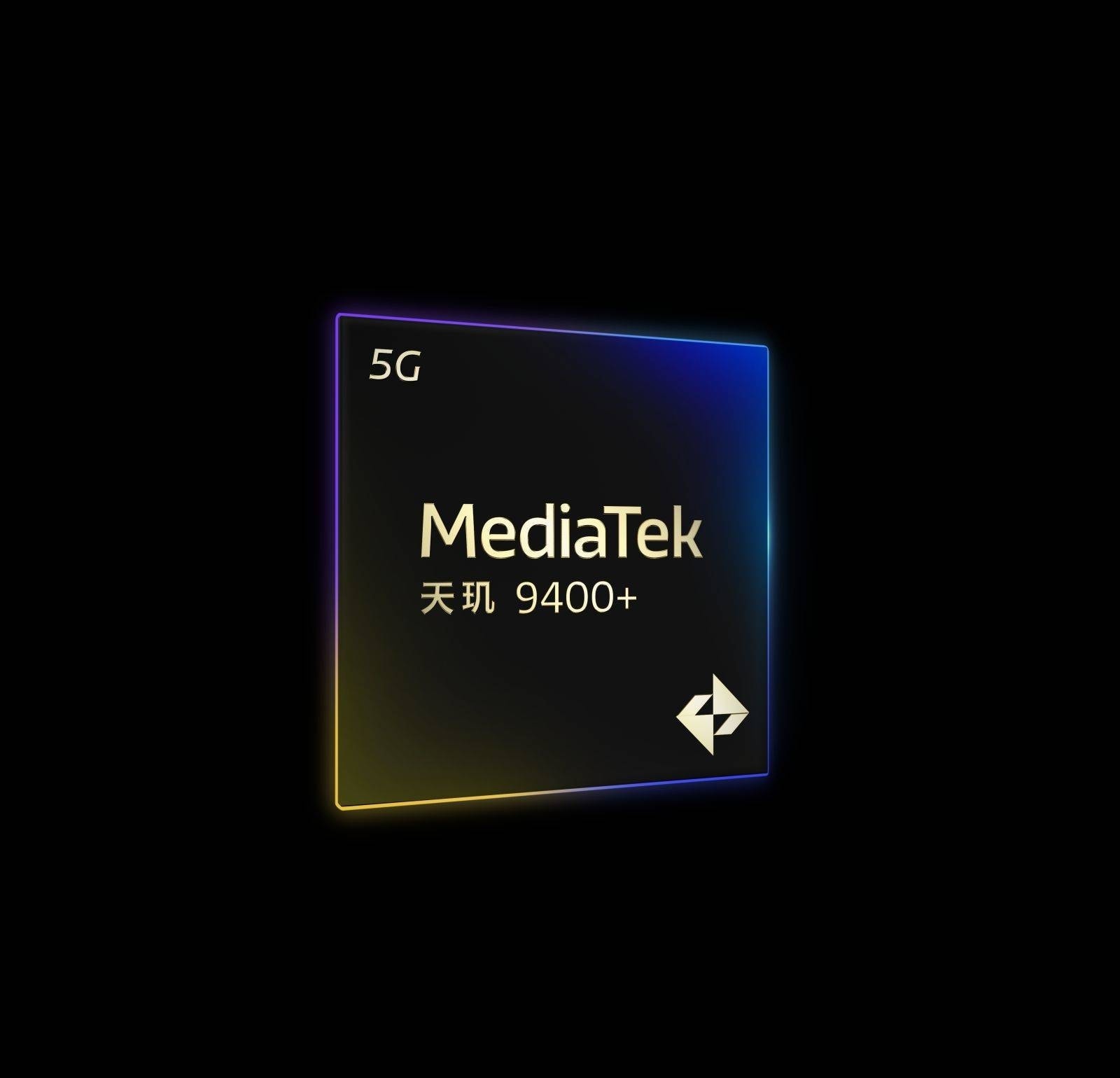
The Dimensity 9400+ adopts a second-generation all-big-core architecture. Its 8-core CPU includes one Arm Cortex-X925 super-large core with a clock speed of up to 3.73GHz, three Cortex-X4 super-large cores, and four Cortex-A720 large cores. The Dimensity 9400+ integrates MediaTek’s eighth-generation AI processor, the NPU 890. It is the first on the edge side to support the four key technologies of the DeepSeek-R1 inference model and also supports enhanced inference decoding technology (SpD+), increasing the inference speed for agent-based AI tasks by 20%.
The MediaTek Dimensity 9400+ is equipped with a 12-core Arm GPU, the Immortalis-G925. Supporting the Dimensity OMM Light-Chasing Engine and Dimensity Frame Boost technology, it not only delivers stunning visual effects but also provides sustained, smooth mobile gaming experiences.
Connectivity Beyond Borders
Additionally, the Dimensity 9400+ extends Bluetooth connectivity for in-range phone-to-phone connections to up to 10 kilometers—a distance 6.6 times greater than that of the Dimensity 9400. It adds support for Beidou satellit
MediaTek Hosts MDDC 2025, Partnering with Industry to Accelerate Agent AI Adoption
The latest updates from MediaTek’s Mobile Developer Day Conference (MDDC) 2025 highlight a strategic pivot toward embedding artificial intelligence directly into the hardware layer. This move is not just about faster chips; it is about reshaping how devices interact with users in real-time, particularly in environments where connectivity is unreliable or absent.
Enhancing Precision and Connectivity
A key technical achievement presented at the conference involves significant improvements to location services. MediaTek reported that its new architecture accelerates Time To First Fix (TTFF) by 33%. This improvement is notable because it occurs even without cellular network coverage, suggesting a robust reliance on satellite or offline processing capabilities. For consumers in remote areas of the Asia-Pacific region, this means more reliable navigation and emergency services, reducing dependency on dense urban infrastructure.
I think offline TTFF improvements signal a shift toward resilient edge computing for global markets. From an APAC angle, mediaTek’s focus on non-cellular accuracy challenges traditional reliance on 5G infrastructure.
The Ecosystem Approach to Agent AI
Looking ahead, the narrative from MediaTek emphasizes that AI will continue to enrich and enhance public life through broader ecosystem integration. The company remains committed to building and developing industry ecosystems, collaborating with global partners to promote innovation in advanced technologies such as AI and gaming. This collaborative approach aims to jointly explore paths for synergistic development and new industrial opportunities, moving beyond single-device performance to interconnected experiences.
Globally, ecosystem collaboration is essential for standardizing agent-based AI across fragmented APAC markets. I think gaming integration suggests MediaTek is targeting high-performance consumer segments first.
Building the Agent AI Foundation
Facing the wave of agent-based AI, MediaTek will continue to rely on the Dimensity platform as a computing power foundation. The company plans to refine and iterate development tools, working with industry partners to co-create an open, diverse, intelligent, and boundless application ecosystem. This strategy aims to build a win-win future characterized by full-link edge-side interactive smart experiences, ensuring that AI agents can operate efficiently on-device without constant cloud dependency.
From an APAC angle, edge-side interactivity reduces latency, critical for real-time agent applications in emerging markets. Globally, open ecosystems may lower barriers for local APAC developers to create specialized AI tools.
Comments
Sign in to join the discussion and leave a comment.
Sign in with Google