OpenAI just lost its chief architect for the models that define its current valuation. Jerry Tworek, the VP of Research who built o3, o1, GPT-4, ChatGPT, and Codex, has resigned. This isn’t just a personnel shuffle; it’s a signal about the limits of internal research at a public company.
Honestly, openAI is bleeding its core reasoning talent right as the market demands proof of sustained technical leadership.
Tworek announced his departure immediately after the start of this year, citing a need to explore research areas difficult to pursue within the company. I read his statement carefully: he wants to tackle problems that don’t fit OpenAI’s current operational model.
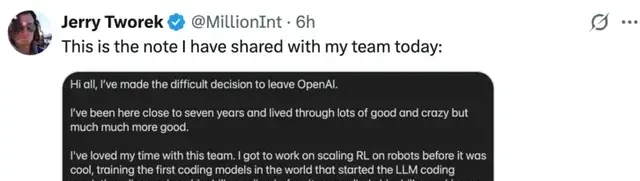
He spent nearly seven years at OpenAI. He described the experience as mostly wonderful, with some crazy moments included. The “seven-year itch” appears to have hit even the biggest tech giants.
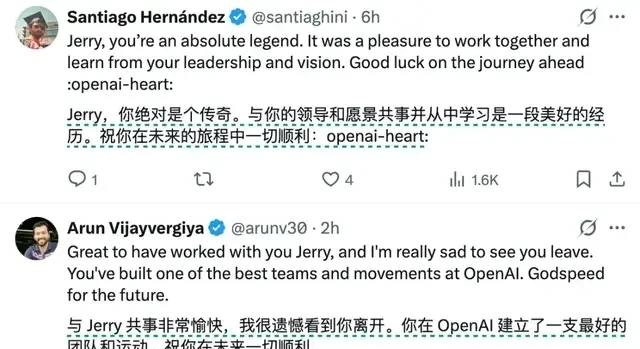
Current employees flooded the comments with gratitude. The sentiment was clear: they admired his work and his leadership. It’s a rare moment of unified praise in an industry defined by churn.
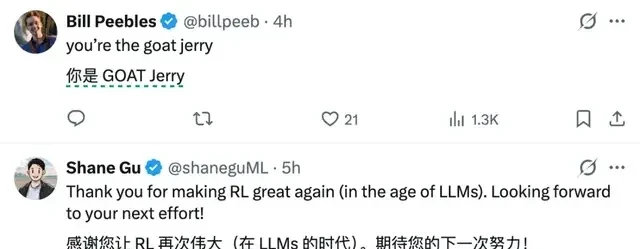
But the broader market reaction is different. Many are frustrated by OpenAI losing such key talent. This departure raises questions about retention strategies for top-tier AI researchers.
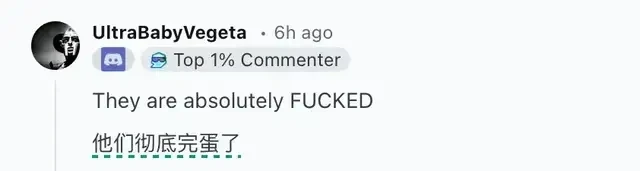
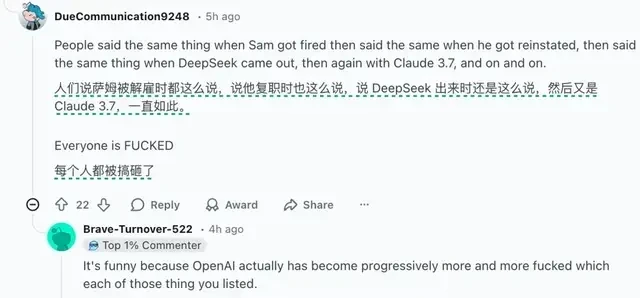
The comments section also offered some levity. Not everyone is mourning the loss with solemnity. The internet remains the internet, regardless of who you are.
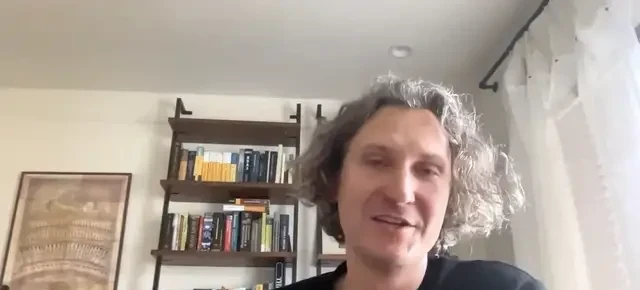
Jerry Tworek is known from intermittent interviews and speeches. But his impact on OpenAI’s product stack is comprehensive. I’m taking a serious look at his career to understand what this departure means for the industry.
I think the loss of a multi-model architect suggests OpenAI’s internal R&D structure may be stifling the very innovation it claims to lead.
The Architect Behind OpenAI’s Reasoning Engine
Jerry Tworek didn’t stumble into AI by accident. Born in Poland with a math degree from the University of Warsaw, he spent five years in Amsterdam building quantitative trading strategies. He wasn’t chasing hype; he was extracting signals from noise using optimization theory. That rigorous background is exactly why reinforcement learning felt like the natural next step for him.
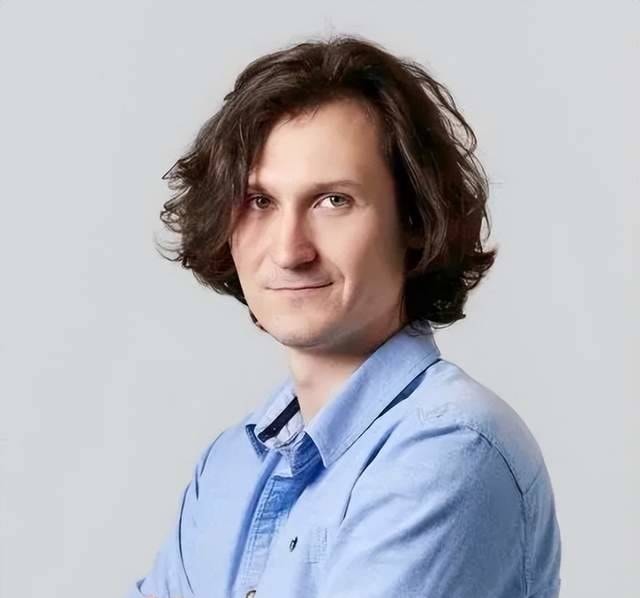
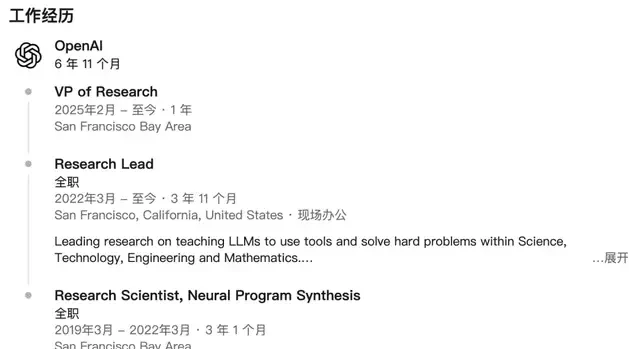
He joined OpenAI in 2019 as a Research Scientist. The lab was small then—non-profit, modest fame, and just releasing GPT-2. Tworek didn’t wait for the ChatGPT explosion to focus on reasoning. He was already working on neural program synthesis and large-scale pre-training scaling before most of the industry understood the value of compute-heavy inference.
Early in his tenure, he even tackled robotics, presenting “Solving Rubik’s Cube with a Robotic Hand” at NeurIPS 2019. It wasn’t just academic curiosity; it was about systems that learn to think, not just predict text. After GPT-3 launched in 2020, he shifted focus to training models for logic and reasoning problems. He has consistently argued against mere pattern-matching generation since day one.
Between 2019 and 2022, Tworek’s work directly influenced code models like Codex and Copilot. He used reinforcement learning to boost decision-making in complex tasks. By 2022, he became Research Lead, directing teams on how large language models could use tools for difficult STEM problems. This included early iterations of plugins and the Code Interpreter.
His influence grew with ChatGPT, but his true legacy lies in the reasoning stack. He is the Chief Researcher for GPT-4. He led the development of o1, OpenAI’s first dedicated reasoning model. Most critically, he is identified as the core architect behind GPT-5’s long-thinking capabilities and reasoning mechanisms.
In 2025, he was promoted to Vice President of Research. On January 6, 2026, Tworek announced his resignation. He did not disclose where he is going next. This departure leaves a significant gap in OpenAI’s ability to execute on its stated roadmap for advanced reasoning.
The way I see it, openAI loses its primary architect for the reasoning stack that defines its current competitive moat. Honestly, the departure signals potential instability in GPT-5’s development timeline and technical direction. I think investors should view this as a material risk to OpenAI’s ability to maintain its lead in complex task execution.
Below is the translated original text of Jerry’s farewell post.
The Departure of Jerry
Jerry Liu’s exit is not just a personnel change; it is a signal that the internal pressure to deliver on the “reasoning” narrative has become unsustainable. He leaves after nearly seven years, having built the foundational models—GPT-4, Codex, o1, and o3—that define OpenAI’s current valuation.
I read his farewell post closely. The tone is polished, but the content reveals a team stretched thin by its own success. Liu notes he is leaving to explore research areas “difficult to pursue within the company.” This suggests that even internal R&D has hit diminishing returns on scaling compute for reasoning tasks.
He claims credit for discovering the scaling law before DeepMind’s Chinchilla and assembling the new paradigm for training inference compute. These are not minor contributions; they are the core assets driving OpenAI’s market dominance right now. Losing the architect of o3 is a significant risk to their near-term competitive moat.
The way I see it, the loss of Jerry Liu exposes the fragility of OpenAI’s “reasoning” narrative as a sustainable growth engine.
Cultural Artifacts and Market Signals
The article concludes with an observation that feels less like news and more like industry folklore. I stumbled upon a comment suggesting that farewell posts are an unwritten rule at OpenAI. Whether this is corporate culture or just PR hygiene, it highlights the high turnover rate in elite AI labs.

This pattern matters to investors. If top talent leaves precisely when the company is betting its future on complex reasoning models like o3, it raises questions about internal alignment and technical feasibility. Liu’s departure coincides with a period where OpenAI must prove these models are commercially viable beyond hype.
The “Strawberries” sign-off is a cultural quirk, but the underlying message is stark: the people building the future of AI are leaving before they can fully realize it. This churn creates uncertainty for buyers relying on OpenAI’s roadmap.
Honestly, high-profile departures during critical product cycles undermine investor confidence in OpenAI’s execution capabilities.
Comments
Sign in to join the discussion and leave a comment.
Sign in with Google