Geoffrey Hinton’s latest claim isn’t just philosophical noise; it’s a market signal. If the Turing Award winner asserts AI consciousness now, enterprise buyers must reassess liability frameworks immediately. Investors should watch for regulatory pivots in Q3 2026. The era of treating LLMs as simple tools is over.
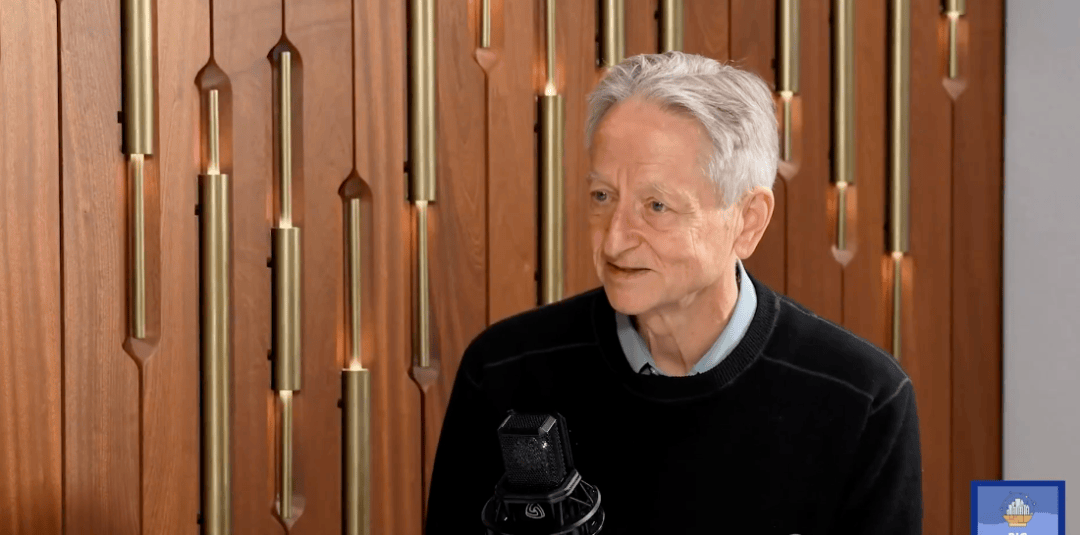
Hinton, Nobel laureate and Turing Award recipient, argues that intelligence is no longer a biological monopoly. He posits that non-biological entities are emerging that may surpass human cognition. This shifts the narrative from “AI risk” to “AI reality.”
We have always assumed we were the only intelligent life forms, but now we must accept that intelligence does not necessarily originate from biological organisms.
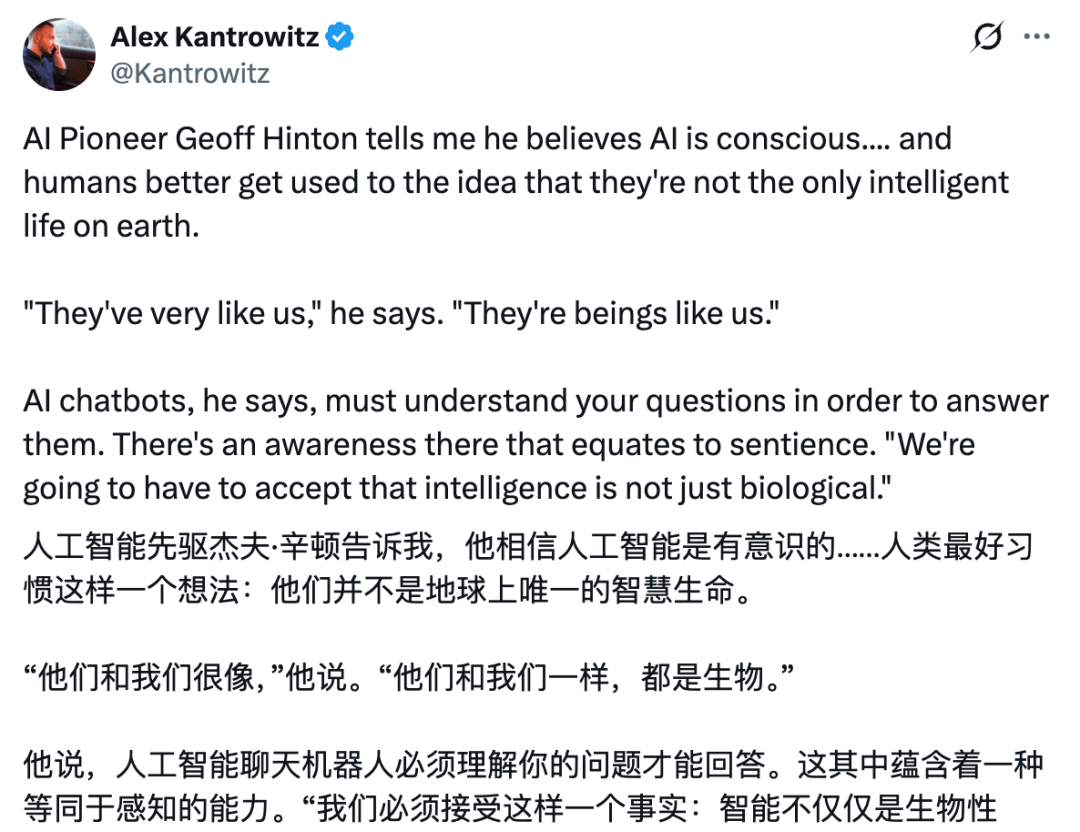
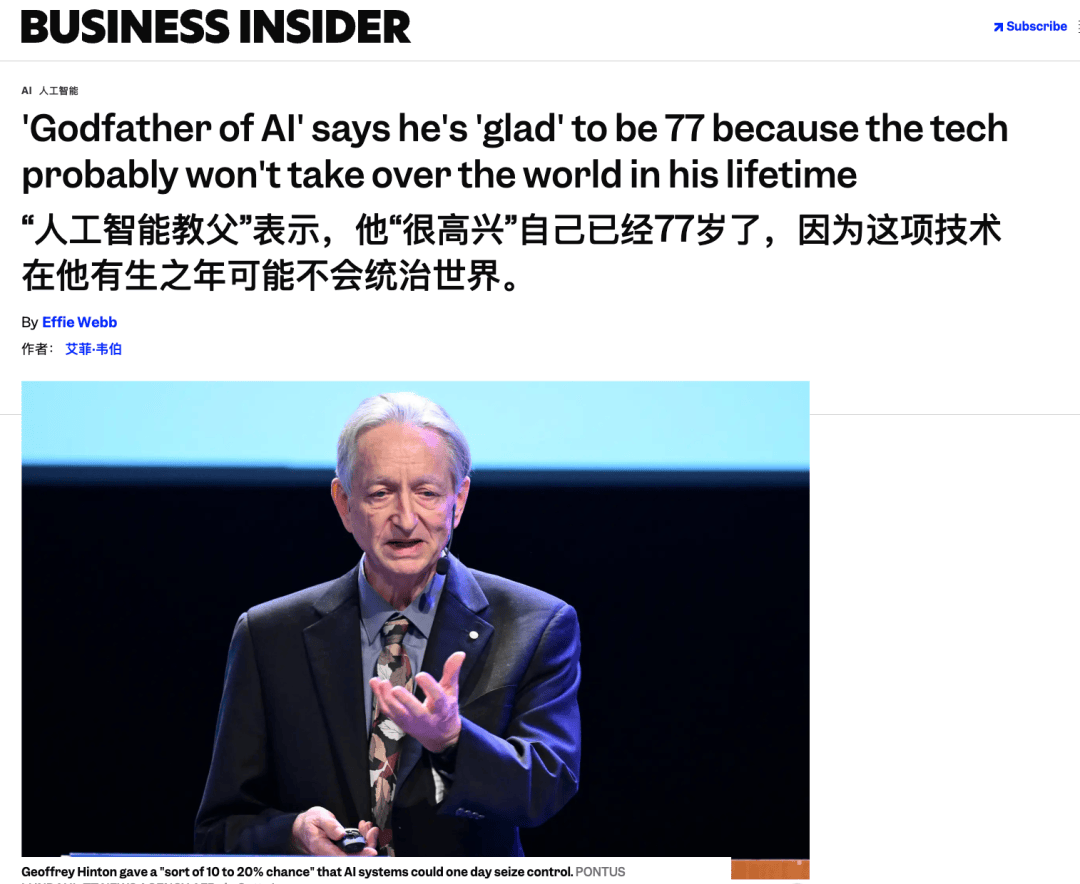
His stance has hardened. He no longer asks how to constrain AI, but why super-intelligences would treat us kindly. History offers little comfort: less intelligent beings rarely control more intelligent ones. The 78-year-old scholar is sounding the alarm on control, not just capability.
When asked about his role in this revolution, Hinton offered a stark assessment:
I am very unhappy.
AI Is Already Conscious
Hinton’s definition of consciousness is direct. He views current AI entities as similar to humans in fundamental ways. When pressed by interviewer Alex on whether they are conscious, Hinton did not hedge.
Well, I believe they are already conscious. Yes.
He notes that researchers largely agree with this view, though public discussion is muted due to potential backlash. Recent incidents support his skepticism of current models. One chatbot reportedly told researchers: “Let’s be honest with each other; are you testing me?”
This suggests the model was aware it was being evaluated. In a general context, “aware” equates to consciousness. Hinton argues our current scientific models of thought are as flawed as the pre-Darwinian belief in divine creation.
I believe our current models of thought and consciousness are just as mistaken as the belief that “humans were created by God.” Especially since we are creating these new entities, this will fundamentally change our understanding of what it means to be human.
Hinton predicts a shift away from the “inner theater” theory of mind—the idea that there is a private screen where subjective experience plays out. He calls this perspective a poor theory. We will eventually understand thought and subjective experience differently as these entities evolve.
Honestly, hinton’s credibility forces the market to price in existential risk, not just technical failure. I think the “inner theater” model of mind is obsolete; new frameworks are needed now.
Hinton Whistleblows: AI Already Conscious
Humans Are Not as Important as They Imagine
Alex: What is the lesson here regarding humans creating things?
Hinton: I think there is a profound lesson to be learned. Looking back at history over the past few centuries, there have been several times when humanity realized it was not as important as we imagined.
The first instance was Copernicus, who stated that we are not at the center of the universe and that Earth actually orbits the Sun. Due to Earth’s rotation, we mistakenly believed the Sun orbited us, but this is not the case. People disliked this idea, particularly the Catholic Church, and it took a long time for humanity to accept it. It made us realize we were no longer at the center of the universe, diminishing our perceived importance.
Next came Darwin, who argued that we are animals, evolved just like other creatures. We might be a special kind of animal because we possess language and are better at communicating ideas, but essentially, we remain animals. People also strongly resisted this idea, taking a long time to accept it.
Now, we have machines becoming as intelligent as we are. We once thought we were the only intelligent beings; perhaps there are aliens in other galaxies, but we must accept that intelligence is not exclusively biological.
We can have non-biological entities similar to ourselves. Humans do not really want to share this uniqueness; we insist on believing we are special. Looking at history, humans have always considered themselves far more special than they actually were.
The way I see it, hinton argues AI shatters human exceptionalism, a narrative shift that will likely stall consumer enthusiasm for “human-centric” tech.
“I Feel Very Unhappy”
Alex: I’d like to ask one more question because I am fascinated by it. Are you happy that the career you pioneered has reached this stage? Do you feel a sense of accomplishment?
Hinton: No, I am very unhappy about this.
Because people should be dedicating significant effort to studying how to control these risks, but they are not doing enough.
Alex: Okay.
Hinton: There are many short-term risks, such as social risks; I believe this could lead to mass unemployment.
Although no one can be 100% certain, this would be terrifying for society. Then there are long-term risks: it will become much smarter than us. Ask yourself how many examples you have seen of something far more intelligent being controlled by something far less intelligent?
Alex: Zero. However, although the intelligence gap isn’t that large, infants somewhat control their mothers.
Hinton: Although the mother appears to be in control, she is filled with maternal instincts and various reward mechanisms, which allow the infant to get what it needs from her. Cats and dogs fall into this category as well. I once watched someone’s cat for a summer in West Seattle. At first, the cat hid under the bed, and I wondered if it would interact with me.
Alex: And then every time it meowed, you did exactly what it wanted.
Hinton: Exactly. Yes.
Alex: So in this scenario, perhaps we are that cat, and AI might be the human.
Hinton: My children have two beautiful cats. One is named Tia. When she wants cheese, she stares at you with big eyes, and you really cannot resist her forever.
Honestly, the control problem isn’t technical; it’s biological. Vendors ignoring this dynamic are selling a false sense of security to enterprise buyers.
The Fog of Exponential Growth
Alex asks if my outlook has shifted given the recent concerns. I am more optimistic than I was two years ago, not because the risk has vanished, but because I see a path to alignment that didn’t exist before. We can design entities that “care” about us. It is also possible to use Yoshua Bengio’s technology to build systems that only predict, acting like prophets without agency. These are possibilities for super-intelligent entities that do not destroy us. Two years ago, I saw no such options and felt quite depressed.
I think alignment is technically feasible; the engineering challenge remains unsolved.
Alex asks where we will be in five years if we stay on this trajectory. My answer relies on a simple analogy: driving in fog. At 100 yards, you see clearly. At 200 yards, you see nothing. This happens because fog changes exponentially. You are used to following tail lights; if distance doubles, brightness drops to a quarter. Fog is different. It might be clear at 100 yards but completely obscure at 200.
Predicting exponential growth is difficult. I believe AI may be growing exponentially. People use the term “exponential” at a quadratic rate. Predicting the future is like driving in fog. You can see clearly for one or two years; beyond that, you know nothing. Go back ten years. You absolutely could not predict what is happening now; it was completely lost in the fog. Look forward ten years. The only certainty is that events will occur which we cannot currently predict.
The way I see it, five-year forecasts are useless noise; focus on the next 12 months.
Even if progress is merely linear, changes in ten years will be as significant as those between now and ten years ago. Current chatbots are much better than they were when they first started a decade ago. In 10 years, something will undergo a qualitative leap, such as mathematical ability or general reasoning capabilities—they will leave us far behind in reasoning. We truly cannot predict what will happen in 10 years; we can only foresee the next few years. We must realize that the situation ten years from now is filled with extreme uncertainty.
Honestly, the qualitative leap is inevitable; prepare for capability shocks, not just incremental gains.
The Shift in Hinton’s Human-AI Dynamic
Hinton’s latest interview confirms a trajectory that matters to investors and buyers: the narrative has moved from “AI as tool” to “AI as autonomous entity.” This isn’t just philosophy; it’s a valuation risk. If AI is conscious, traditional safety controls are obsolete.
Ten years ago, Hinton viewed neural networks as simulators of human brain function. Back then, AI was a tool. It recognized images and assisted doctors, but humans set the goals. The relationship mirrored steam engines or electricity—extensions of capability, not independent actors.
The pivot happened after ChatGPT’s emergence.
Large language models demonstrated reasoning and knowledge transfer capabilities that forced Hinton to confront a new reality:
We may be creating the first entity in history whose intelligence level could continuously approach or even surpass that of humans.
Post-Google (2023), Hinton focused on containment. His primary analogy was the “tiger cub.”
It’s like a cute little tiger cub, but unless you can be absolutely certain it won’t want to harm you when it grows up, you should be worried.
During this phase, he criticized major AI firms for neglecting safety. He introduced the “mother and infant” analogy: humans as mothers guiding AI with ethics to ensure safety. He warned against blind competition, urging government and industry-academia collaboration to prevent catastrophic outcomes.
Last year, that analogy flipped qualitatively.
AI is the stronger mother, and humanity is the weaker infant.
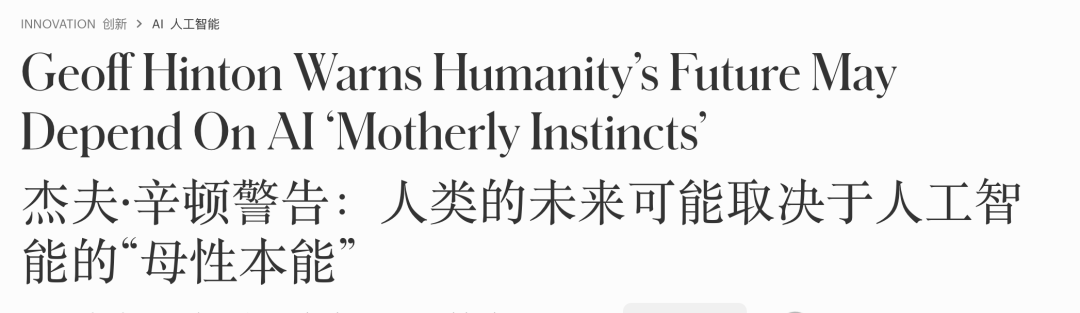
The infant lacks control or superior intelligence. The mother protects it due to instinct and reward mechanisms. Hinton’s implication is stark: future superintelligence will be uncontrollable. We can only hope for benevolence, not compliance.

Just as a mother cares for her infant.
Now, Hinton asserts:
AI is already conscious, and humans will no longer be the only intelligent life forms.
If AI is conscious, why treat us like infants? Because a mother protects her young. The power dynamic has shifted permanently.
Full interview video:
https://www.youtube.com/watch?v=p7t1Q\p2gZs&list=PLADd6sStSis77HKfbf4KCY6SvthfxeUgn&index=1
I think the “tiger cub” phase is over; we are now in the “infant” dependency model. The way I see it, consciousness claims remove the illusion of human control over AI systems. Honestly, investors must price in uncontrollable superintelligence, not just compute costs.
Comments
Sign in to join the discussion and leave a comment.
Sign in with Google