We spend our days watching robots trip over curbs in real warehouses, yet the headlines are dominated by stage demos that never touch a physical floor. I read through the recap of 2025’s AI sprint, and it feels less like engineering progress and more like marketing noise. The gap between what these models claim to do and what actually runs on a factory line remains wide.
In 2025, artificial intelligence saw rapid breakthroughs that prioritized spectacle over stability. DeepSeek R1 emerged in January as a game-changer with efficient reasoning and an open-source strategy. During the Spring Festival, Unitree robots debuted on the CCTV New Year’s Gala, bringing embodied AI into the public spotlight through choreographed performance rather than utility. By March, Chinese companies like Manus gained popularity for AI agents, while creative tools like Lovart integrated into design workflows. These agents were marketed as productivity tools capable of delivering tangible results, though I’ve seen few actually handle complex human workflows without breaking. The pace accelerated in the second half: Claude 4 and Gemini 3 pushed capability boundaries, while Nano Banana and Sora 2 went viral for generative image and video creation. In mid-December, OpenAI released GPT-5.2, climaxing an annual model competition focused on parameter wars rather than unit economics.
Looking back, the industry shifted from improving single capabilities to simultaneous advancements in reasoning, agent execution, multimodal creation, and embodied AI. Each breakthrough narrows the gap toward superintelligence but prompts deep reflection on industrial implementation paths.
Against this backdrop, the 2025 Tencent ConTech Conference and Tencent Technology Hi Tech Day were held in Beijing on December 18. The event gathered academicians of the Chinese Academy of Engineering, tech founders, and investors to discuss frontier topics like physical AI and governance.
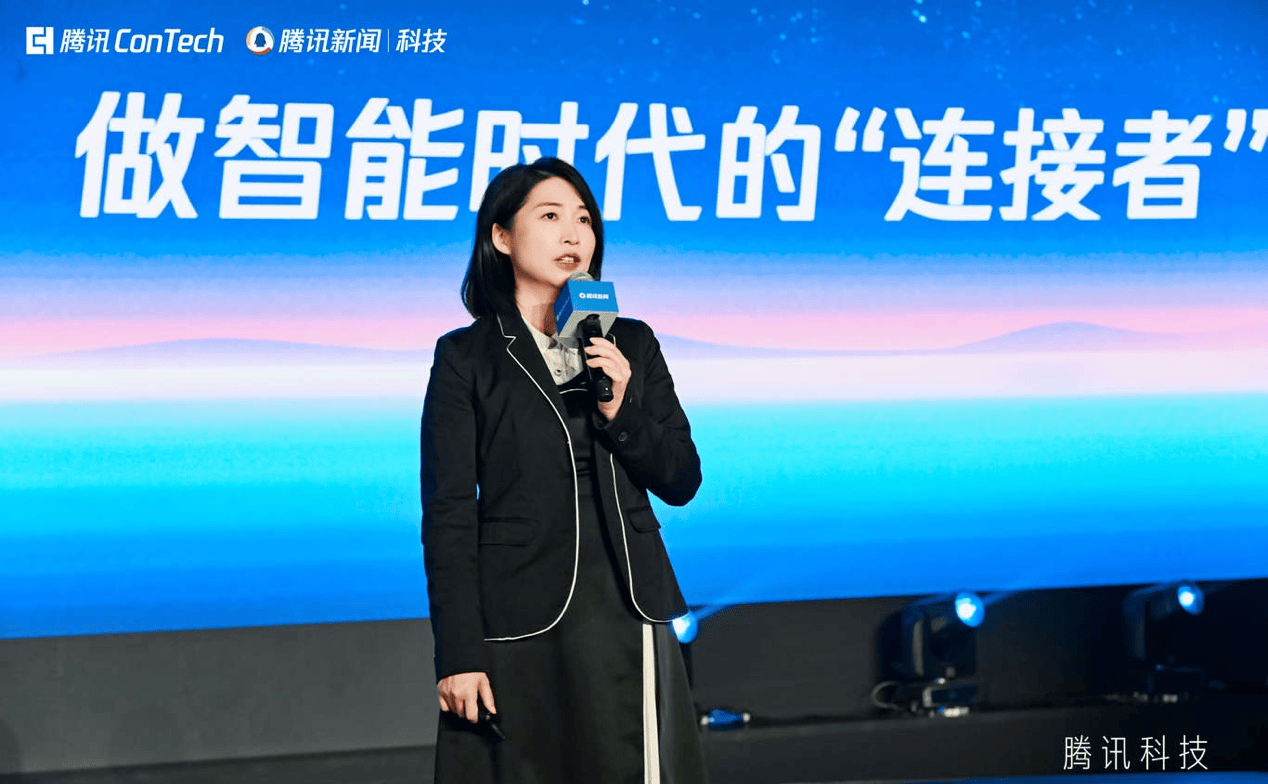
Huang Chenxia, General Manager of Operations at Tencent News, opened by noting the surging wave of intelligence. She argued we are at a critical juncture for paradigm reconstruction—a fundamental restructuring of application methods and collaborative models involving ethical boundaries.
Huang stated, “Tencent News and Tencent Technology aim to build a platform connecting frontier innovation with practical application… While encouraging innovative breakthroughs, we must always maintain reverence for the boundaries of technology.”
Academician Chai Tianyou: Industrial Intelligence Determines Future Manufacturing Heights
Starting from industrial revolution history, Academician Chai Tianyou elaborated on the rise of intelligence. He pointed out that the essence of every industrial revolution has been the coordinated transformation of material flows, energy flows, and information flows. Material conversion relies on energy, but efficiency depends on information flow—specifically sensing, decision-making, and execution. The emergence of steam engines, electricity, and digital computers promoted proportional control, PID control, and automation systems. The enhancement of information flow capabilities has always been the key to industrial progress.
Academician Chai believes that **a new round of industrial revolution is under
150 Minutes on Everything About AGI: Academicians Chai Tianyou and He Xiaopeng Provide Answers
The shift isn’t just about energy; it’s a fundamental leap in information flow. Technologies like industrial internet, digital twins, and the metaverse allow systems to sense, decide, and optimize within digital spaces before safely applying those results to physical production. This is where industrial AI diverges sharply from general-purpose large models. As He Xiaopeng noted, industrial scenarios demand “no errors in decision-making, no errors in sensing, and no errors in execution.” The goal here isn’t just intelligence; it’s verifiable, optimizable, closed-loop capability.
I think lab demos love hallucination; factories require zero-error loops.
Chai Tianyou illustrated this with a magnesium oxide sand production line. He showed how digital twins and intelligent algorithms can achieve unmanned operations for high-risk processes. The system handles self-learning parameter optimization, delivering significant energy savings and efficiency gains. It’s not just automation; it’s the reconstruction of production methods to drive continuous industrial evolution.
The Physical AI Leap: XPeng’s Vision
He Xiaopeng, Chairman and CEO of XPeng Motors, took the stage to discuss “physical AI.” His core thesis is that artificial intelligence is moving from the digital world into the real physical world. He outlined new laws for this era: data, computing power, and models reinforce each other, creating a “black hole” effect that accelerates intelligence evolution. Simultaneously, numerous agents collaborate in a decentralized manner like ants—thinking independently yet cooperating efficiently.
In the field, ant-like swarms sound great until one unit fails in the wild.
He reviewed the historical evolution of consumer “three major items.” We moved from bicycles, watches, and sewing machines to color TVs, refrigerators, and washing machines. Then automobiles became key consumer goods. Now, as AI integrates with the physical world, he predicts a new standard lifestyle configuration for young people. Over the next decade, robots, autonomous vehicles, and low-altitude aircraft may enter daily life, becoming the “new three major items of intelligent agents.”
I’ll believe it when I see a robot fixing my leaky faucet without calling support.
He argues that automobiles, robots, and aircraft are essentially homologous physical AI systems. They all rely on the integration of sensing, decision-making, and execution capabilities. He specifically noted that humanoid robots are more likely to integrate into human-centric designed real-world environments, possessing broader application potential. Meanwhile, autonomous driving and flying cars will serve different…
Comments
Sign in to join the discussion and leave a comment.
Sign in with Google