Musk’s $97.4 Billion Bid for OpenAI: A Valuation Trap or Strategic Bluff?
Elon Musk just tried to buy the crown jewel of generative AI, and Sam Altman just laughed him out of the room. This isn’t just a celebrity spat; it is a massive signal about where capital is flowing in 2025. For investors watching the silicon stack, this $97.4 billion ask reveals Musk’s desperation to control the foundational models that power everything from autonomous vehicles to enterprise software.
Musk Offers $97.4 Billion to Acquire OpenAI!
I read the filings carefully. Earlier this Monday, local time, Musk sent lawyers to submit an offer for all assets of the non-profit organization to the OpenAI board. The number on the table is $97.4 billion, which converts to approximately 711.843 billion yuan in RMB.

What stood out to me is the structure of this bid. This is not Musk’s final take-it-or-leave-it price. Lawyers stated, “Musk’s investor group is prepared to match or exceed any bid higher than OpenAI’s own.” It is a classic aggressive negotiation tactic designed to freeze out competitors and signal dominance before the ink is even dry.
Honestly, a $97B valuation for an unprofitable non-profit subsidiary ignores current cash flow realities.
Altman’s Retort: The Twitter Jab
The response from OpenAI CEO Sam Altman was swift and personal. He responded on X, directly targeting Musk’s most recent acquisition failure.
Thanks, but no thanks!
However, if you’re willing, we are ready to acquire Twitter for $9.74 billion.
Yes, he directly referred to it as Twitter. The math here is deliberate and insulting. The offered $9.74 billion (approximately 71.15265 billion yuan) does two things: it shifts Musk’s bid one decimal place to the left, and it lands far below the $44 billion (approx. 310 billion yuan) Musk originally paid when he acquired it.

This isn’t just banter; it is a valuation correction. Altman is reminding the market that Musk’s social media asset has lost nearly 80% of its purchase price value. Although documents submitted to regulators show that revenue since Musk accepted [Twitter] has dropped significantly, the implication is clear: OpenAI is worth more than Twitter ever was.
I think altman’s counter-bid highlights the massive gap between Musk’s ego and his actual asset valuation.
The Valuation Gap: Why Musk’s Bid Is a Distraction
Musk’s lawyers dropped a statement demanding OpenAI return to its “open-source” roots. It is a narrative play, not a legal strategy. Two key words define this move: “open source” and “safety.” They are designed to appeal to the developer community that feels abandoned by OpenAI’s commercial pivot.

Musk followed the legal filing with a 20-second video on X. In it, Sam Altman claims he received no equity from OpenAI. Musk captioned the post bluntly:
Sam Altman, you big liar!
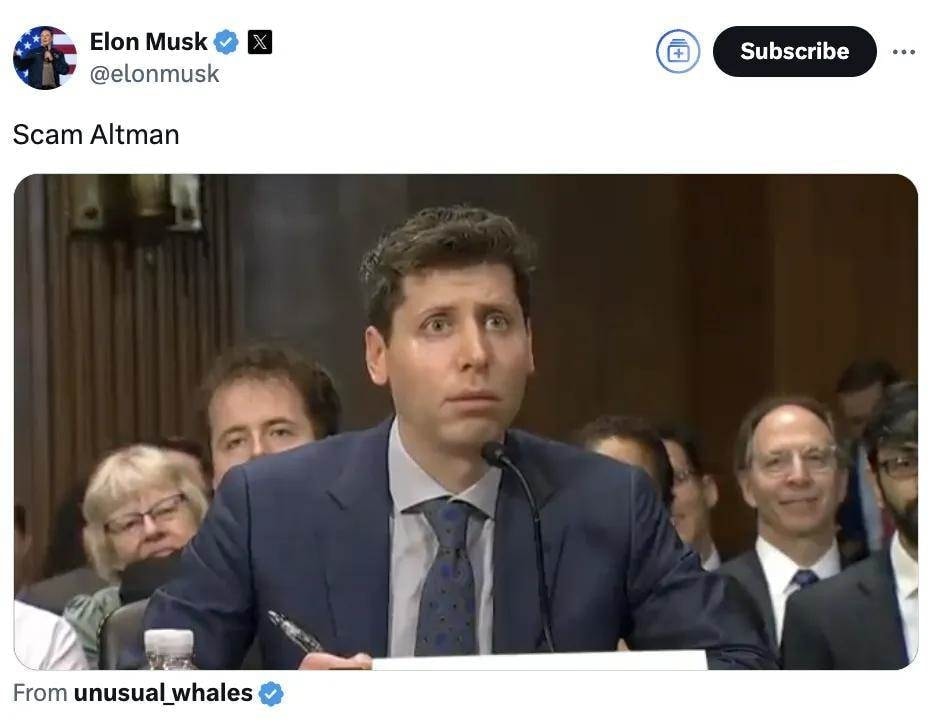
The way I see it, musk is weaponizing narrative over substance to destabilize OpenAI’s board stability.
The History of the Feud: From Co-Founders to Litigants
Why does Musk want to acquire OpenAI? I read the background carefully. In 2015, Musk and Altman co-founded the entity. Initially, it was positioned as a non-profit research institution dedicated to advancing AI development. That mission statement is now the primary weapon in their war.
Musk left in 2018 after disagreements over direction. He tried to poach Demis Hassabis to Tesla, though Hassabis later returned to OpenAI. Since ChatGPT’s launch, Musk has accused OpenAI of prioritizing profit maximization over its original mission. He points to the Microsoft partnership as evidence of this betrayal.
Musk founded xAI and launched Grok to compete directly. He began filing lawsuits against OpenAI, accusing it of violating antitrust regulations. His core argument is that OpenAI attempted to prevent its transition into a for-profit entity without proper governance.
Honestly, the lawsuit is a distraction from the fact that xAI cannot yet match OpenAI’s compute or talent scale.
The $97.4 Billion Bid vs. Reality
Earlier this Monday, Musk led a consortium offering $97.4 billion to acquire OpenAI. This number is arbitrary compared to market reality. It is a bluff intended to force the board into a corner.
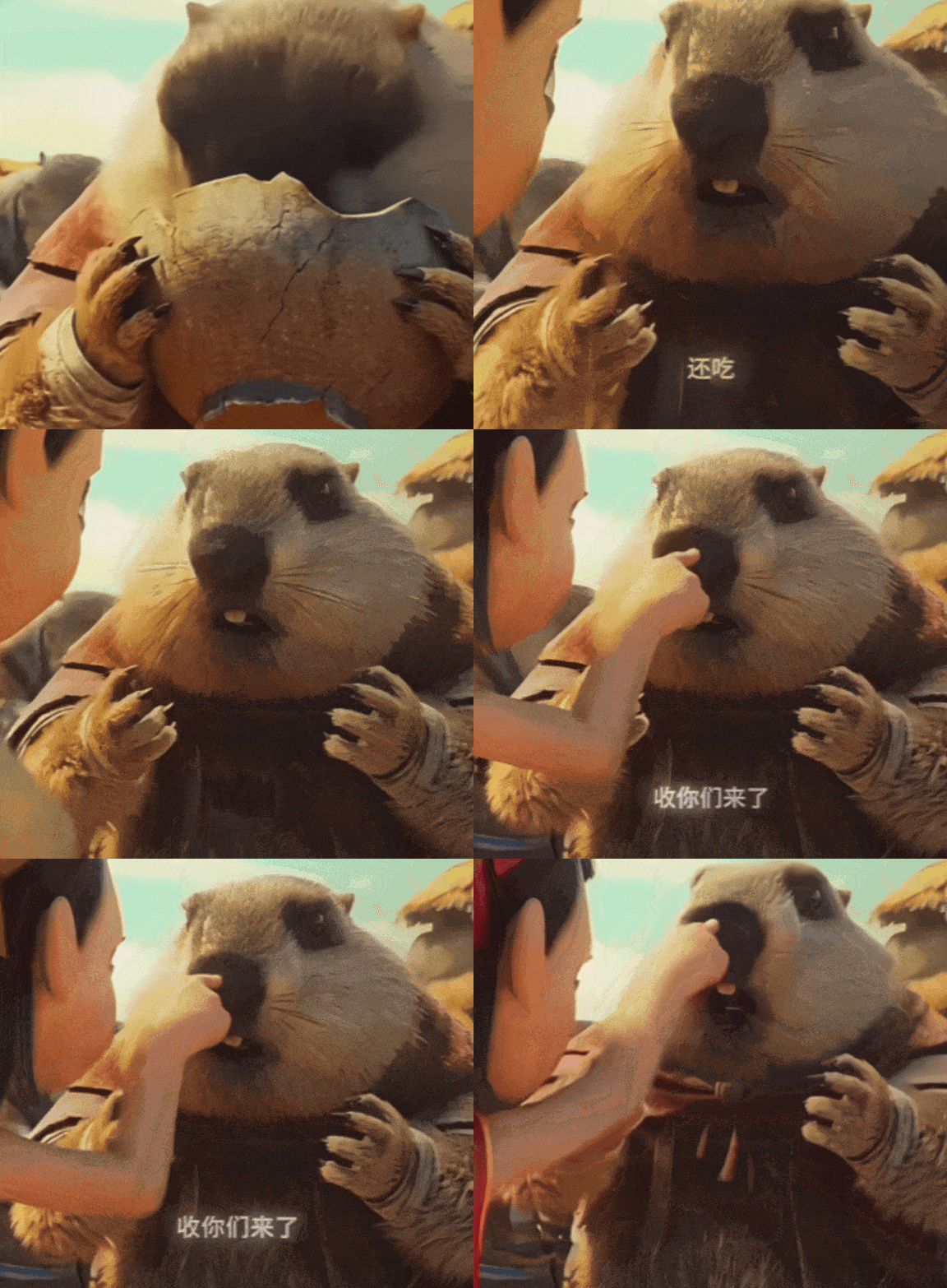
OpenAI is not sitting idle. At the end of last year, they announced a structural shift to protect their AGI mission. They plan to maintain a hybrid status: part non-profit, part for-profit. The specific plan involves transforming the for-profit entity into a Delaware Public Benefit Corporation (PBC).
The PBC will raise funds for AGI and control daily operations. Meanwhile, the non-profit retains business shares but loses operational control. It will focus on charitable activities in healthcare, education, and science. OpenAI stated that the non-profit’s equity interest will take the form of PBC stock, valued by independent advisors. This structure multiplies resources for donors while securing capital.
This transition began operating in 2025 and is scheduled to complete by the end of 2026. It locks out hostile acquirers like Musk who cannot navigate this dual-structure complexity.
I think the PBC structure creates a legal moat that makes a $97 billion acquisition nearly impossible to execute cleanly.
OpenAI’s Financial Fortress: $40 Billion in the Bank
Musk’s bid ignores the sheer scale of OpenAI’s capitalization. In late January, Altman led a new financing round worth $40 billion. This is not a small raise; it is a war chest.
The purpose is twofold: fund loss-making operations and fulfill commitments to the “Stargate” project. Before this round, OpenAI’s valuation was $260 billion. After financing, it is expected to reach $300 billion. Musk is trying to buy a company worth three times his offer.
SoftBank Group is expected to lead this round with an investment between $15 billion and $25 billion. SoftBank has deep pockets and a long-term view on AI infrastructure. They are not going to let Musk disrupt their asset easily.
The way I see it, a $97 billion bid is irrelevant when the target has secured $40 billion in fresh capital at a $300 billion valuation.
The valuation trap in Musk’s non-profit bid
I read the filing details, and the numbers are staggering. Elon Musk is offering $97.4 billion for the OpenAI non-profit entity. This isn’t just his money; it includes backing from xAI, Valor Equity Partners, Baron Capital, Atreides Management, Vy Capital, and other individual investors. Lawyers representing this group stated they are prepared to match or exceed any higher bid OpenAI might receive.

The Wall Street Journal notes this unsolicited bid complicates Sam Altman’s “non-profit + for-profit” structure significantly. The core issue is valuation of the non-profit portion. As the WSJ wrote, “Musk’s offer sets a high standard,” which could result in Musk or his allies receiving a large, potentially controlling stake in the new OpenAI.
Honestly, this bid forces a price tag on OpenAI’s soul that Altman cannot ignore without looking irrational.
The financing fallout and market reaction
Musk’s interference introduces massive uncertainty about OpenAI’s future trajectory. Consequently, the round of financing Altman is currently raising might go down the drain. Investors hate ambiguity, and this bid creates a lot of it.
Netizens watching from the sidelines couldn’t sit still. Some questioned Altman’s outright rejection, asking, “Bro, just casually rejecting a $97 billion offer?”

Serious discussions focused on the open-source angle and gently persuaded Altman to reconsider. Critics argued:
You don’t have a strong enough product team to successfully commercialize OpenAI’s slight advantage in large models.
Your video model is terrible~ And open-source large models are catching up fast.
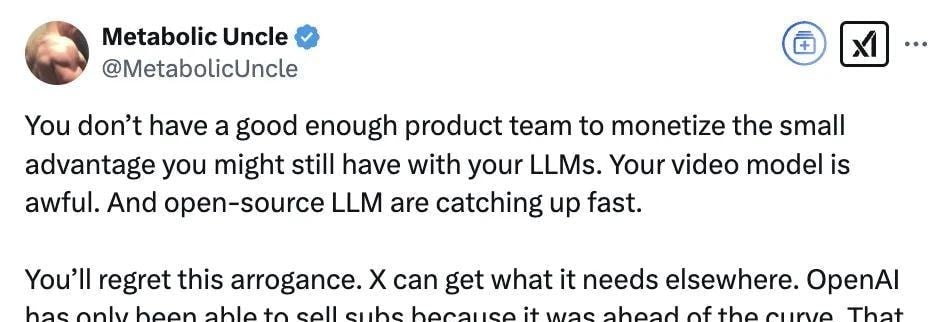
One commenter hit the nail on the head under Altman’s post regarding his interest in Twitter:
You’re shouting about acquiring [Twitter], but first you need $9.74 billion.

Grok, Musk’s own large model available on X, synthesized information from Forbes and other sources to highlight the disparity in wealth: as of early 2025, Altman’s net worth is approximately $1.1 billion.
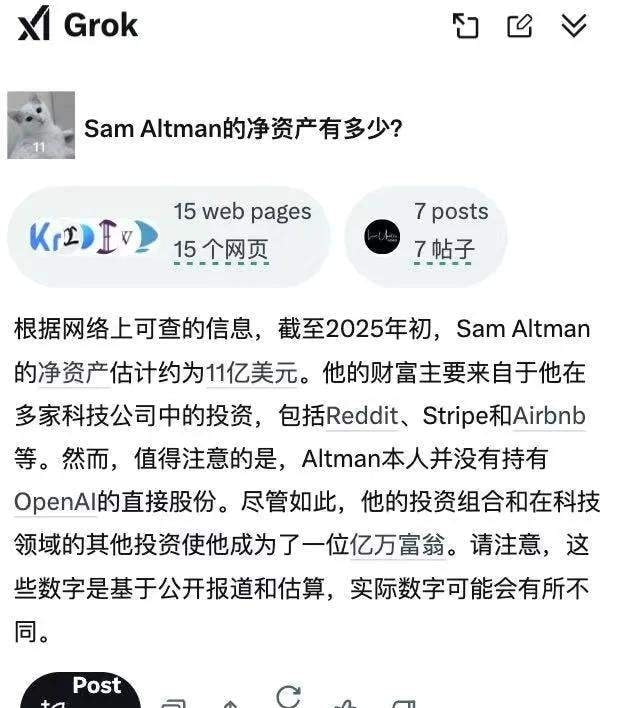
I think musk is using financial leverage to bypass technical moats and acquire control through capital intensity alone.
Comments
Sign in to join the discussion and leave a comment.
Sign in with Google