I read the transcript from Jensen Huang’s appearance on the All-In Podcast, and what stood out wasn’t just the humor—it was the operational reality behind NVIDIA’s compensation structure. The CEO admitted to carrying a “secret option pool” in his leather jacket, joking that it is “currently in my pocket.” This isn’t a lab demo; it’s a direct challenge to enterprise HR latency.
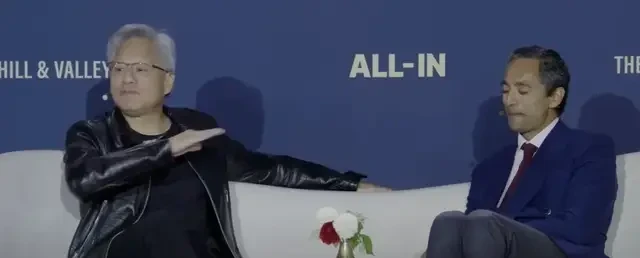
Huang handles employee rewards with casual directness that most large corporations would find terrifying. There is no need for lengthy approval processes or waiting for year-end evaluations. If you perform well, your boss might surprise you at any moment—a practice almost unheard of in large corporations.
The CEO confirmed he personally reviews compensation plans for all 42,000 employees using machine learning and various technical methods. He stated:
Every time, I increase the company’s operating expenses* (primarily referring to payroll).
The reason is simple: take care of your employees, and everything else will fall into place.
In practice, centralized ML-driven comp reviews cut approval latency but create single-point-of-failure risks in HR data pipelines.
Huang also proudly mentioned during the show that his team has more billionaires than any other CEO in the world. While this sounds bold, it reflects NVIDIA’s astonishing growth amid the AI wave and Huang’s generous attitude toward sharing success with employees.
Acquiring a Company Is Less Effective Than Paying One Person $1 Billion
Huang’s management style appears particularly prescient against the backdrop of the current AI talent war. The podcast noted that the value of top-tier AI researchers has skyrocketed to staggering levels—rumors suggest Meta offered a researcher a four-year contract worth $1 billion.
Facing such a talent market, Huang pointed out a key fact: with sufficient funding, 150 top AI researchers could create a company similar to OpenAI. DeepSeek has approximately 150 employees, Moonshot AI (Yuezhimian) also has around 150, and early OpenAI and DeepMind were of similar scale.
He argued:
If you are willing to spend $20–30 billion acquiring a startup with only 150 AI researchers, why not just pay one person $1 billion directly?
I think direct equity grants bypass M&A integration debt but require robust cap table management and immediate tax compliance workflows.

Regarding DeepSeek, Huang emphasized the importance of open source. Without it, startups simply cannot survive. He believes that future industries will likely be dominated by today’s startups, which rely on open-source models.
He also spoke enthusiastically about the significance of reasoning models like DeepSeek R1: Older models were static, with everything pre-memorized. But now, with reasoning models, they can truly think. If every step of thinking is energy-efficient, you can sustain that thought process for a long time.
GPU Allocation Is Simple and Direct: First Come, First Served
How does NVIDIA allocate its scarce H100s and other chips amidst the demands of tech giants like Mark Zuckerberg, Elon Musk, and Sam Altman?
Huang’s answer was surprisingly simple: Place a purchase order (PO). That’s it. It’s just like going to a checkout counter—pay first, get served first.
He explained this seemingly complex allocation mechanism using the most straightforward analogy.
In the early days, demand for Hopper chips grew too fast for production capacity to keep up. However, the situation has improved significantly. NVIDIA now discloses its product roadmap to all partners a year in advance, allowing ample time for joint planning.
Buyers decide how much power, data center space, and capital expenditure they need. We plan together and collaborate on product iterations. The entire process is now quite smooth.
Operationally, predictable supply chains reduce procurement friction significantly. In practice, year-ahead roadmaps allow us to right-size our infrastructure budgets earlier.
Huang also revealed that he currently has $50 billion worth of Hopper chip inventory. If anyone wants extra chips, they can simply give him a call.
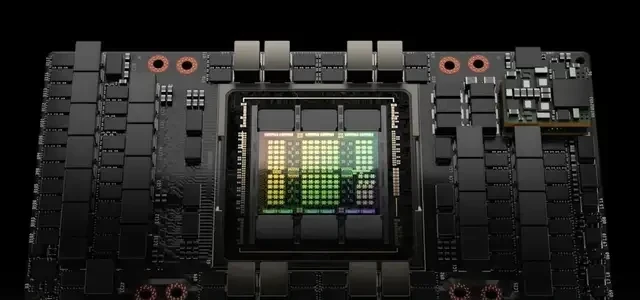
More interestingly, he explained the value retention of these chips.
When asked how long these chips, costing hundreds of thousands of dollars each, remain useful, Huang did the math: Each generation offers an X-fold performance improvement, which translates to an X-fold improvement in performance-per-watt, effectively doubling customer revenue by a factor of X.
We are racing to accelerate iteration speeds to increase everyone’s income and reduce costs, making AI as affordable as possible.
He shared a startling statistic: Hopper chips retain about 80% of their value after one year, 65% after two years, and 50% after three years. Furthermore, due to the programmability of the CUDA platform, developers worldwide are continuously optimizing its performance.
After shipping Hopper, we and others boosted its performance by four times. You won’t get such returns from CPUs.
I think high residual value justifies longer hardware refresh cycles for cost efficiency. Operationally, software optimizations extending hardware life reduce total cost of ownership.
AI Won’t Steal Jobs; The Pace of Job Creation Is Just Too Slow
When asked about AI’s impact on the job market, Huang offered a insightful perspective: We are busier now than ever before.
He cited NVIDIA as an example: Currently, 100% of its software engineers and 100% of its chip designers use AI to assist their work. This has not led to layoffs; instead, it enables the company to pursue more innovative ideas.
So I believe that as long as a company has enough ideas, higher productivity allows you to chase those ideas even more aggressively.
To me, aI is actually creating jobs. It enables us to build products customers are willing to buy, driving growth and subsequently creating more positions—a chain reaction.
Huang considers AI “the greatest technology equalizer in history”:
Everyone is a programmer now. In the past, you needed to master C, C++, or Python. Now, you just need to converse with AI using natural language. Even if you don’t know how to ask the right question, you can have AI help you write a better prompt, and it will reorganize your thoughts for you.
Everyone is now an artist, everyone is a writer, and everyone is a programmer.
However, he issued a warning:
One thing we can be certain of is that if you do not use AI, you will lose to those who do. He asserted that no programmer in the future will work alone; “You can’t go raw dogging it anymore without tools—you need a Copilot.”
Every Industrial Company Will Become an AI Company
I read the filing and followed the release, but what stood out to me wasn’t just the vision—it was the operational reality. Huang argues that AI isn’t a feature; it’s continuous production. That means your SRE team is now responsible for token latency as much as CPU cycles. The shift from batch processing to real-time inference changes how we monitor uptime.
Just as energy production peaked at 30% of the economy two or three centuries ago, in the future, there will be an entire industry dedicated to generating tokens, becoming new infrastructure.
I feel that current investments in AI infrastructure are around tens of billions of dollars, but future annual investments will reach trillions.
In practice, trillion-dollar capex means we need better cost allocation per model run immediately.
Huang points out that autonomy for anything with wheels is imminent. Every manufacturer now needs two factories: one for hardware, one for the “AI factory” training the brains. Tesla already does this; most others are still debugging their first LLM. This isn’t a lab demo—it’s a supply chain requirement.
So, in the future, every industrial company will become an AI company; otherwise, it won’t survive.
Video Replay:
https://www.youtube.com/watch?v=9WkGNe27r_Q
Comments
Sign in to join the discussion and leave a comment.
Sign in with Google