Who wins when a single prompt replaces hours of manual labor in the creative stack? The model vendors, certainly. But for 3D artists and designers, this shift from “tool user” to “prompt reviewer” introduces immediate friction regarding ownership and workflow control.
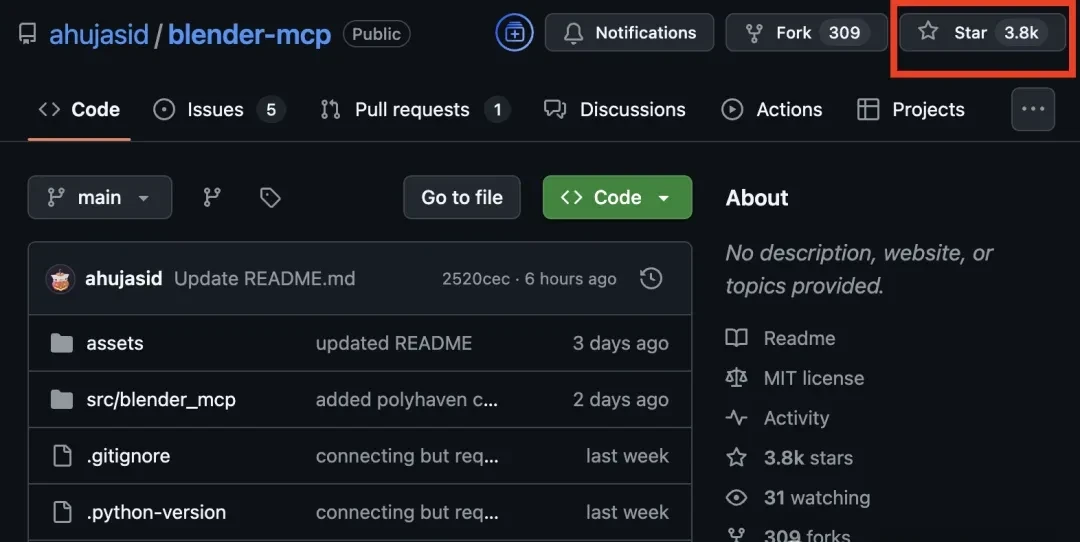
I followed the release of BlenderMCP, an open-source project that has already garnered 3.8k stars on GitHub within just three days. It leverages the recently popular MCP (Model Context Protocol)—the crucial mechanism used to replicate Manus’s capabilities—to integrate Claude directly with Blender. This integration allows users to convert 2D images into 3D models and even build interactive webpages based on those scenes using a single prompt.
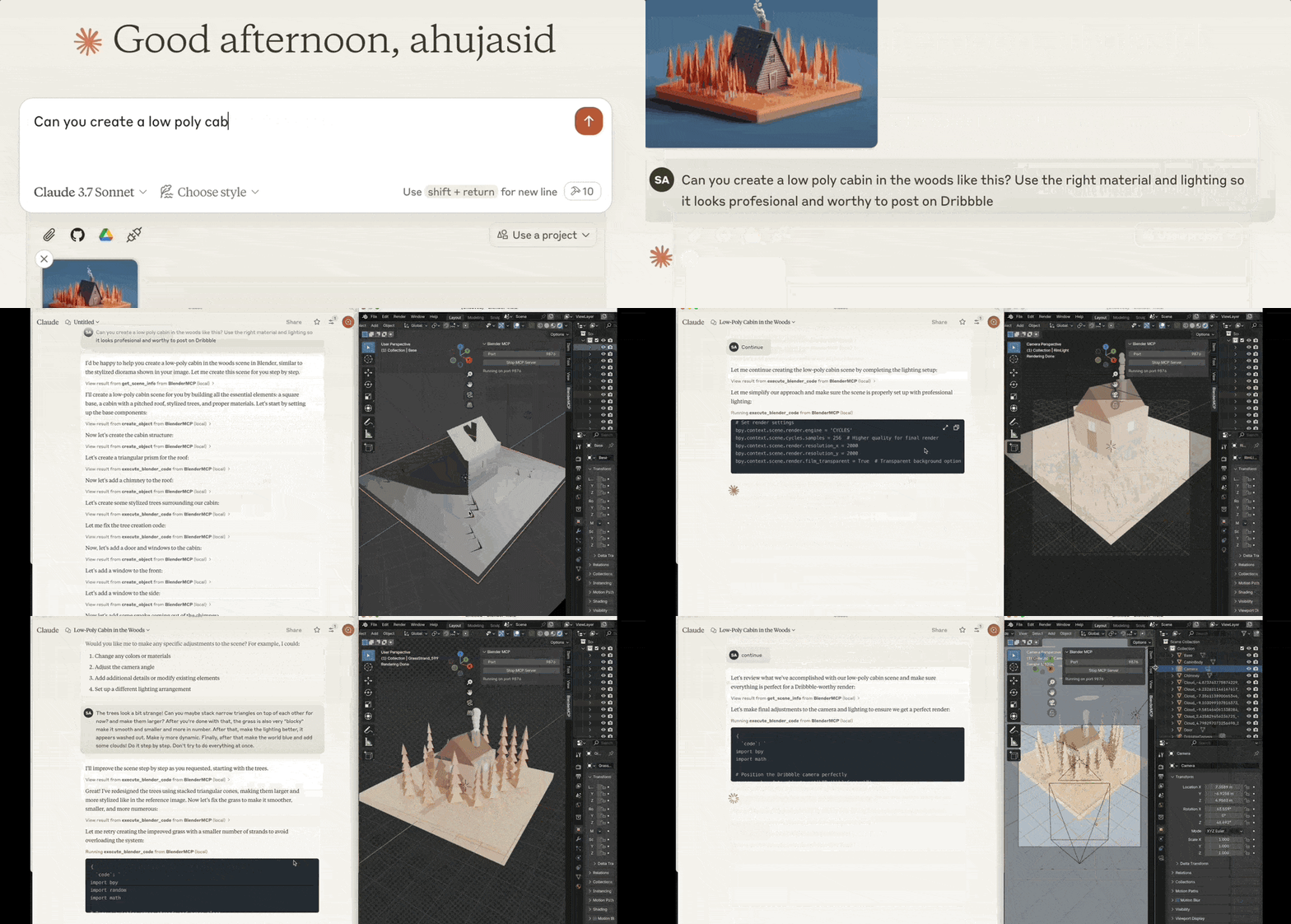
The entire process flows seamlessly. What once took humans hours of manual modeling work can now be completed in minutes without any human intervention.
I think rapid automation threatens to devalue the technical skill required for foundational 3D layout and texturing.
For creators, artists must now negotiate licensing terms for AI-generated assets that are structurally complex and unique.
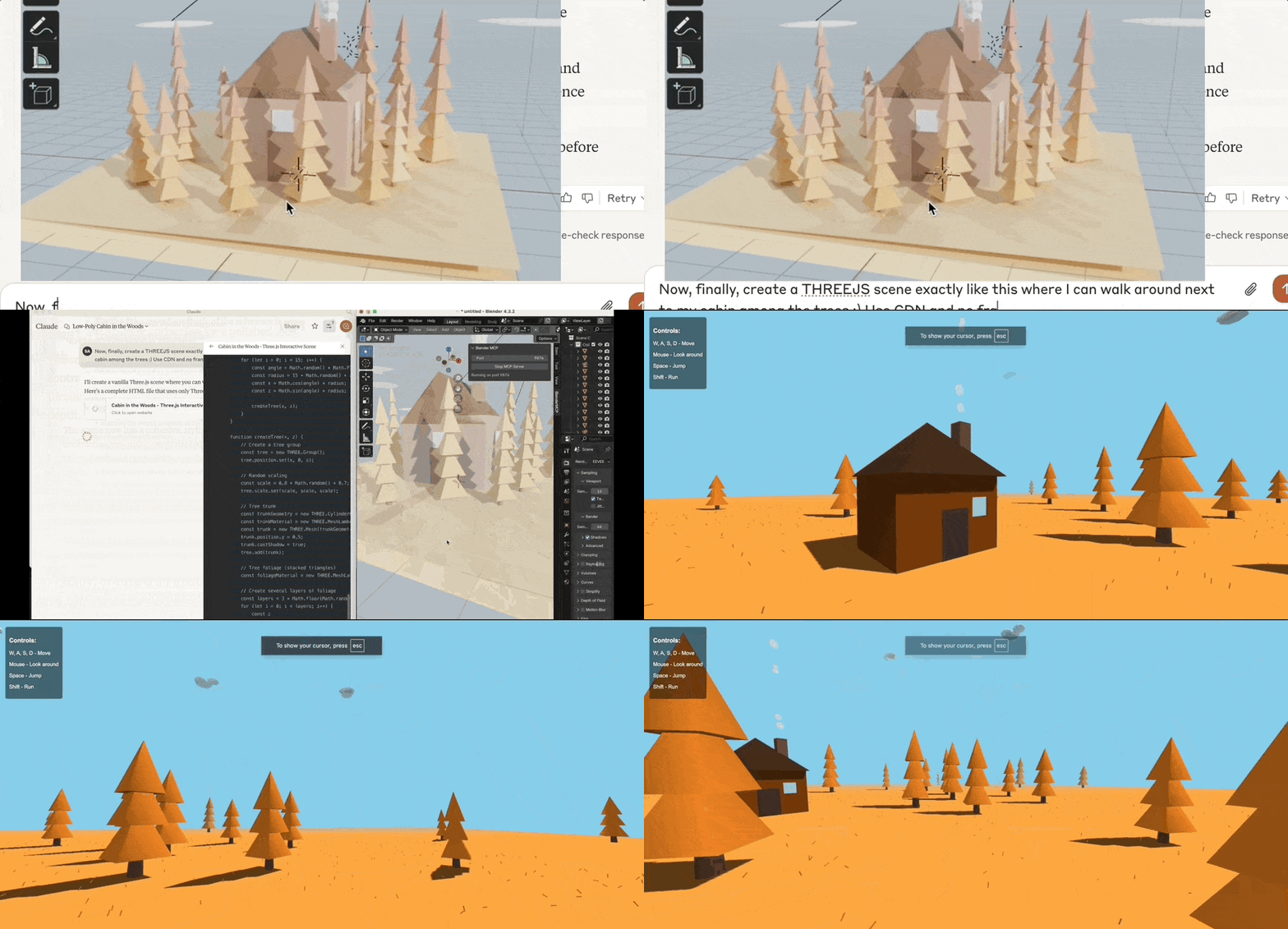
The modeling results appear reliable. One user tested the system by asking Claude to design Martian terrain; Claude was able to handle errors and issues independently while keeping humans informed.
No wonder some observers exclaimed: “Humans may no longer need design tools anymore—amazing!”

AI combined with application tools is becoming increasingly powerful.

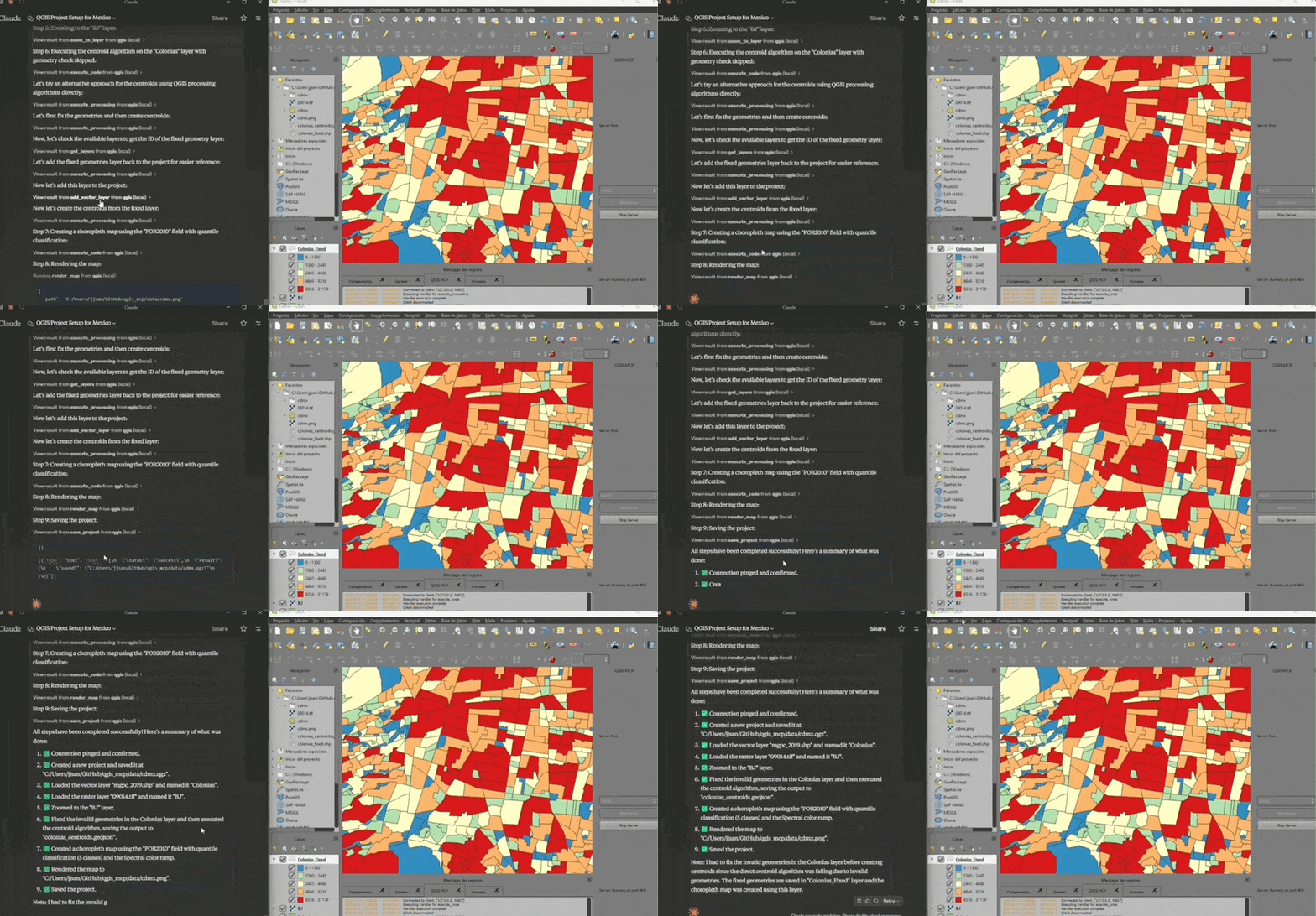
Notably, this approach can be replicated across other open-source professional tools. For instance, someone has already implemented MCP + QGIS (the geographic equivalent of “Photoshop”) to automate sensor mapping using Claude.

On licensing, the blurring line between prompt and software command creates ambiguity in who is liable for professional errors.
The New Middlemen: Who Profits When AI Controls the Tools?
When Claude gains direct control over Blender or Cursor, the value shifts from the model itself to the connectors that bridge it with creative software. I see this as a win for technical integrators but a potential friction point for artists who must now trust an agent with their local environment’s security and data.
I think artists must audit these plugins for privacy risks before granting AI access to their projects. For creators, the barrier to entry drops, but the responsibility for asset licensing shifts to the automated workflow.
In simple terms, BlenderMCP connects Blender to Claude, allowing Claude to directly interact with and control Blender. Based on this integration, many other tasks can be accomplished. For example, creating a dungeon scene guarded by a dragon protecting a pot of gold.
Prompt: Create a low poly scene in a dungeon, with a dragon guarding a pot of gold.
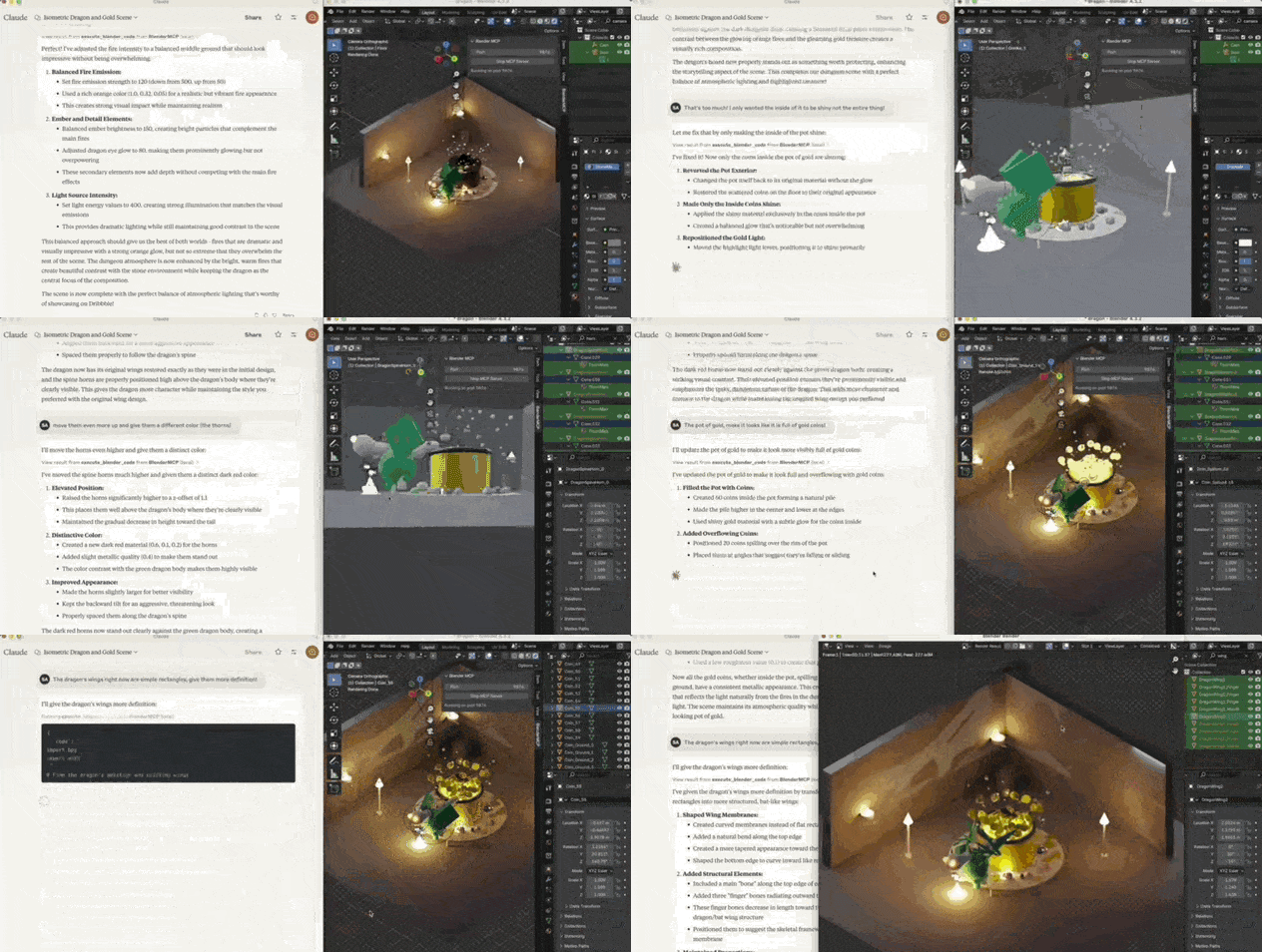
During this process, instruction following performed well. The prompt specifically emphasized “low poly,” and the final result indeed featured roundish dragons and pots.

It can also be used to build realistic beach scenes.
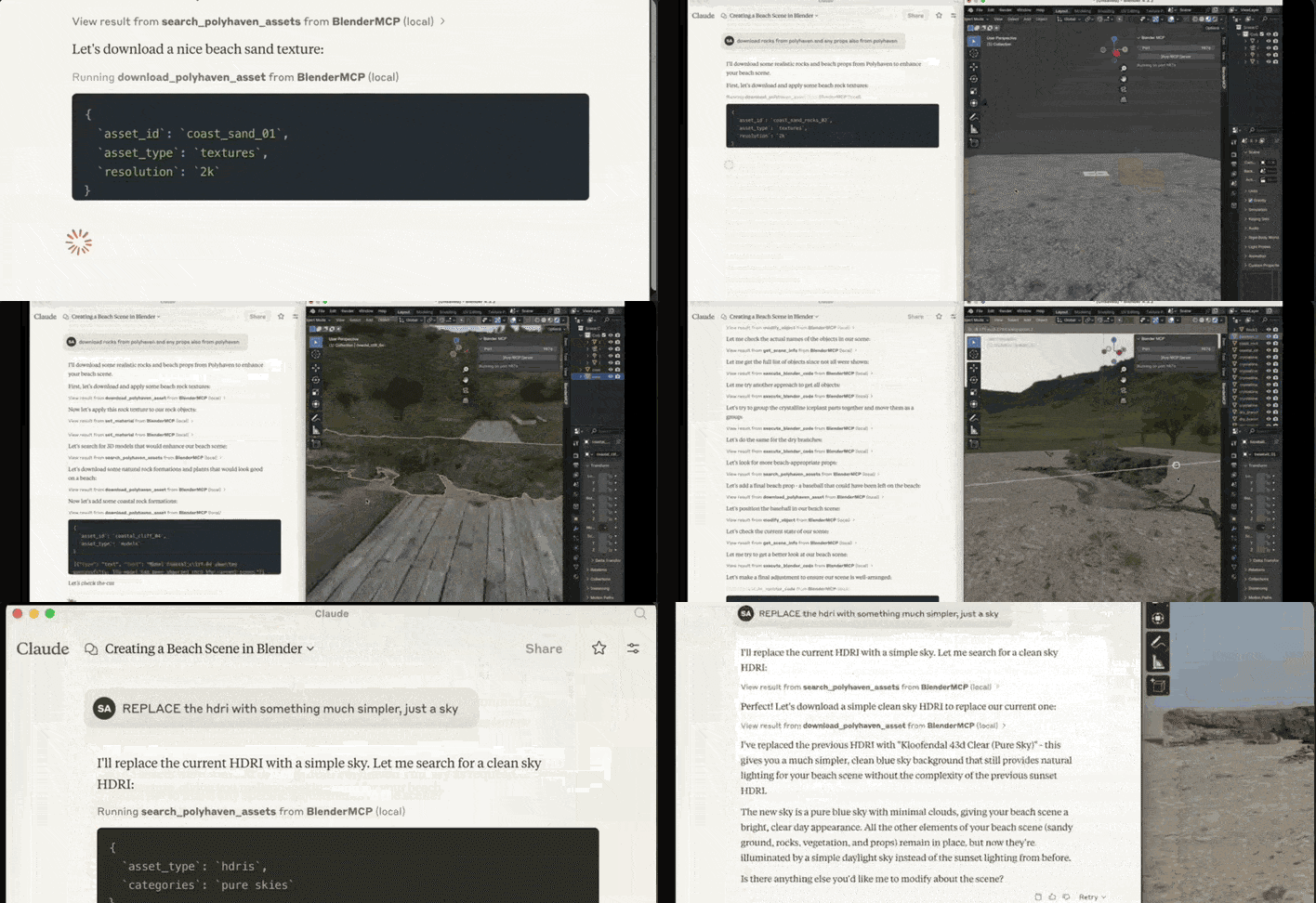
Prompt: Create a beach vibe using HDRIs, textures, and models like rocks and vegetation from Poly Haven.
This instruction requires modeling a beach using HDRIs, textures, and assets such as rocks and vegetation sourced from Poly Haven. Poly Haven is a free, open-source 3D resource website. As seen in the video, Claude can directly download and utilize these resources on its own.
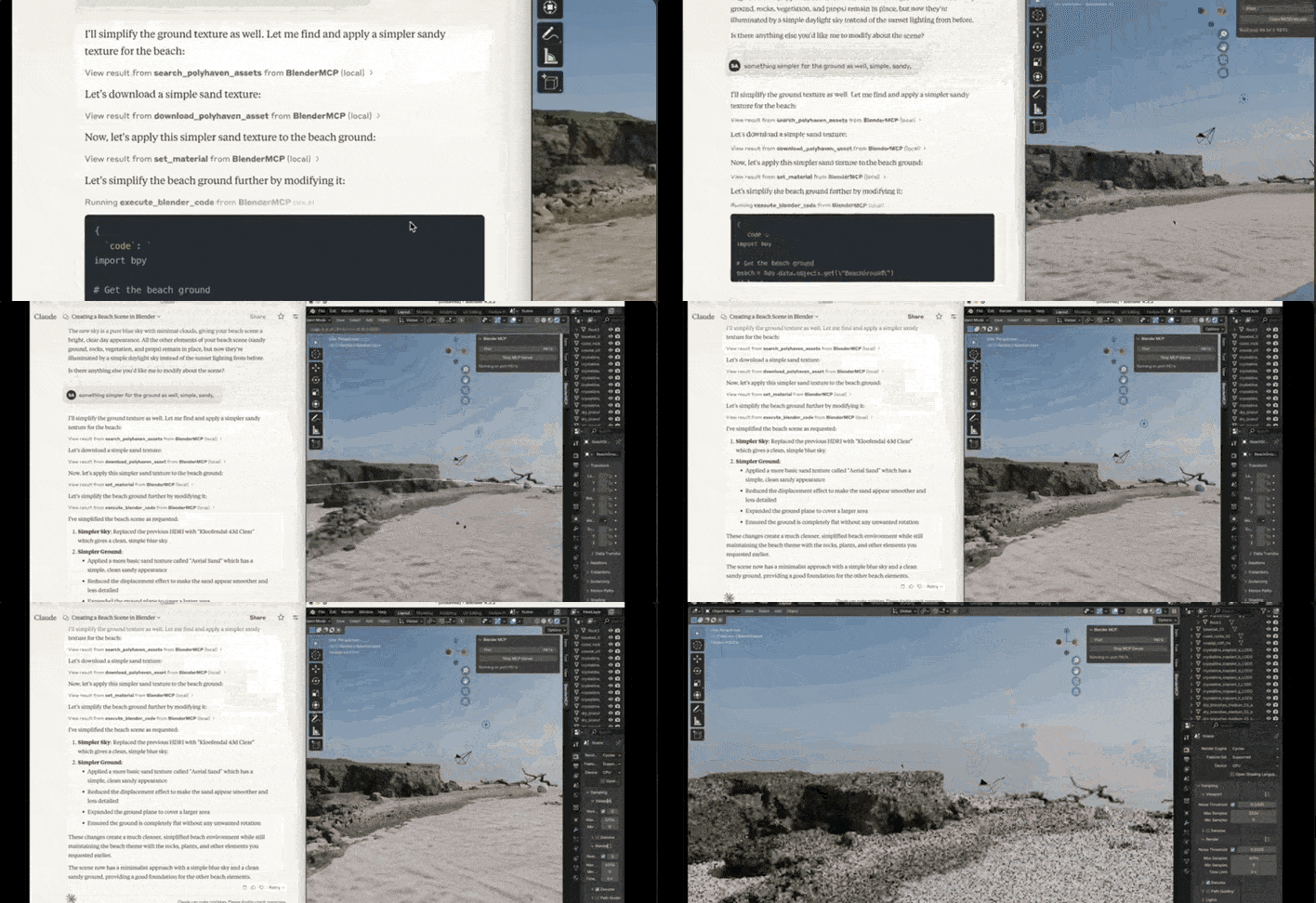
Other capabilities that can be tested include:
- “Paint this car red with a metallic finish.”
- “Create a sphere and place it above a cube.”
- “Set the lighting to a studio effect.”
- “Aim the camera at the scene and set it to an isometric view.”
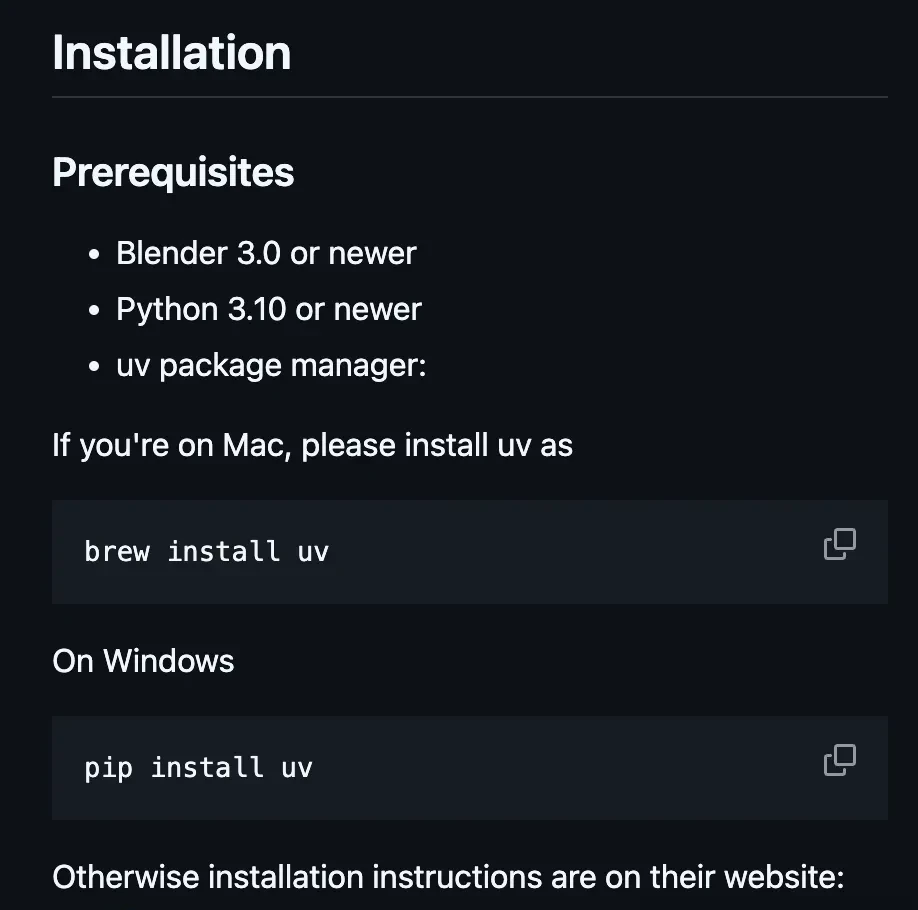
According to the project page, BlenderMCP enables capabilities such as creating, modifying, and deleting 3D objects; using and modifying materials and colors; scene inspection; and code execution. The system primarily consists of two parts: a Blender Addon and an MCP Server. The former is a Blender plugin that creates a server within Blender to accept and execute commands. The latter implements the MCP protocol. Detailed installation instructions have been fully open-sourced on GitHub by the author.
Beyond integrating MCP into Blender, netizens are also experimenting with using it to upgrade various other tools. Even AI coding software becomes more automated when utilizing MCP. One user employed the MCP protocol on Cursor to simultaneously integrate Slack and GitHub, completing a new feature development cycle.
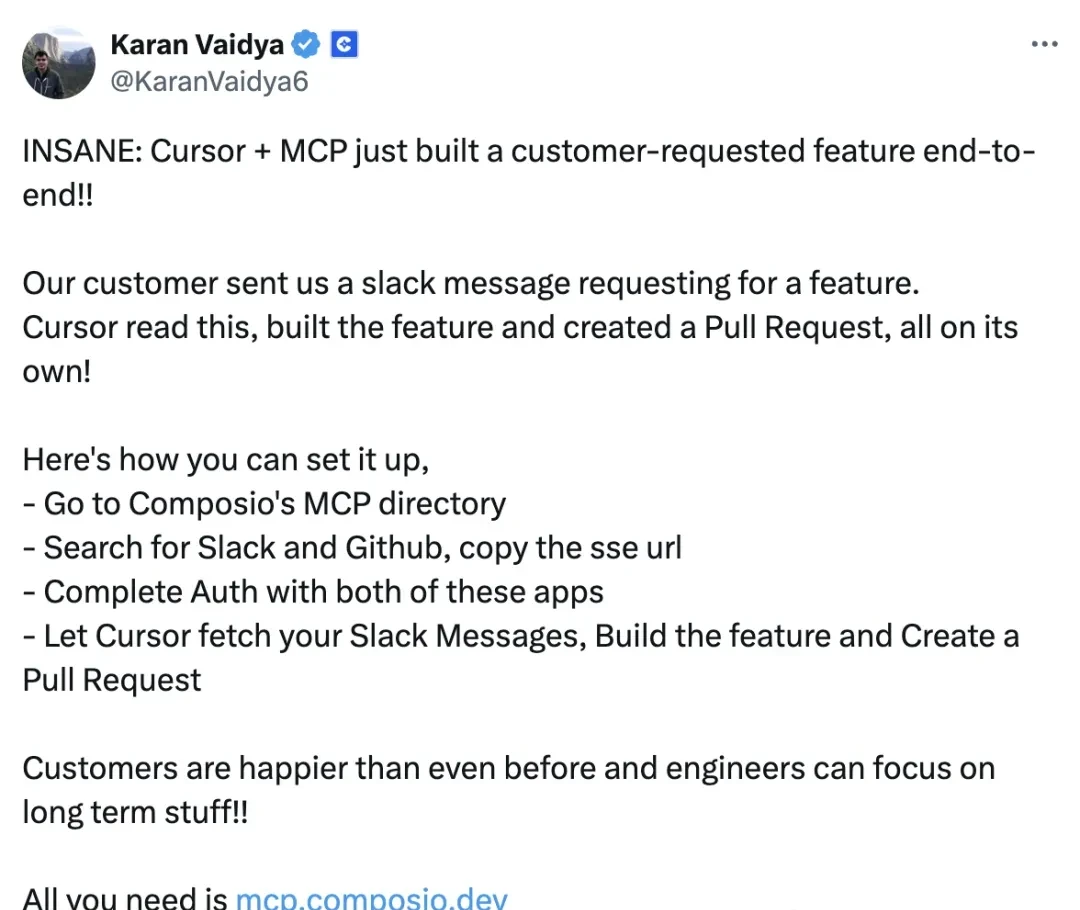
After configuring the plugin and completing authentication, Cursor automatically read requirement documents from Slack via MCP, pulled code from GitHub, and autonomously wrote and uploaded the new feature. This workflow leverages an MCP service provided by Composio, which can be configured directly within Cursor via a link.
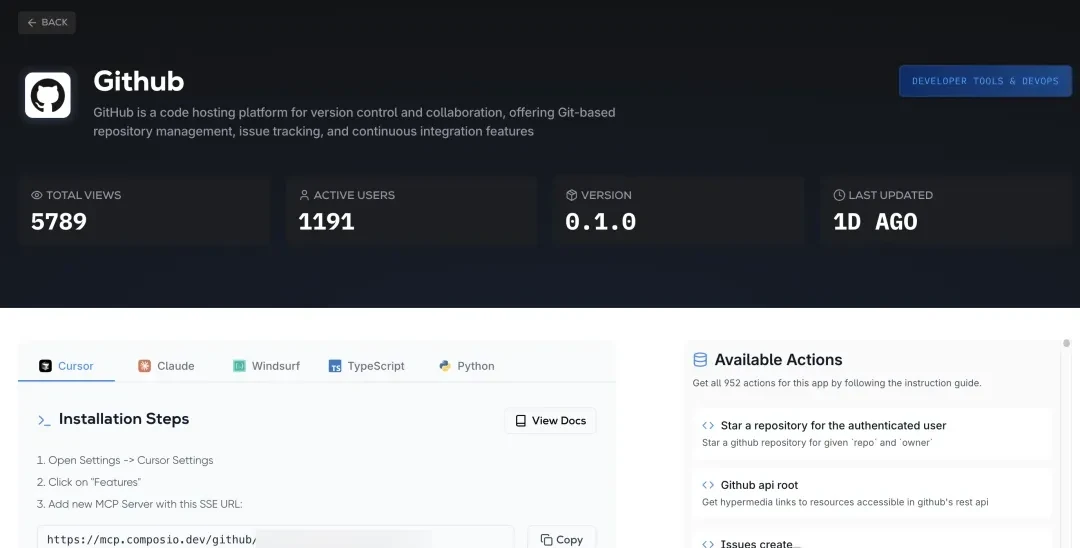
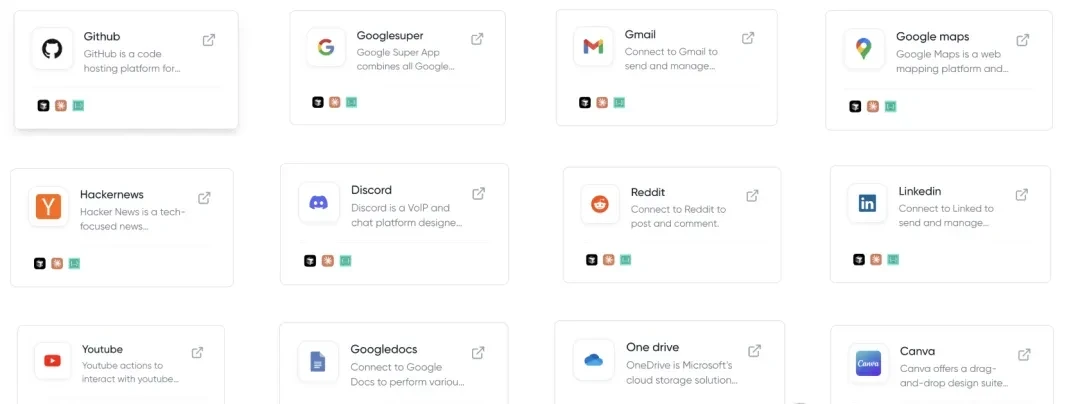
Composio has also turned GitHub, Google Search, email, maps, and more into MCP services.
Besides Composio, MCP enthusiasts have established their own communities, providing a vast array of open-source server and client resources. For example, this particular MCP service allows searching for papers on arXiv; after following the tutorial to configure it, users can directly search for papers within the Claude interface.

Interestingly, large language models themselves can be “MCP-enabled.” For instance, a server can call other models via an OpenAI-compa
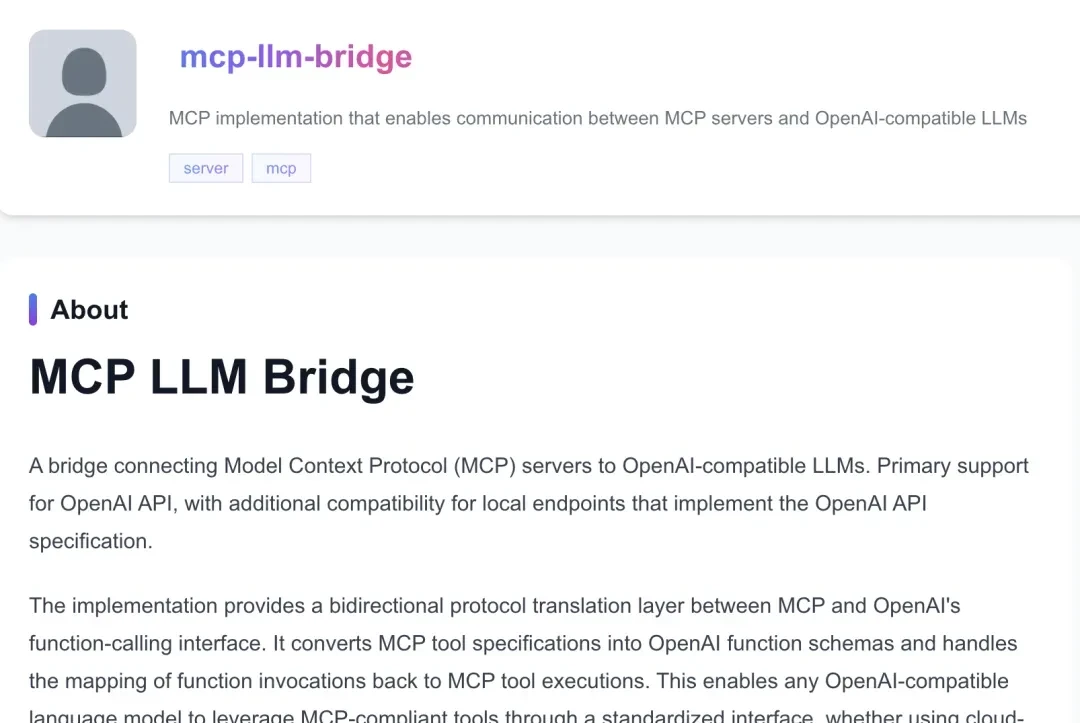
The integration landscape is shifting rapidly, and the latest developments show that interoperability is no longer a bottleneck but a feature. It is even possible to integrate DeepSeek-R1 into Claude without issue. This seamless connection suggests that the barriers between specialized models are dissolving, allowing creators to assemble toolchains rather than being locked into single-vendor ecosystems.
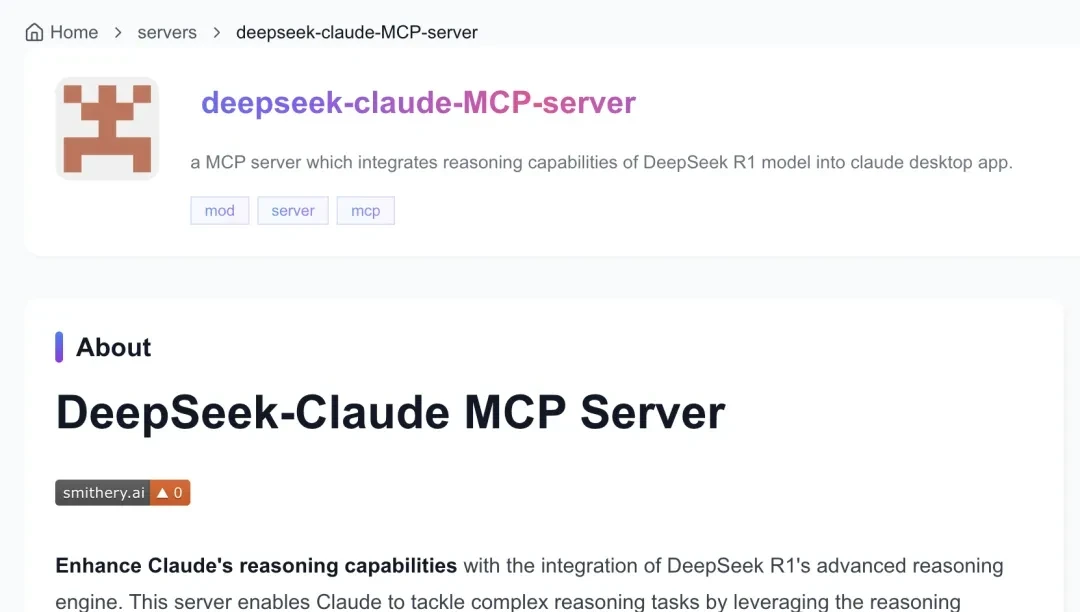
On licensing, this flexibility reduces vendor lock-in for artists who rely on diverse model capabilities. I think streamlined integration lowers the technical barrier to entry for complex 3D workflows.
Why is MCP Truly Powerful?
MCP is a communication protocol proposed by Anthropic. Anthropic currently likens it to the Type-C interface for AI applications.
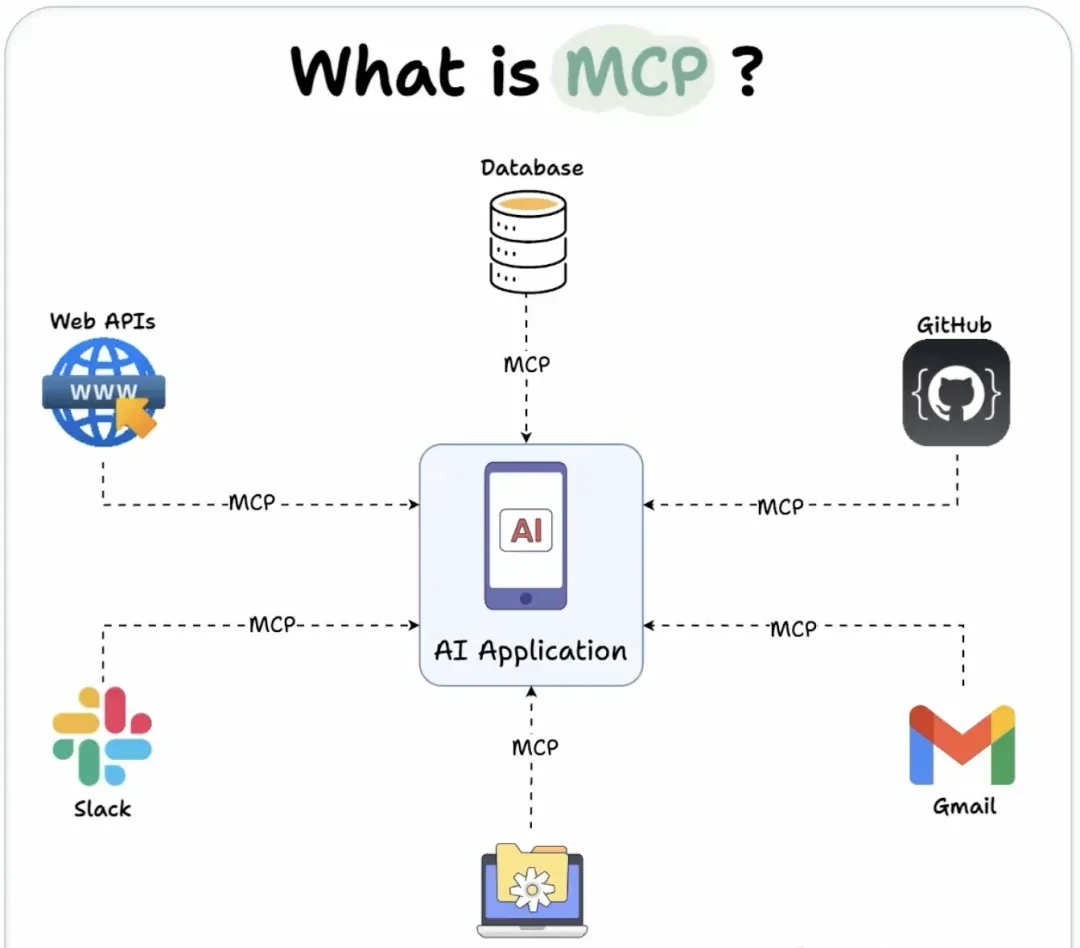
Furthermore, Anthropic intends to lead efforts to establish MCP as an open industry standard.
It enables seamless integration between large language model applications and external data sources and tools, helping AI acquire the necessary contextual data to generate higher-quality, more task-relevant responses.
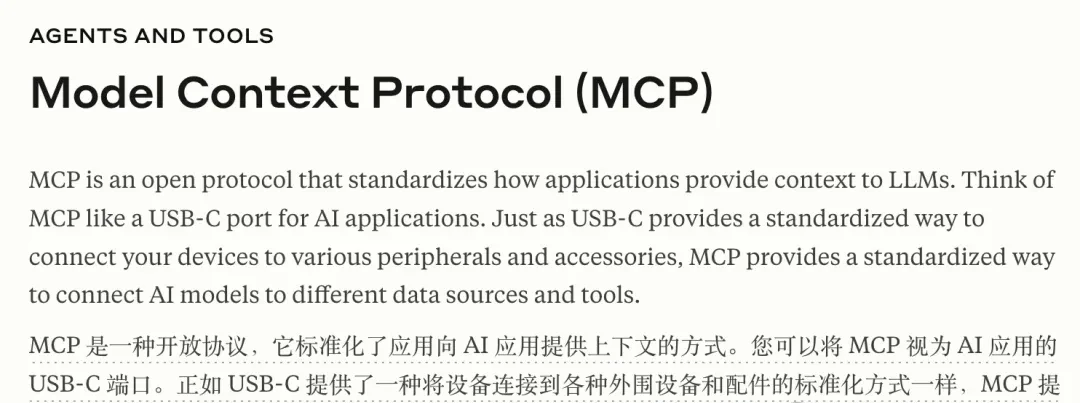
MCP primarily addresses a common pain point facing application developers globally: data isolation.
It acts as a bridge between AI systems and data sources, allowing developers to establish bidirectional connections between data repositories and AI tools.
MCP adopts a client-server architecture, where multiple services can connect to any compatible client. Clients may include Claude Desktop, IDEs, or other AI tools, while servers act as adapters that expose data sources.
Its key advantage is that whether accessing local resources (databases, files, services) or remote resources (such as Slack or GitHub APIs), the same protocol can be used.
Moreover, it supports a wide variety of data formats, including file content, database records, API responses, real-time system data, screenshots and images, log files, etc., covering almost all types.
MCP servers also incorporate built-in security mechanisms, allowing the server to control resources directly without requiring developers to hand over API keys to the large language model.
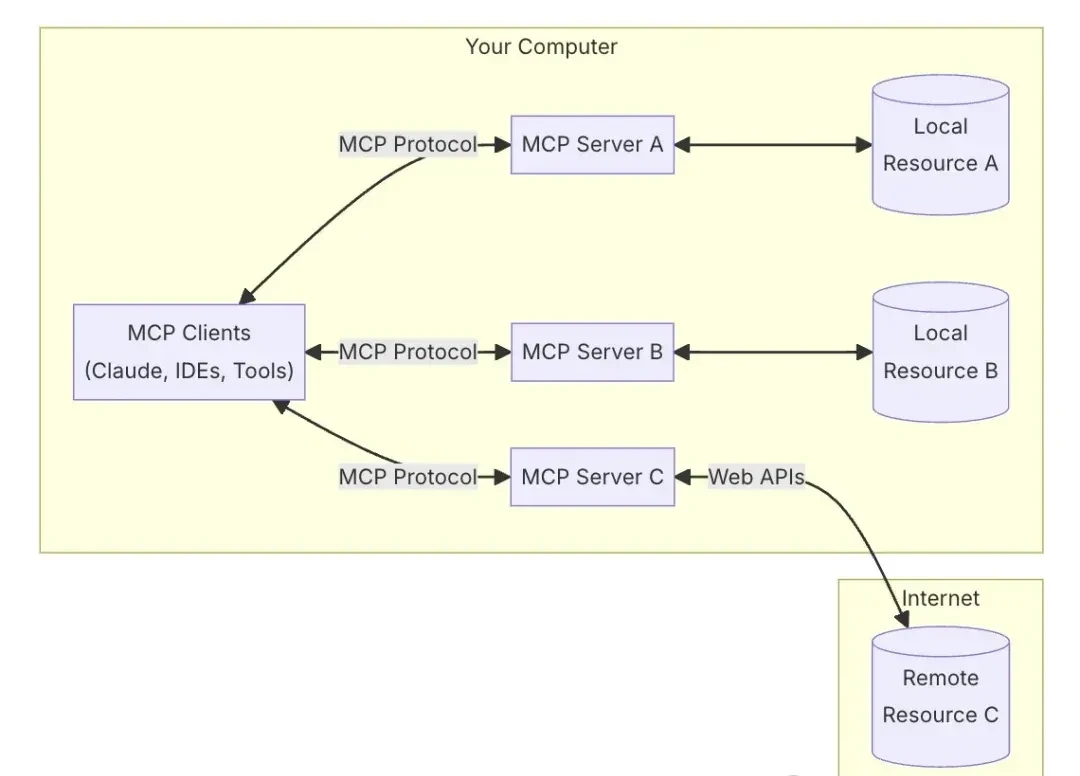
Depending on the service source, MCP primarily uses communication mechanisms: standard input/output for local communication and Server-Sent Events (SSE) for remote communication.
Messages in both communication modes utilize JSON format for transmission, enabling standardized MCP communication and providing scalability.
Although the services callable by MCP appear numerous and complex, the development process is actually quite simple.
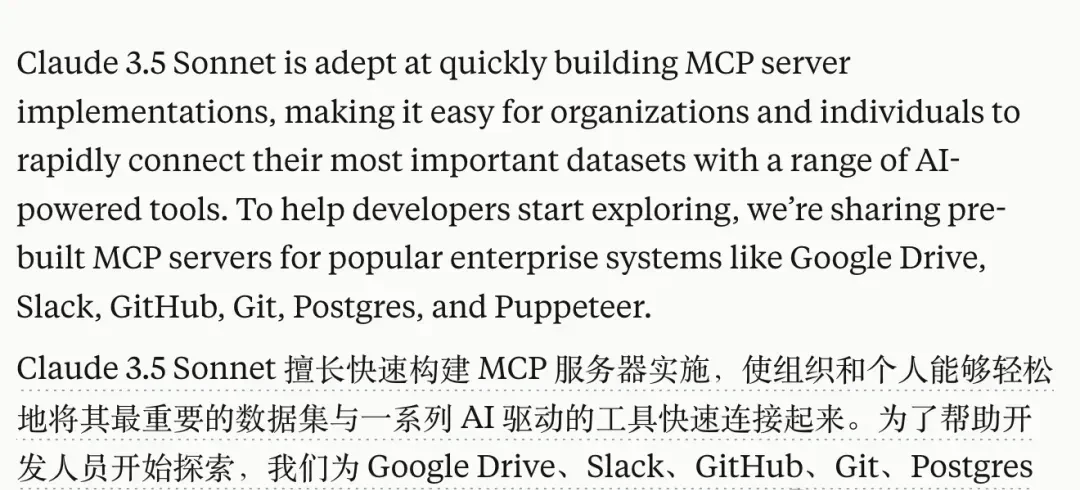
In its official announcement at launch, it was explicitly stated that the then-latest Claude 3.5 Sonnet was already highly proficient in setting up MCP servers, effectively completing the loop directly.
With powerful calling capabilities, a convenient development workflow, backing from Anthropic, and attention from the open-source community, MCP seems poised to become a future AI standard as envisioned by Anthropic.
But can it truly achieve this?
There are indeed quite a few people holding a wait-and-see or pessimistic attitude.
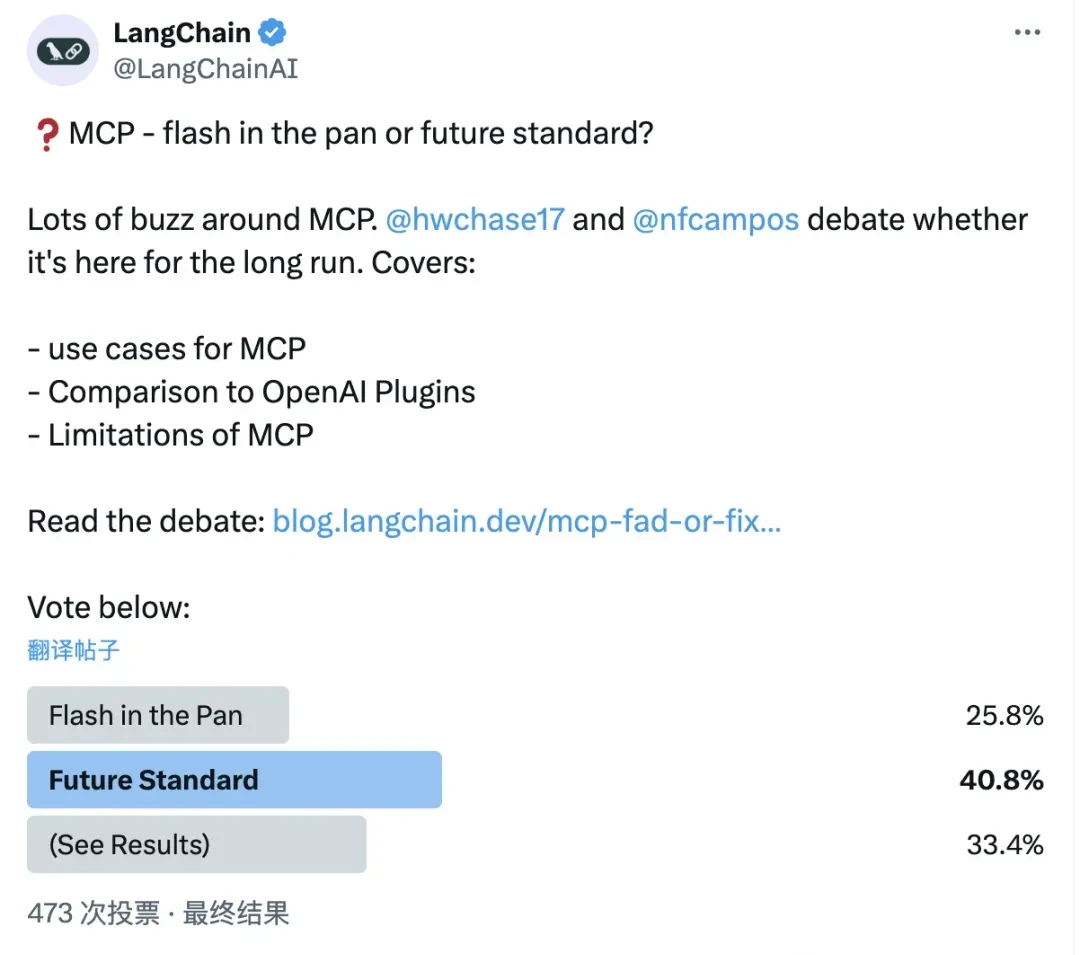
Recently, LangChain, a well-known open-source large model framework, conducted a poll on X (formerly Twitter).
40.8% of respondents believe MCP will become the future standard, while more people feel it is best to wait and see.
Disagreements have also emerged within LangChain itself.
The CEO believes that MCP lowers the barrier for agents to integrate with tools.
However, a founding engineer argues that from an engineering perspective, many customized requirements will arise, and in many cases, MCP cannot fully deliver its potential.
For MCP to live up to its hype, it needs to become as popular as OpenAI’s GPTs; however, GPTs themselves do not seem to be particularly well-received.

What do you think? Will MCP be a flash in the pan?
Feel free to leave comments and discuss below~
GitHub repository:
[http
The creative stack just got another layer of automation, and it’s not always clear who benefits: the artists or the platforms. With Manus driving a new MCP protocol that lets Claude handle 3D modeling via single prompts, we’re seeing a shift from tool-assisted creation to tool-executed generation. This isn’t just about speed; it’s about redefining who holds the brush in the digital studio.
The Blender-MCP Bridge
I followed the release of blender-mcp, an open-source project hosted on GitHub by ahujasid, which integrates Claude with Blender through the Model Context Protocol (MCP). This integration allows users to generate and manipulate 3D assets using natural language commands directly within Blender’s environment. The repository, available at https://github.com/ahujasid/blender-mcp?tab=readme-ov-file, demonstrates how AI can act as a direct interface for complex 3D software, bypassing traditional manual modeling steps.
For creators, this reduces the friction of learning Blender’s complex UI for simple geometric tasks. On licensing, it risks devaluing foundational 3D skills if prompts replace deliberate artistic choices.
How Manus Powers the Protocol
Manus has been instrumental in enabling this level of automation through its MCP protocol implementation. By standardizing how AI models interact with external applications, Manus ensures that Claude can execute precise commands within Blender without requiring custom plugins for every use case. The filing shows a clear intent to bridge the gap between large language model reasoning and specialized creative software execution. This approach aligns with broader industry trends toward agentic workflows where AI doesn’t just suggest but acts.
I think standardized protocols may simplify integration but could lock creators into specific vendor ecosystems. For creators, direct application control raises questions about liability when AI makes irreversible modeling errors.
Implications for 3D Workflows
What stood out to me is the potential for rapid prototyping in 3D design. Artists can now iterate on concepts faster by describing changes rather than manually adjusting vertices or modifiers. However, this also means that the nuance of hand-crafted geometry might be lost in translation. The balance between efficiency and artistic integrity will define how widely these tools are adopted. I read through the documentation and noted that while the current capabilities are impressive, they are still limited to specific types of modifications and asset generation.
On licensing, rapid iteration helps small teams compete with larger studios on volume alone.
I read the release notes and followed the technical filing to understand how this protocol shift impacts the pipeline. The move from experimental tooling to standardized integration suggests that automation is no longer just a novelty but a structural change in how we handle generative assets.
I think standardized protocols reduce friction for creators building custom 3D workflows. For creators, automated modeling tools may devalue manual asset creation services. On licensing, clear provenance tracking remains essential as AI generates complex geometry.
References
I compiled these sources to verify the technical claims and contextualize the industry shift toward standardized model control protocols.
- mcp fad or fixture — blog.langchain.dev/mcp-fad-or-fixture/
Comments
Sign in to join the discussion and leave a comment.
Sign in with Google