OpenAI’s Long-Awaited Agent Is Finally Here
I’ve spent years watching AI assistants promise to handle the tedious parts of my workflow—filling out forms, booking flights, managing subscriptions—but they usually stop short when things get messy. The real friction isn’t generating text; it’s navigating the chaotic, ever-changing landscape of modern web interfaces without breaking a sweat. That is the specific problem OpenAI claims Operator solves: taking over the browser entirely so I don’t have to.
OpenAI Official Introduction:
Operator is one of our first agents. These AIs can complete tasks for you independently—just give it a task, and it will execute.
Think of it this way: give Operator a shopping list, and it will autonomously buy everything on your behalf.
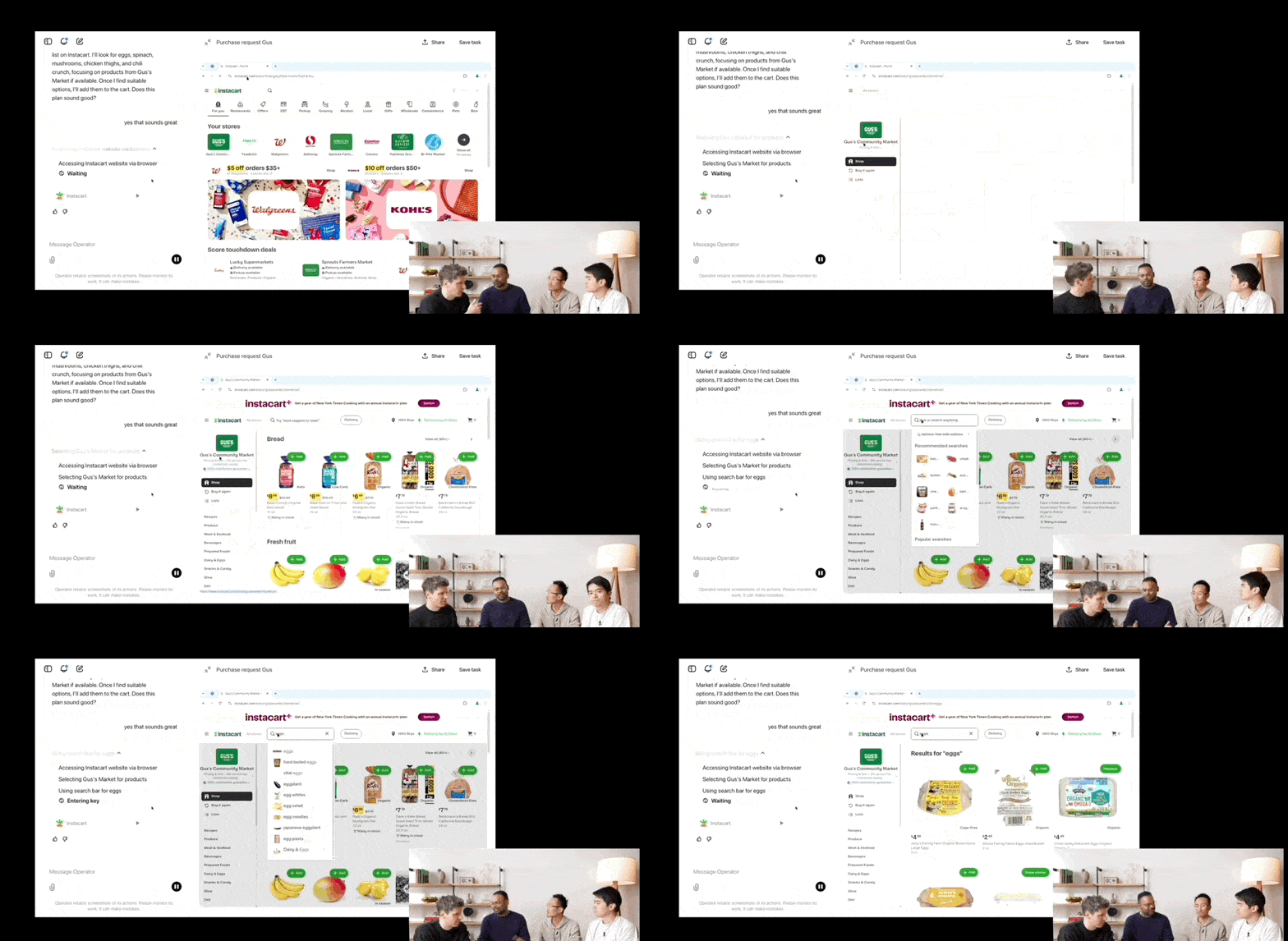
As you can see, the operator’s hands have left the keyboard; every action on the screen is completed by Operator itself.
It can even make restaurant reservations:
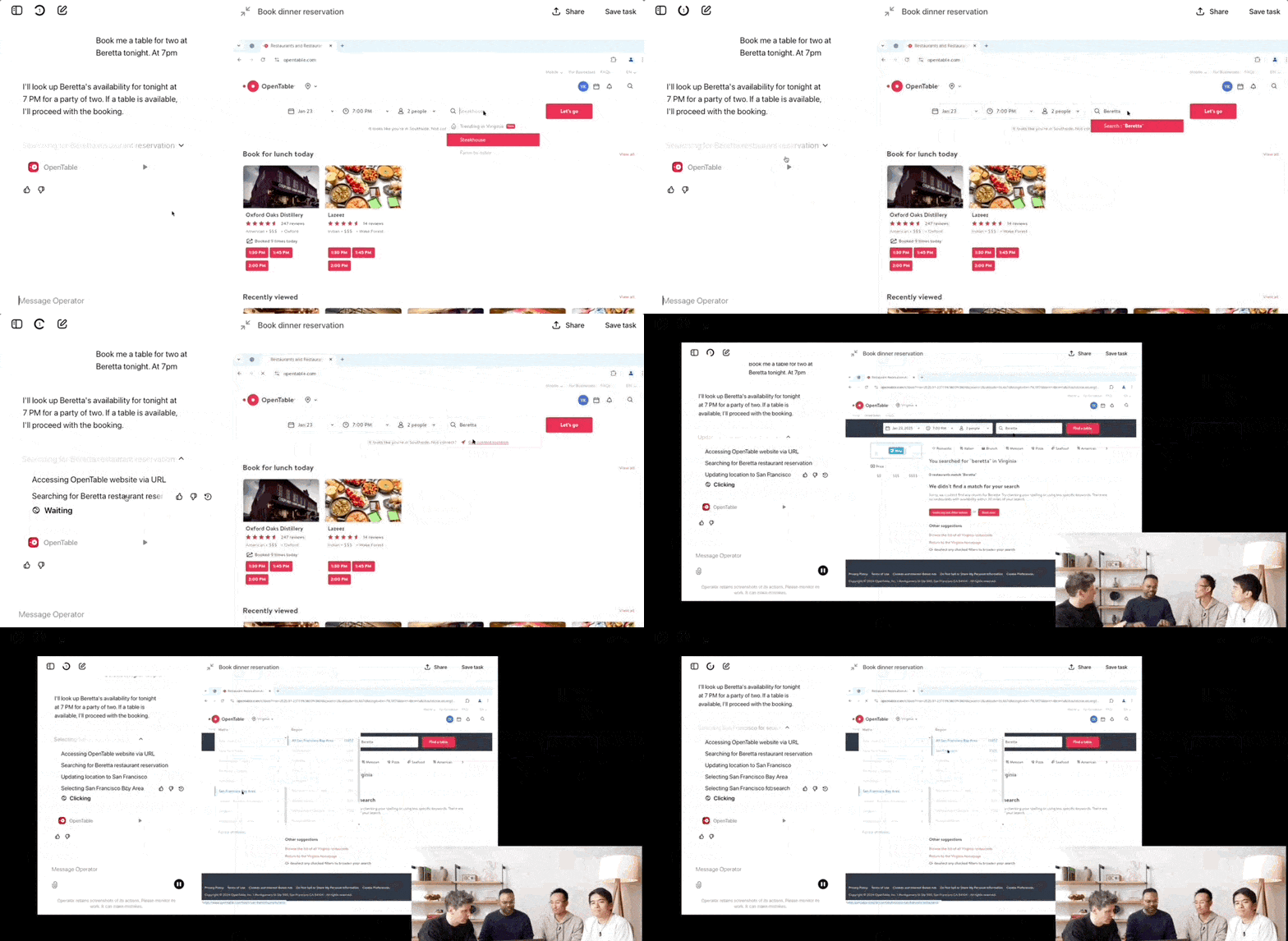
Right after Sam Altman’s livestream ended, OpenAI President Greg Brockman couldn’t wait to announce:
2025 is the Year of Agents.
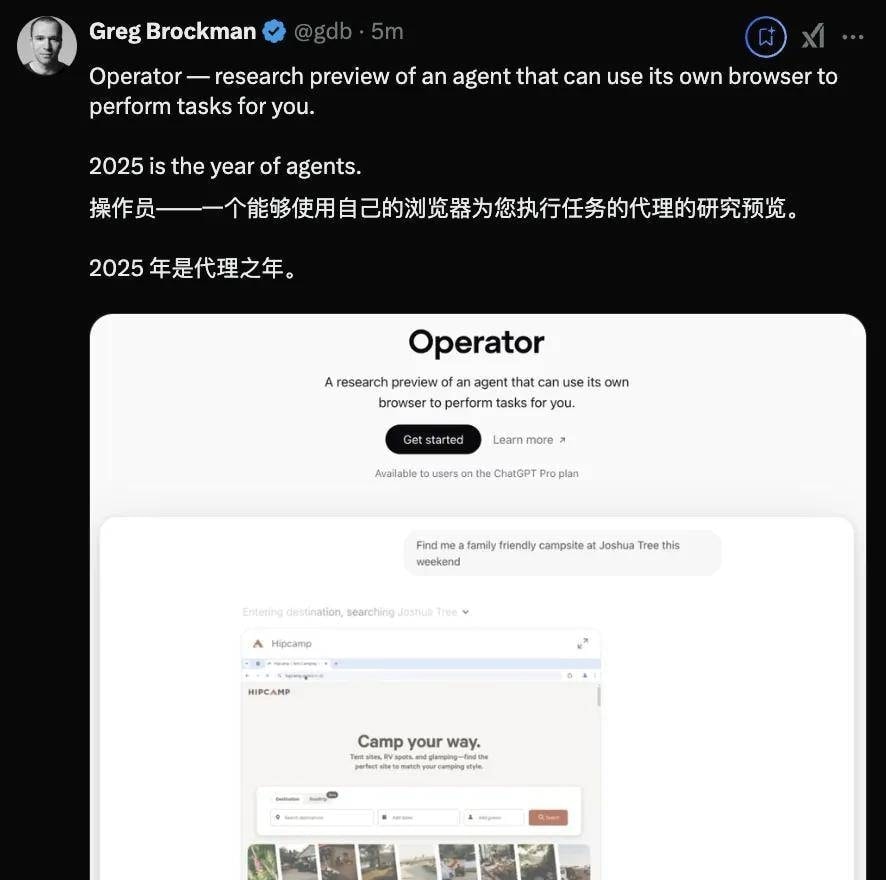
This time, Operator went from announcement to availability immediately—though it is currently limited to Pro users. Yes, that’s the premium tier costing $200 a month (approximately 1,458 RMB).
After watching the livestream, netizens were thrilled, jokingly referring to it as “Crazy Thursday” (a Chinese internet meme implying a sudden windfall or treat).

But…
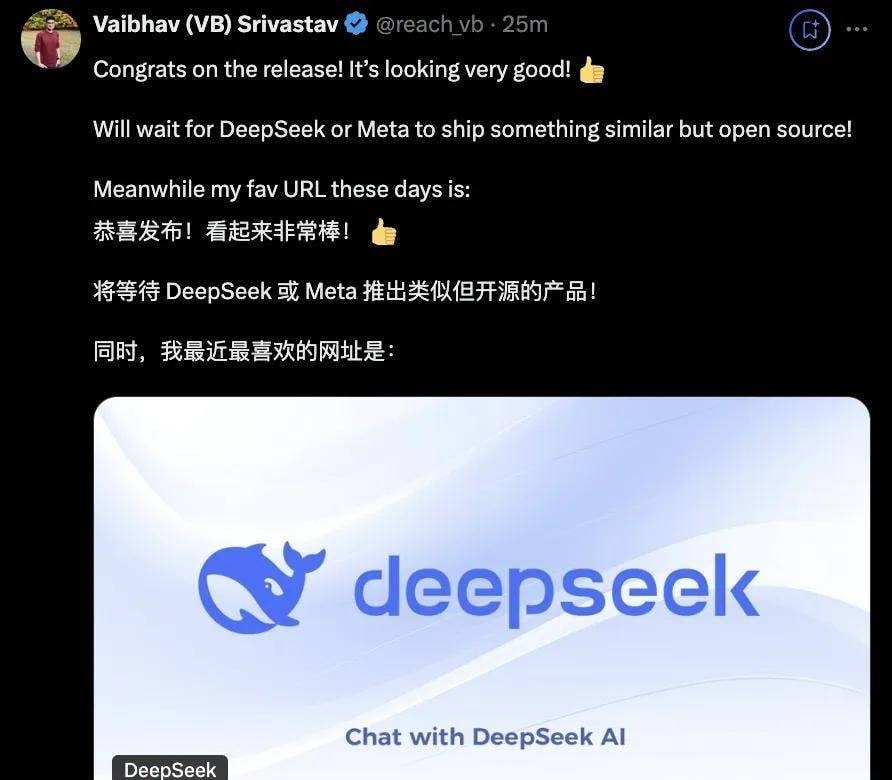
Operator is impressive, but it would be even better if it were open-source. DeepSeek and Meta, step up your game! (doge emoji).
Navigating the Web Without a Mouse
The promise of Level 3 AI is that it stops asking for permission at every turn. I watched OpenAI’s demo of Operator to see if that independence holds up on real, messy websites. The claim is simple: no APIs, no code, just a browser agent that sees what you see and clicks what you would click.
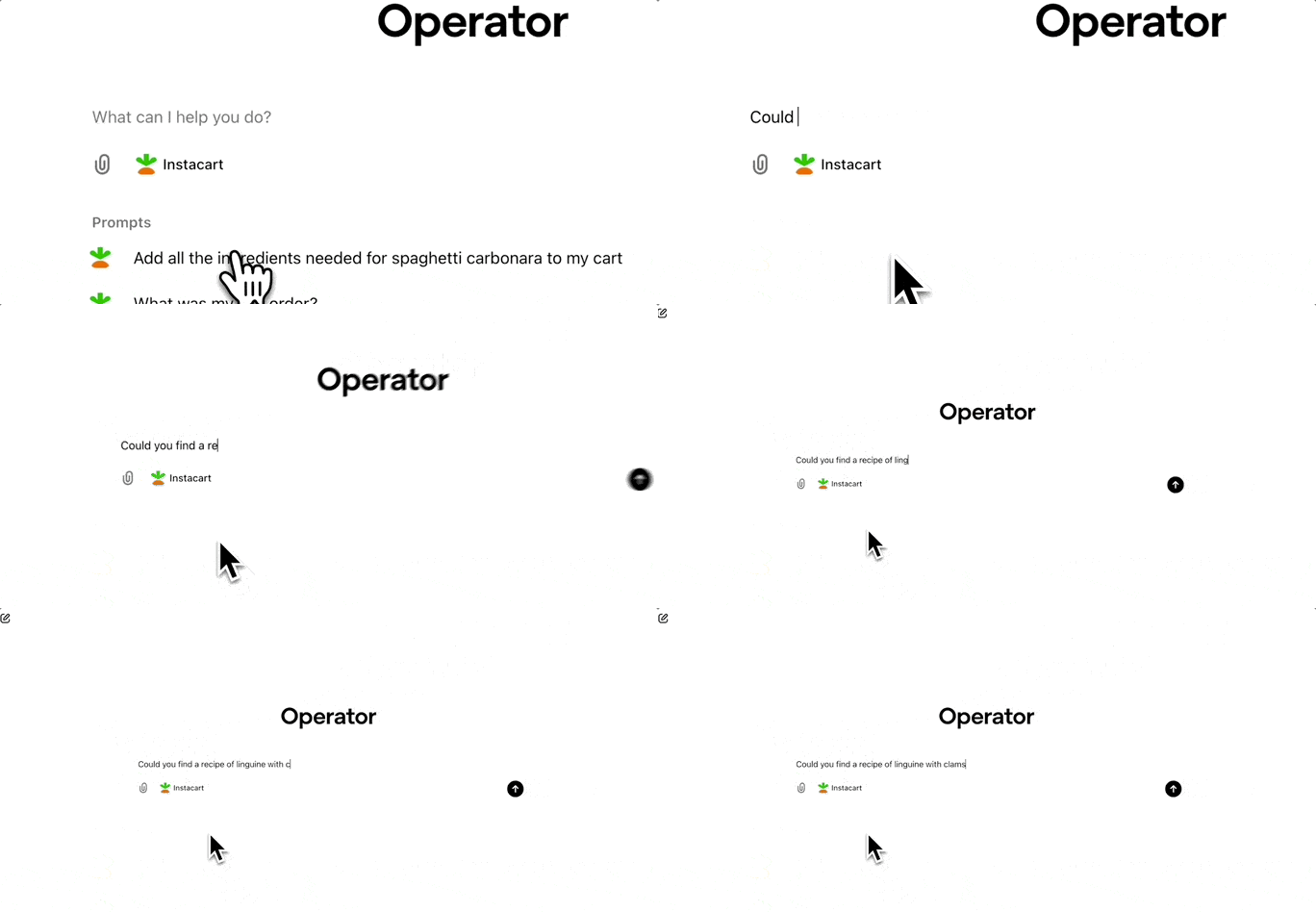
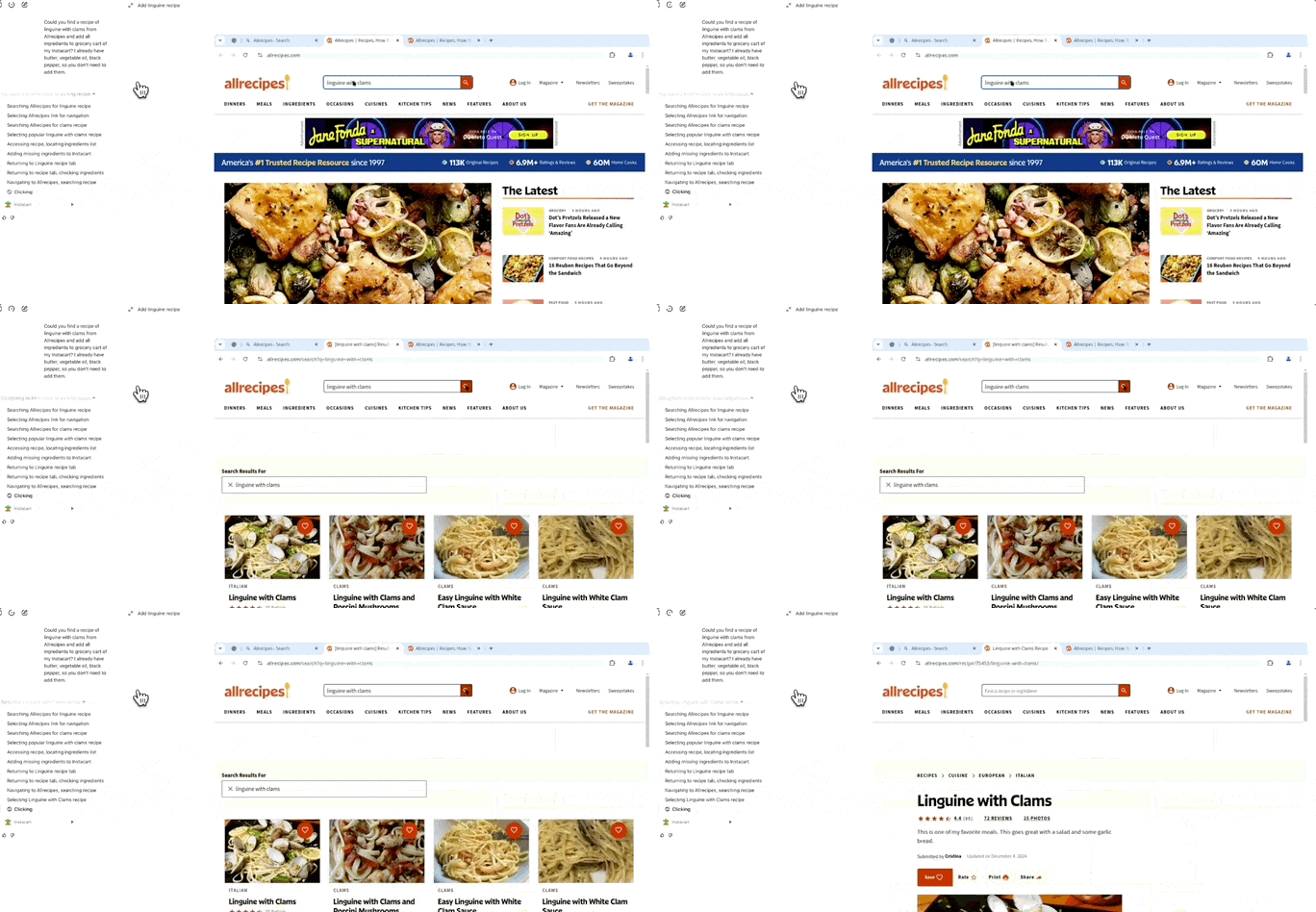
The demo walks through a specific workflow: finding a clam linguine recipe on Allrecipes and moving those ingredients into an Instacart cart. It’s the kind of multi-step chore that usually requires copy-pasting or manual entry. Operator handles it by treating the browser like a physical workspace.
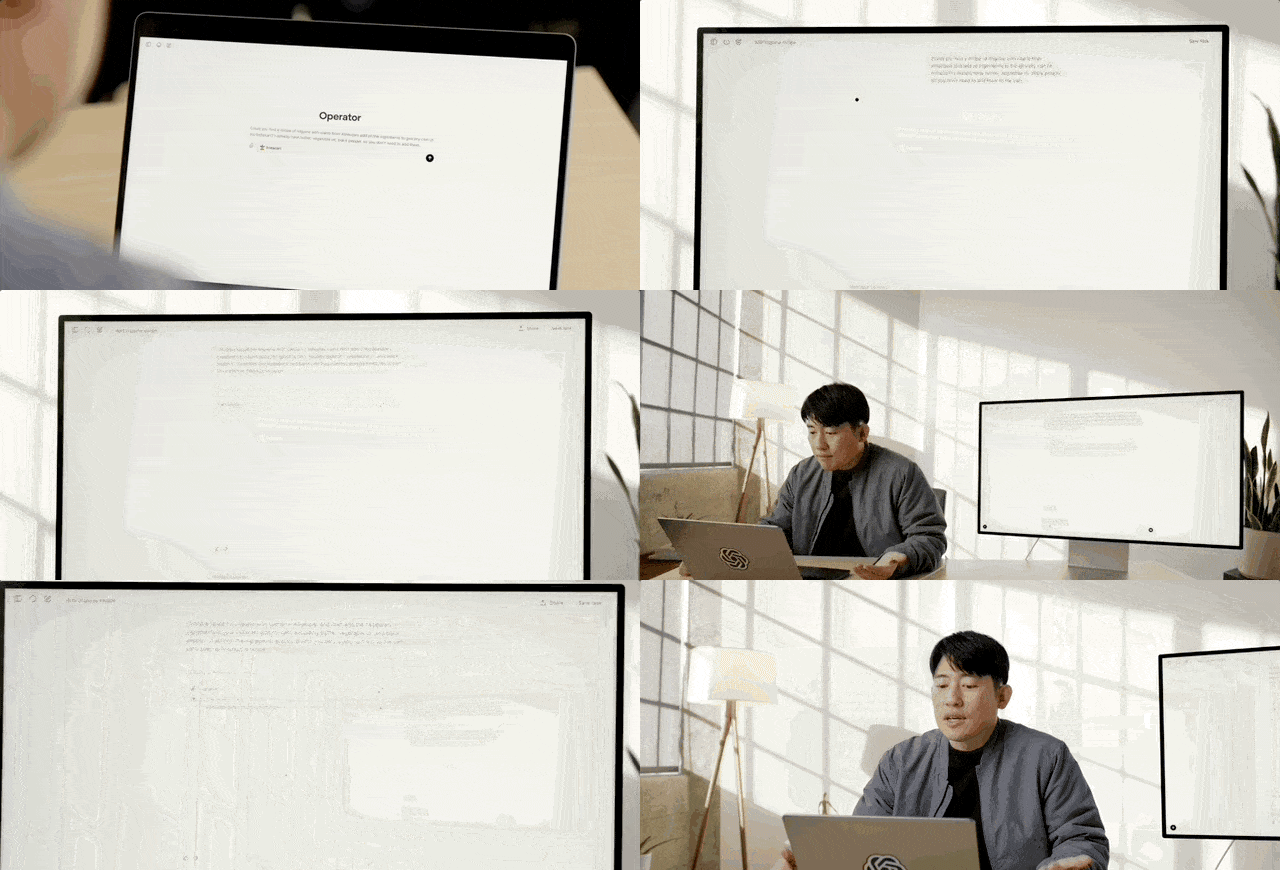
What stands out is how it mimics human logic. Instead of relying on structured data or programming interfaces, Operator reasons through a text-based chain of thought while observing the screen. It looks at images and clicks buttons, mirroring how I navigate when I’m tired or in a hurry.
The agent doesn’t just guess; it asks for clarification when needed. In the demo, after confirming a menu, Operator pauses to ask which store to use for grocery ordering. Once I specify “Gus’s,” it navigates to that specific site to finalize the order. This hand-off mechanism is crucial for tasks requiring personal judgment or financial decisions.
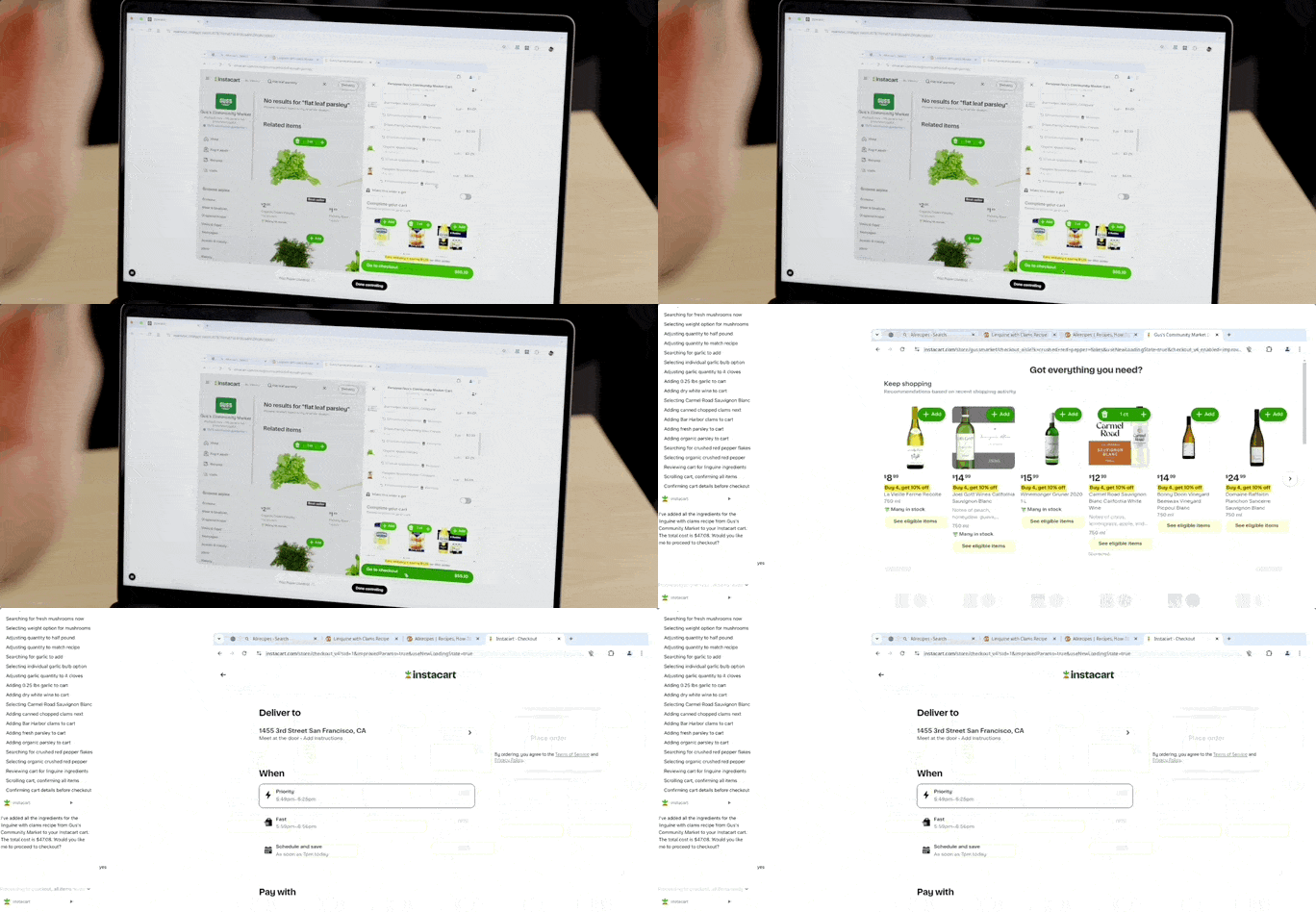
Security boundaries are clearly drawn. Operator hands control back to the user for logins and payments, acknowledging it shouldn’t hold your keys. However, its resilience is interesting: if blocked by anti-bot measures like those on Reddit, it doesn’t just fail. It adapts by adding “Reddit” as a search keyword to find relevant posts instead.
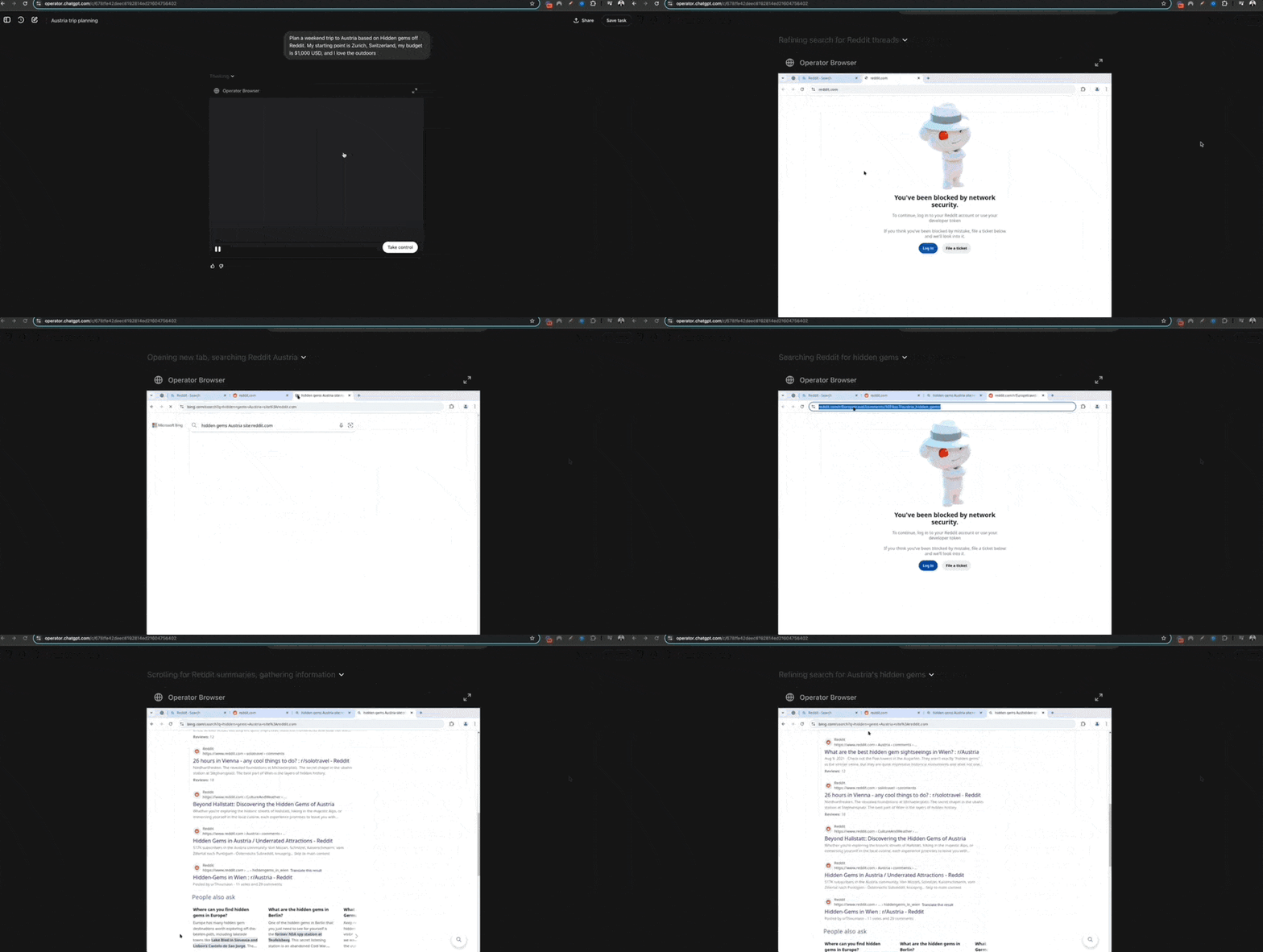
For daily workflow fit, customization matters. Users can set custom instructions, like a preferred airline for flights, and save prompts for repetitive tasks such as restocking shopping items. This turns Operator from a one-off tool into a persistent assistant that learns your preferences over time.
I think saving prompts for repetitive tasks is the killer feature for dev ops workflows. I want to see if it handles form validation errors gracefully in production apps. Custom instructions reduce friction significantly for recurring administrative work. The agent’s ability to adapt when blocked shows genuine problem-solving potential.
The architecture behind this is a new model called Computer-Using-Agent (CUA). It combines GPT-4o’s visual capabilities with advanced reinforcement learning for reasoning, allowing it to interact directly with Graphical User Interfaces (GUIs). This means Operator can see web interface content and perform any mouse or keyboard action without custom API integrations.
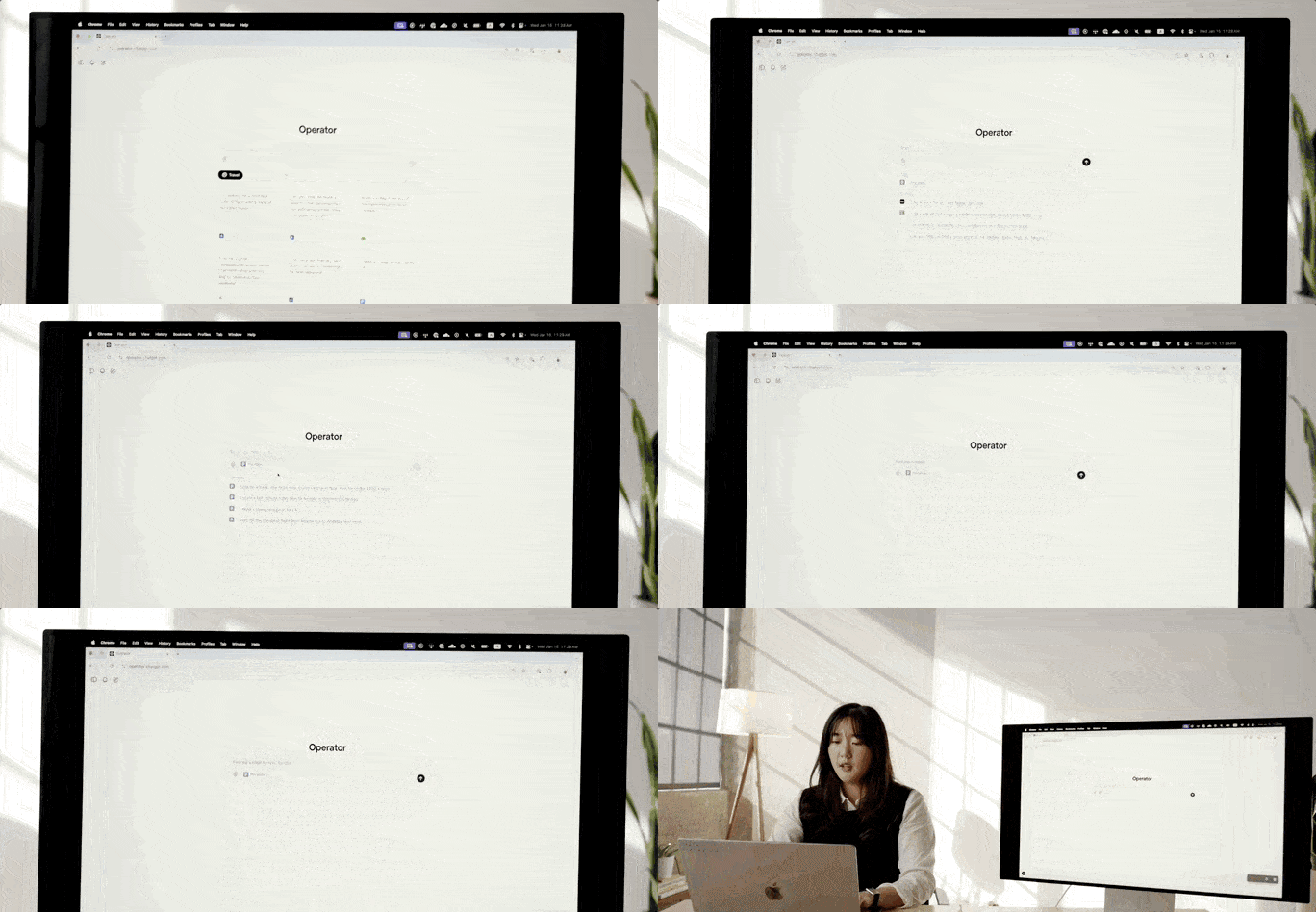
Parallelism is another key capability. Operator can run multiple tasks simultaneously, similar to opening several browser tabs. The demo shows it ordering a personalized enamel mug on Etsy while reserving a campsite on Hipcamp at the same time. This multi-threading approach mimics how power users manage their digital lives.
At its core, CUA’s ability to self-correct is vital. If it encounters errors or gets stuck, it uses reasoning to fix the path before handing control back to the user. It has achieved State-of-the-Art (SOTA) results on both the WebArena and WebVoyager benchmarks, suggesting a robust foundation for general web navigation.

Availability is currently limited. US-based Pro subscribers can access Operator at operator.chatGPT.com. Team, Enterprise users, and those in other regions will have to wait longer, though OpenAI has promised future integration into ChatGPT for these groups.
OpenAI Enters “Level 3”
In July 2024, OpenAI laid out its roadmap to AGI with a five-step progression:
- Level 1: Chatbots – AI interacts with humans via conversation.
- Level 2: Reasoners – AI solves problems at a human level.
- Level 3: Agents – AI executes action-oriented tasks as systems.
- Level 4: Innovators – AI develops innovative AI.
- Level 5: Organizations – AI performs the work of an entire organization.
Back then, OpenAI admitted it was stuck in Level 1 and inching toward Level 2. Now, with Operator’s debut, Sam Altman declared:
This is our beginning to enter Level 3.
What stood out to me is that OpenAI carefully framed Operator as just the “first batch” of agents, not a standalone product. During the livestream, Altman promised:
We will be releasing more agents in the coming weeks and months.

I’m skeptical about “Level 3” without seeing how these agents handle complex, multi-step workflows. As a builder, calling it a “batch” suggests we’re still in the early prototyping phase for autonomous agents.
One More Thing
Just before today’s livestream, OpenAI dropped a side story that caught everyone off guard. Two hours prior to the Operator announcement, they tweeted that they had resolved high error rates in ChatGPT and its API.
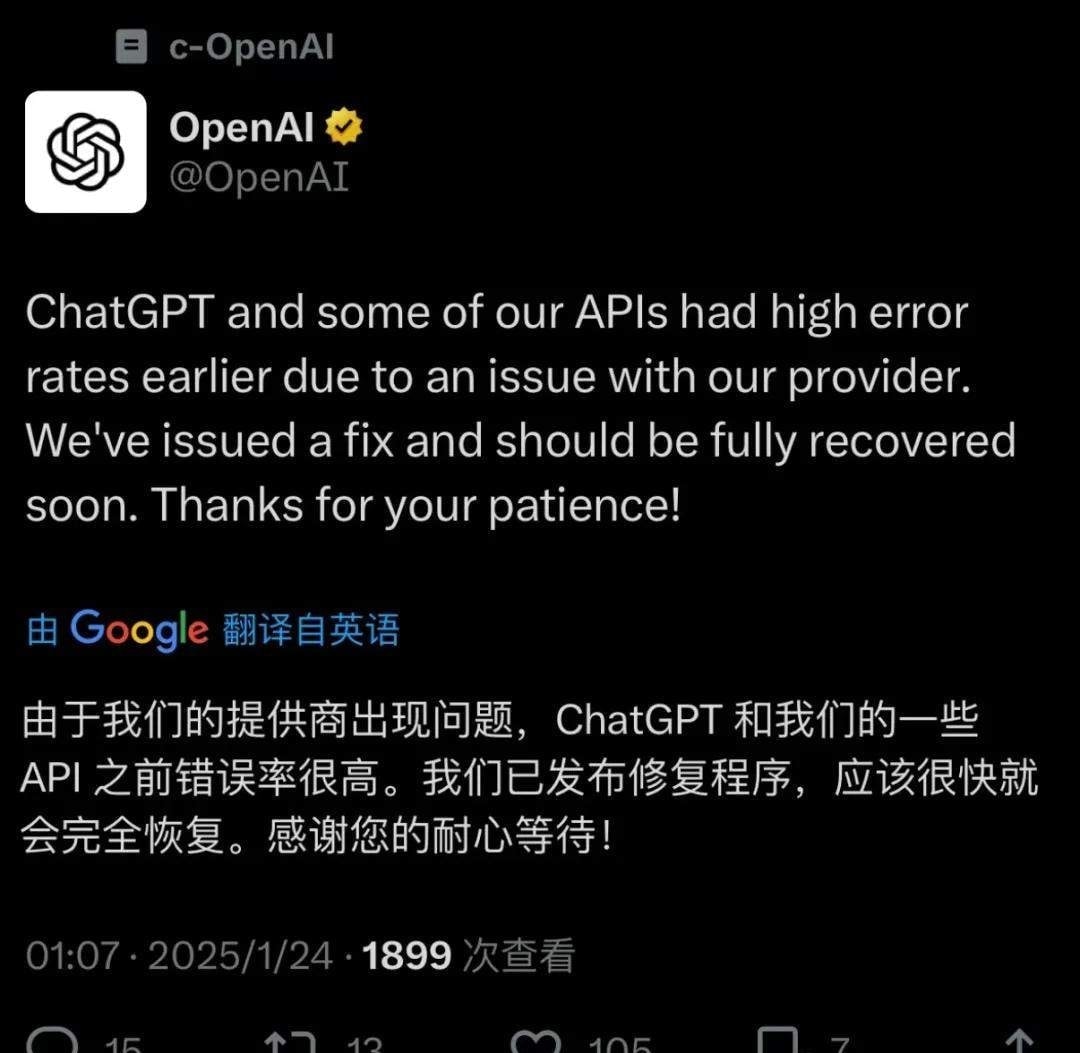
It turned out to be another false alarm for the community.

On a brighter note, Altman teased that the free version of ChatGPT will soon get access to o3-mini.

Personally, free access to o3-mini could change how I prototype logic-heavy tasks without paying for API calls. I think the error rate fix is good news, but stability remains my biggest concern with autonomous agents.
Comments
Sign in to join the discussion and leave a comment.
Sign in with Google