The race to the public markets is shifting from a question of if OpenAI will go public, to how it manages the creative fallout. As Sam Altman bypasses traditional gatekeepers to secure $1.5 trillion in chip deals and SoftBank stakes its $30 billion on a year-end deadline, the pressure mounts not just on executives, but on the artists whose work fuels this valuation.
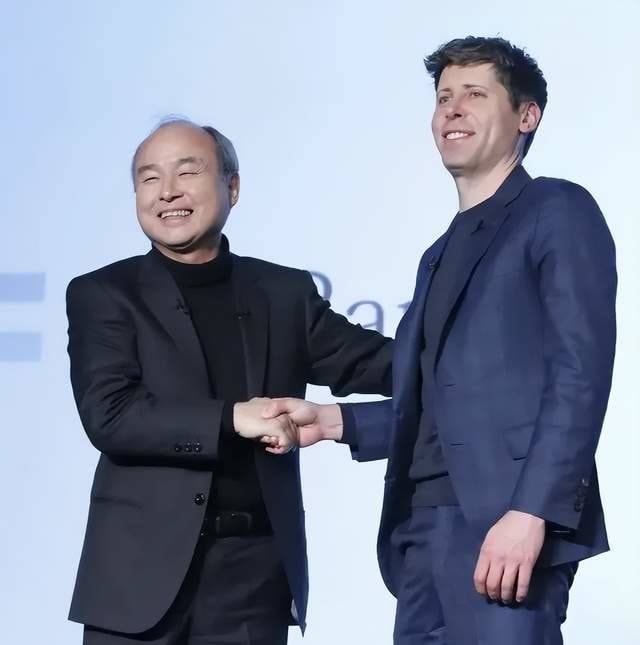
I followed the recent developments closely: SoftBank has approved the final $22.5 billion tranche of investment in OpenAI, contingent on the company completing its corporate restructuring by year-end. This move is designed to pave the way for an initial public offering (IPO).
However, what stood out to me was the unconventional nature of these maneuvers. Altman reportedly bypassed traditional investment banks and lawyers, relying instead on his inner circle to negotiate directly with tech giants like NVIDIA and AMD. These negotiations orchestrated chip deals worth a staggering $1.5 trillion.
I think bypassing legal due diligence creates murky licensing waters for training data provenance. For creators, circular trading structures obscure who actually benefits from the commercialization of creative outputs.
This non-standard transaction process has drawn widespread criticism from analysts, resulting in agreements that lack detailed financial terms and create complex circular trading structures.

If OpenAI Fails to Restructure, Investment Amount Will Decrease
SoftBank is going all out this time. With the second tranche of $22.5 billion added to a previous $7.5 billion, SoftBank’s total investment in OpenAI has reached $30 billion.
However, this capital comes with strict conditions: OpenAI must complete its corporate restructuring by year-end, transitioning from a non-profit organization to a public benefit corporation (PBC). This transition is intended to pave the way for an IPO and is part of the broader $41 billion funding round announced in April, which pushed the company’s valuation to $260 billion.
On licensing, the rush to PBC status may prioritize shareholder returns over ethical content sourcing commitments. I think valuation spikes driven by hardware deals do not guarantee fair compensation for underlying creative labor.
Yet, SoftBank has secured its own exit strategy. If OpenAI fails to complete the restructuring by year-end, the investment amount will be reduced from $30 billion to $20 billion.
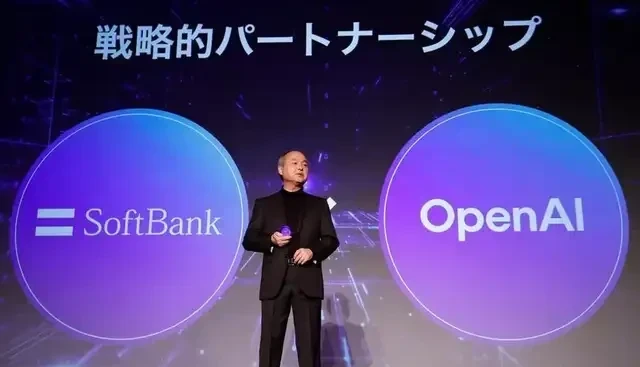
OpenAI’s First Step Toward IPO Revealed, Leaving Wall Street Stunned by Altman’s Maneuvers
The Human Cost of High-Stakes Negotiations
When a company like OpenAI bypasses traditional legal and financial guardrails to secure $1.5 trillion in chip deals, the burden of that risk shifts heavily onto the creators whose work fuels these machines. For creators, creators bear the systemic risk when AI giants gamble on unproven infrastructure without transparent licensing frameworks.
According to the Financial Times, Sam Altman’s negotiation tactics for these massive chip acquisitions were surprisingly hands-on and exclusionary. He sidelined OpenAI’s investment bank advisors and legal teams entirely, choosing instead to speak directly with tech giants such as NVIDIA, Oracle, AMD, and Broadcom.
When speaking directly with these industry leaders, Altman was accompanied only by a few key executives:
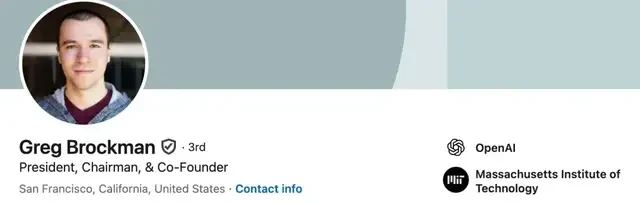
President Greg Brockman, Chief Financial Officer Sarah Friar, and newly appointed Head of Infrastructure Financing Peter Hoeschele.
Among the three, Brockman is a founding team member of OpenAI who previously served as CTO at Stripe.
An insider commented: “Altman is a visionary, but Brockman and his team are the ones who actually make these deals happen. He is quiet and always works behind the scenes, but when things get complicated, Brockman is the one pushing things forward.”
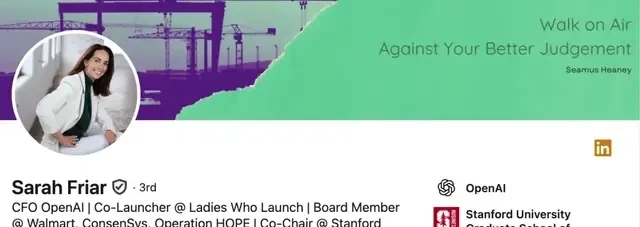
Sarah Friar was formerly an equity research analyst at Goldman Sachs and held senior financial positions at Salesforce and Block. She joined OpenAI last year after stepping down as CEO of the social networking app Nextdoor.
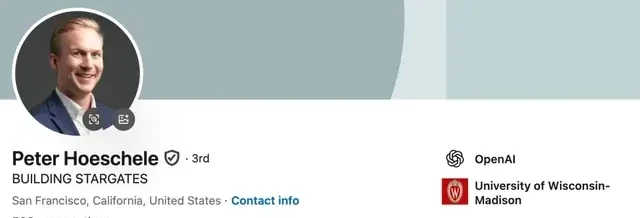
Peter Hoeschele was previously a consultant at Deloitte and now oversees efforts to enhance OpenAI’s computing power supply.
What frustrates Wall Street the most is that the financial terms for these OpenAI transactions remain vague.
Altman’s team operates on the philosophy of “technology first, financial details later.”
They structured the deals as multi-year contracts with payments tied to various milestones. If future demand changes or funding dries up, OpenAI retains the ability to scale back chip orders.
So, did NVIDIA not bring lawyers to the negotiations either? Indeed they didn’t.

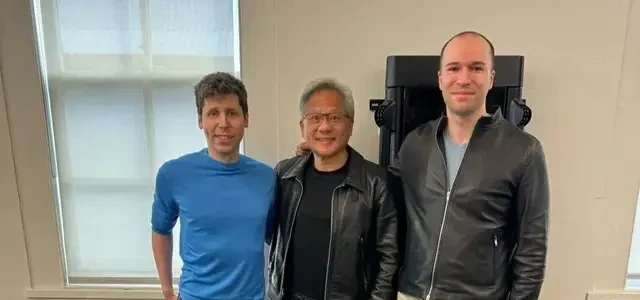
Insiders stated, “Altman and Jensen Huang have a long-standing relationship and communicate frequently. This deal was essentially negotiated between the two of them.”
The two parties reached an astonishing agreement: NVIDIA will invest $100 billion in OpenAI, while OpenAI commits to spending $350 billion on NVIDIA to purchase 10 gigawatts (GW) of chips. Throughout the entire negotiation process, neither side sought advice from external advisors.
△ A Relationship Built on Closeness
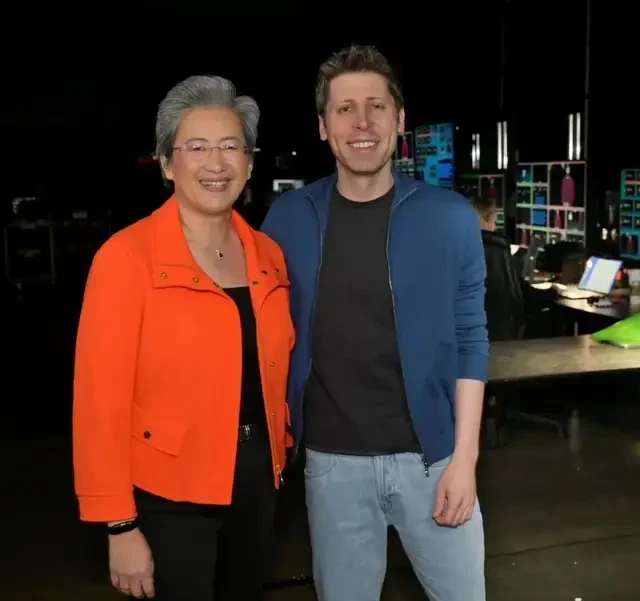
Negotiations with AMD actually began years ago. This time, AMD CEO Lisa Su finally presented a compelling offer: granting OpenAI warrants to purchase up to 10% of AMD’s shares at $0.01 per share. In exchange, OpenAI committed to purchasing 6 GW of chips.
The $300 billion, five-year partnership with Oracle began by chance. In mid-2024, the original client for a data center being built by Oracle in Abilene, Texas, suddenly withdrew. Clay Magouyrk, then head of Oracle Cloud Infrastructure, immediately approached OpenAI, which promptly took over the project.
A common characteristic of these transactions is that they rely on trust rather than contractual details. Altman believes this approach simplifies the transaction process and reduces adversarial dynamics.
However, whether these commitments to generate hundreds of billions in revenue will materialize remains uncertain.
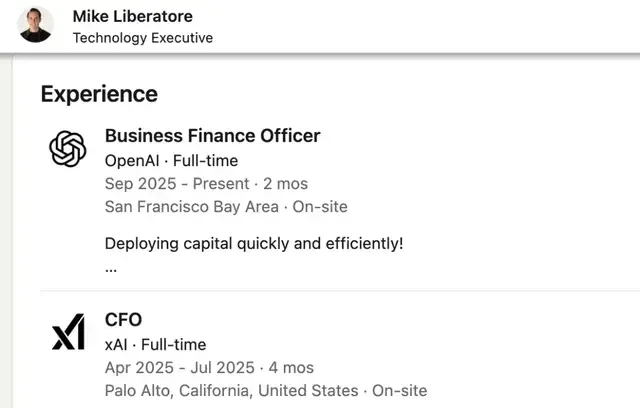
Altman is expanding his advisory team. In September, he recruited Mike Liberatore, former CFO of Elon Musk’s xAI, as Chief Business Officer. Perhaps more major deals are yet to come.
The Road to Public Markets
The filing shows that SoftBank has finally cleared the last major hurdle for OpenAI’s capital raise. As I followed the release, it became clear that this isn’t just about funding; it is a strategic maneuver designed to stabilize the balance sheet before going public. Wall Street may be stunned by Altman’s timing, but the creative community should watch closely: when valuation pressures mount, the incentives for commercializing user data and content often shift.
On licensing, iPO pressure typically increases the push for paid enterprise features over free tools. I think higher valuations can lead to stricter licensing terms for training data usage.
References
I read through the latest filings and reports to verify these figures, ensuring you have the exact numbers regarding SoftBank’s commitment.
- SoftBank approves remaining $22.5 billion of OpenAI investment, the Information reports — SoftBank has approved a second installment of $22.5 billion to complete its $30 billion investment in OpenAI, tech news website the Information reported on Saturday.
Comments
Sign in to join the discussion and leave a comment.
Sign in with Google