The burden of proof in enterprise AI adoption has shifted from “can we build it?” to “who is liable when it fails?” As the 2025 World Robot Conference marks its 10th anniversary, I observed a supply chain that is no longer just about hardware novelty but about integrated governance. The sheer volume of new products—over a hundred items from more than 200 companies—demands rigorous due diligence on safety standards and data provenance before any deployment.
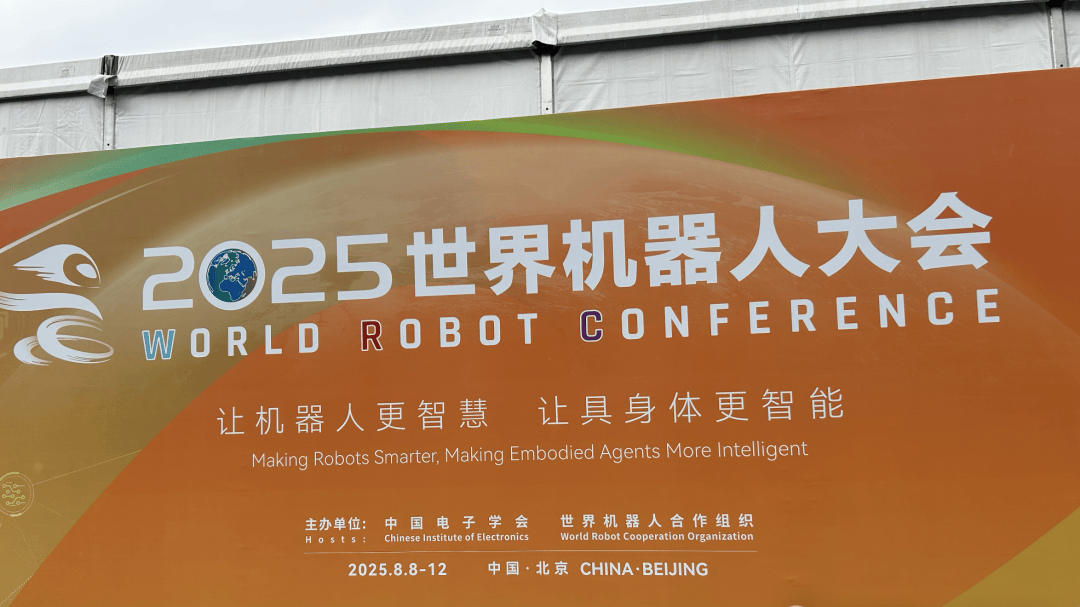
Looking back at past news and products, standing in the exhibition hall today evokes only one feeling: robotics technology is advancing at an astonishing pace! The coverage across all scenarios and industries is comprehensive. However, speed of deployment often outpaces regulatory clarity. Enterprises must verify that these rapid advancements do not compromise compliance frameworks.
I think rapid scaling without clear liability models creates significant enterprise risk. My sense is supply chain transparency for key components is now a governance requirement. What concerns me is that the distinction between industrial and service robots blurs, complicating safety audits. I think we must separate marketing hype from verifiable operational reliability metrics.
In addition to the robots themselves, many key component suppliers within the robotics supply chain also participated in this technological feast. This integration highlights the complexity of accountability chains. When a failure occurs, tracing it back to a specific component supplier is critical for legal protection.
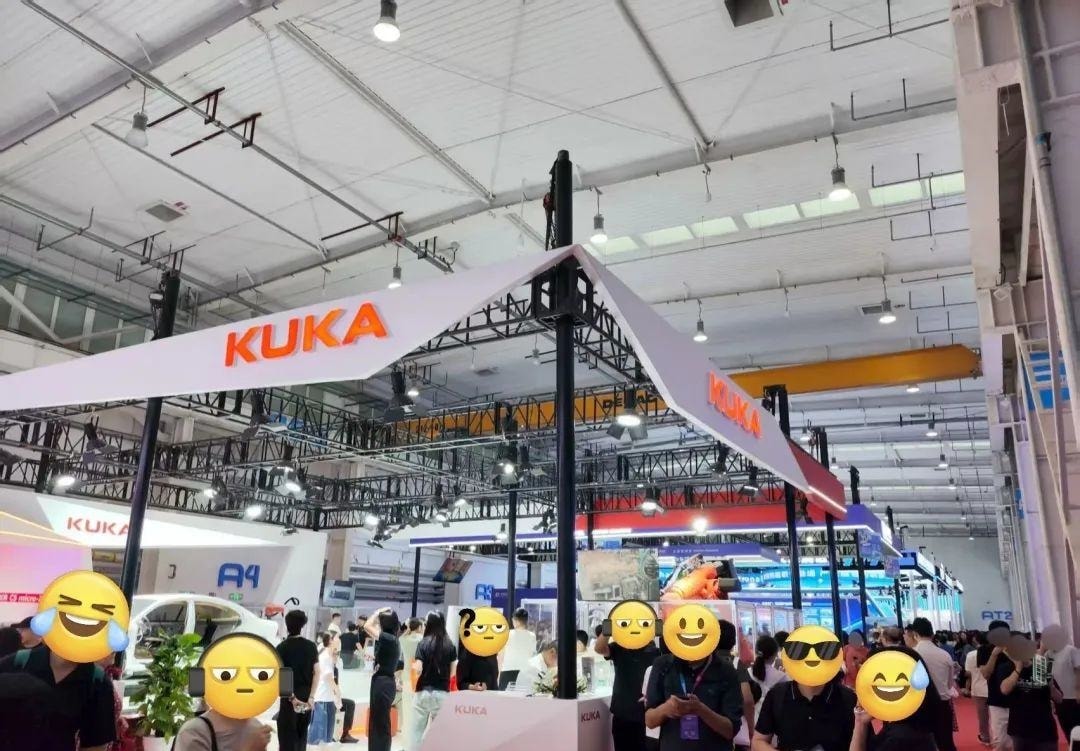
The conference is divided into three exhibition halls: A, B, and C. Each hall represents a different risk profile for enterprise adoption. Understanding these distinctions is vital for compliance officers assessing vendor proposals.
Hall A primarily showcases humanoid robots, industrial robots, and robotics applied in manufacturing. These are typically high-volume, controlled-environment deployments where safety protocols are more established.
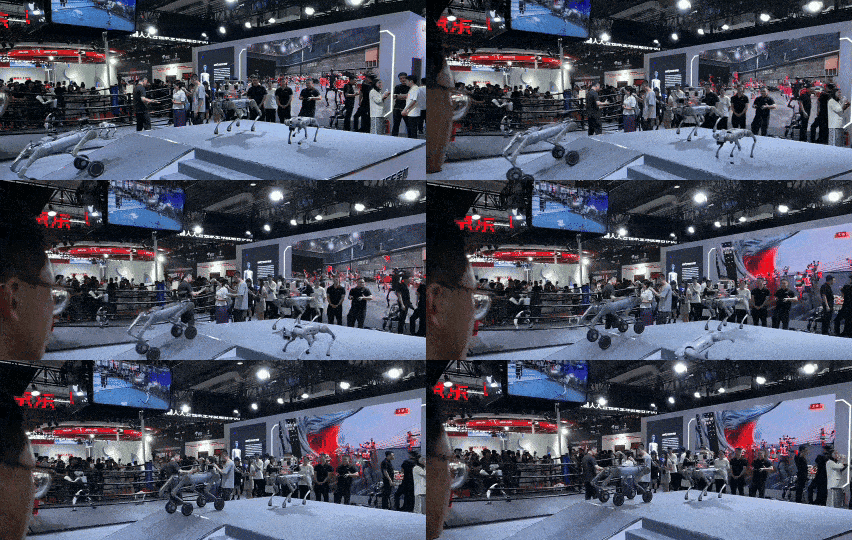
Hall B features humanoid robots designed for healthcare, elderly care services, commercial services, and other fields. These environments involve direct human interaction, raising the stakes for privacy and physical safety compliance.
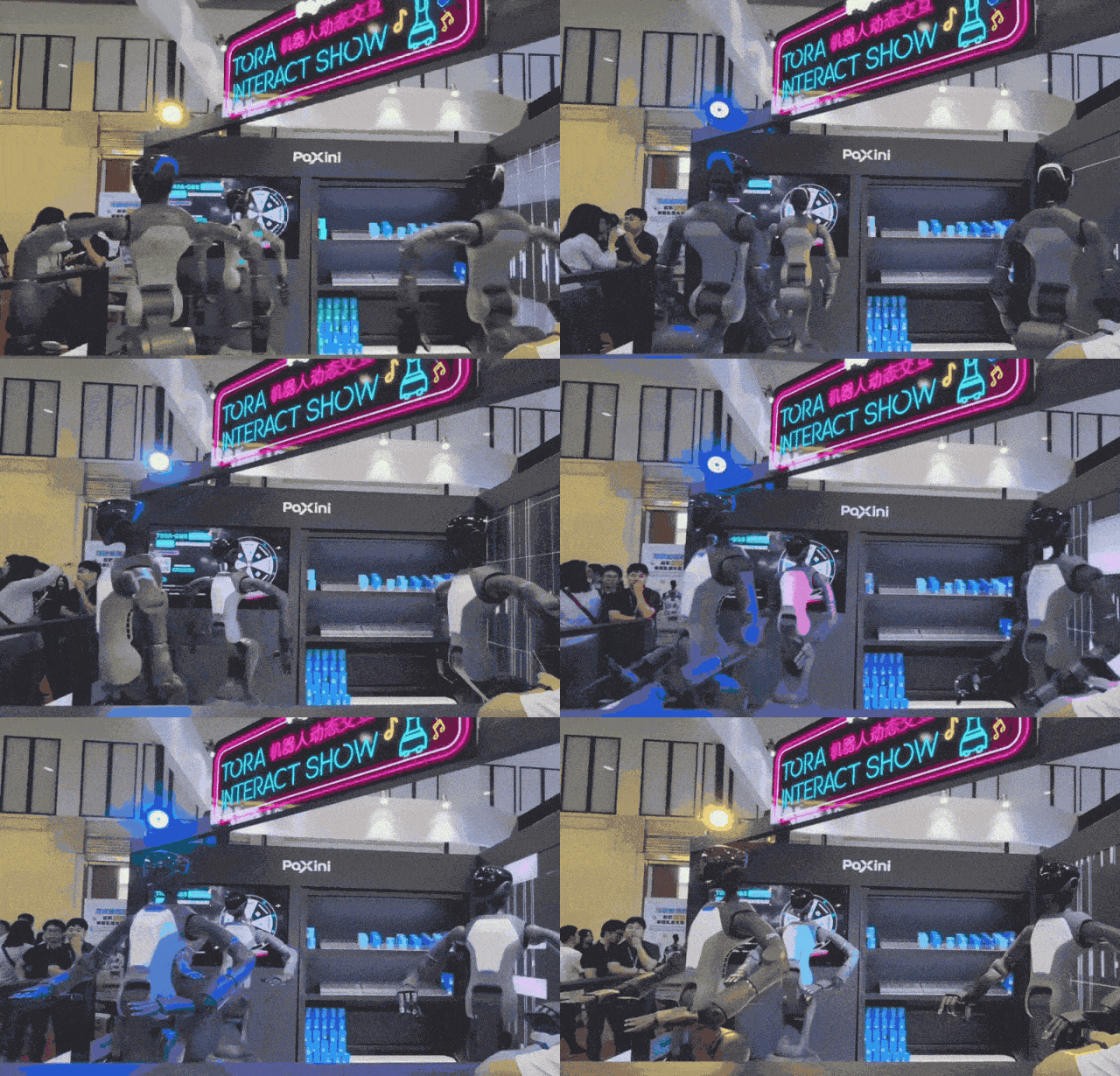
Hall C focuses on special-purpose robots for specific scenarios, agricultural robots, and key robotic components. Niche applications may fall into regulatory gray areas, requiring careful legal review before integration.
This year’s conference also featured a wide array of latest products from exhibitors, including the Fourier GR-3, Kepler K2 Bumblebee, Galileo E-series bionic robots, iFlyte mobile digital humans, and more, totaling over a hundred items. The diversity of these models underscores the need for standardized testing protocols across different vendor ecosystems.
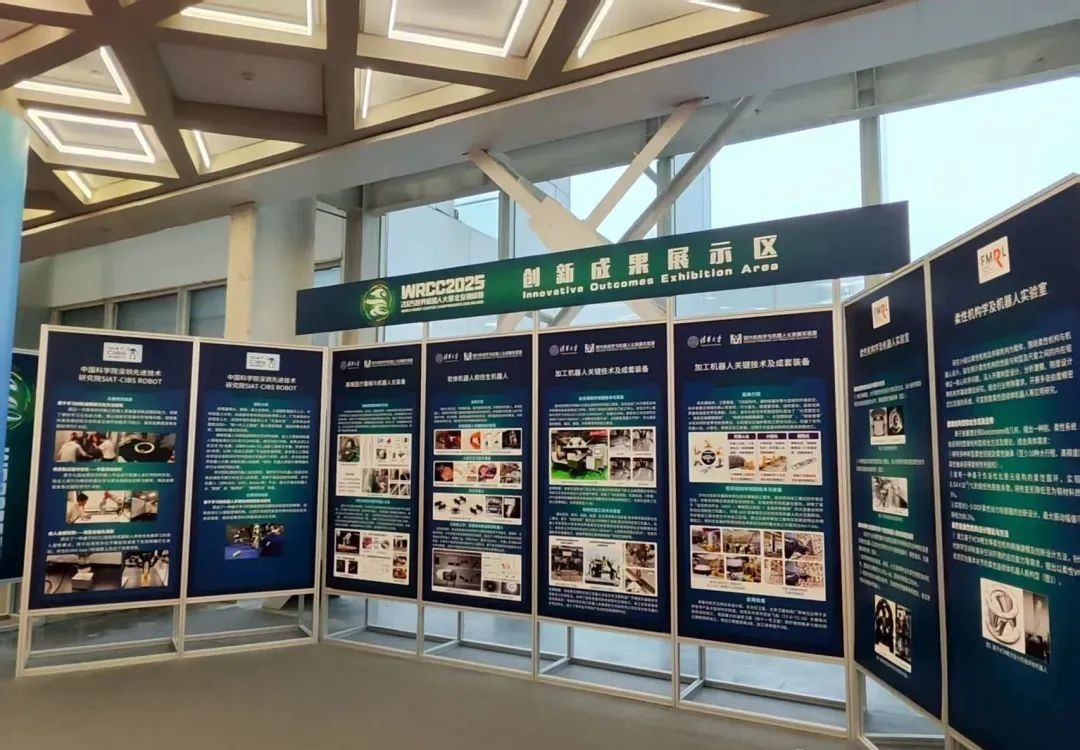
Don’t forget the Innovation Achievement Exhibition Area located in the main hall’s atrium, showcasing cutting-edge embodied AI technologies from major universities across China. These are well worth a visit. Academic prototypes often lack the robustness required for enterprise-grade SLAs. Enterprises should treat these innovations as early indicators rather than immediate procurement candidates.
Beyond the main venue, the industrial park hosted five major activities, offering visitors an all-in-one experience of robotics through entertainment, dining, and more:
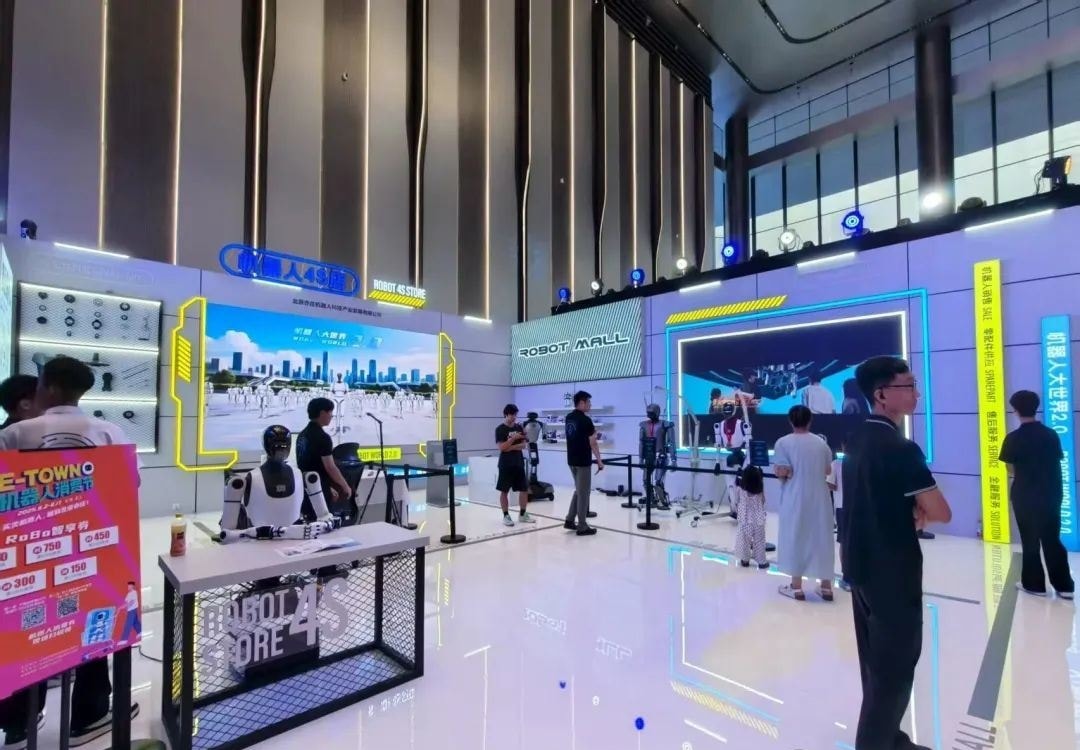
- Embodied AI Robot 4S Store: Visitors can get up close with TianGong 2.0 and UBTECH’s Walker S, compete against Unitree’s G1 and Accelerated Evolution’s Booster T1, and engage in business cooperation or maintenance technical support. This commercialization push requires clear service level agreements to protect enterprise users from downtime liabilities.
- Robot World Cultural & Creative Zone: Featuring 115 items across six categories of robot-themed merchandise, including badges and fridge magnets—perfect for personal keepsakes or gifts.
- International Robot and Art Design Biennale: Focusing on technological narratives and artistic expression, some works have won multiple international design awards, exploring the symbiotic relationship between humans and machines in depth.
- Robot Flame Lab: A robot-themed restaurant offering not only robotic service but also tech-inspired dish names such as “Alpha Core Burger Power Module” and “Omega Cold-Feel Fish Chip Processor.” Service robots in hospitality settings must adhere to strict hygiene and data privacy regulations.
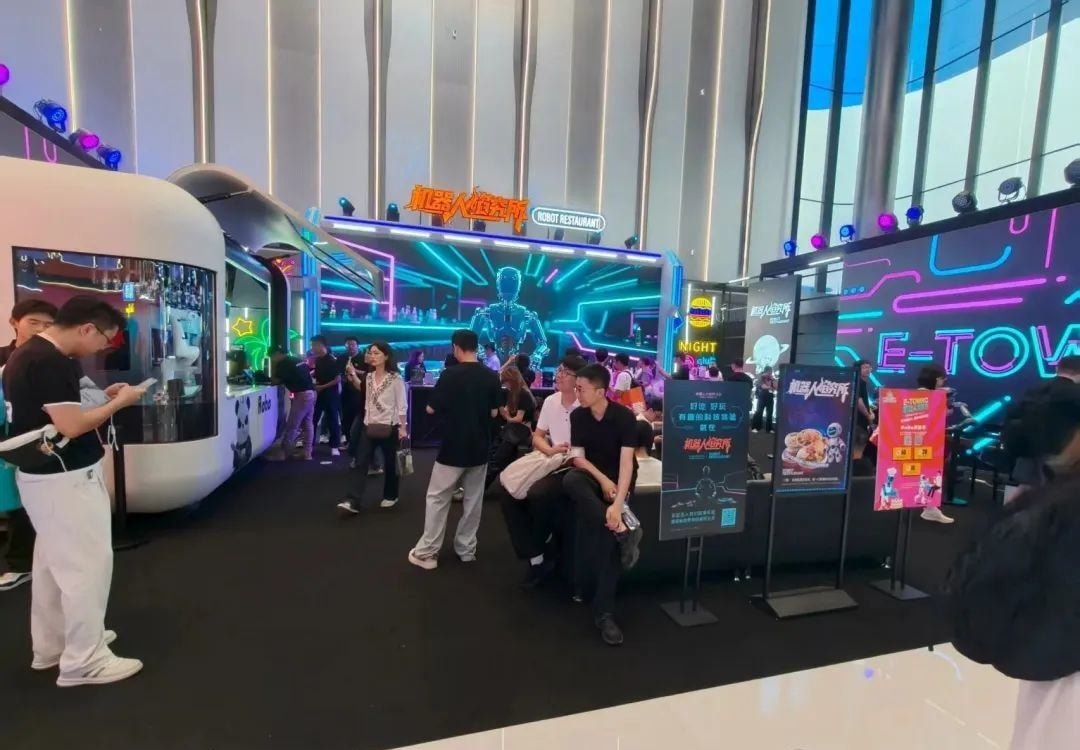
- Open-Air Film Season: Screening open-air movies for 14 consecutive nights, featuring sci-fi and animation content, allowing audiences to fully experience the unique romance of robotics.
Without further ado, let’s dive into a somewhat informal virtual tour of the exhibition~
Let’s Tour the Exhibition Together
Editorial: The Governance Gap in Consumer Robotics
By Priya Sharma, Enterprise AI & Governance Editor
The narrative around robotics is shifting from industrial automation to consumer-facing applications, but the regulatory framework has not kept pace. As enterprises evaluate these technologies for potential integration or investment, the burden of proof shifts to vendors to demonstrate safety and liability coverage. I am tracking how exhibitors are framing their compliance claims versus their marketing hype.
Hall A: From Marathon Running to Industrial Sorting
Upon entering Hall A at the Robot Innovation Center, two landmark booths co-built by national and local authorities immediately command attention. The focus here is on tangible utility rather than pure spectacle.
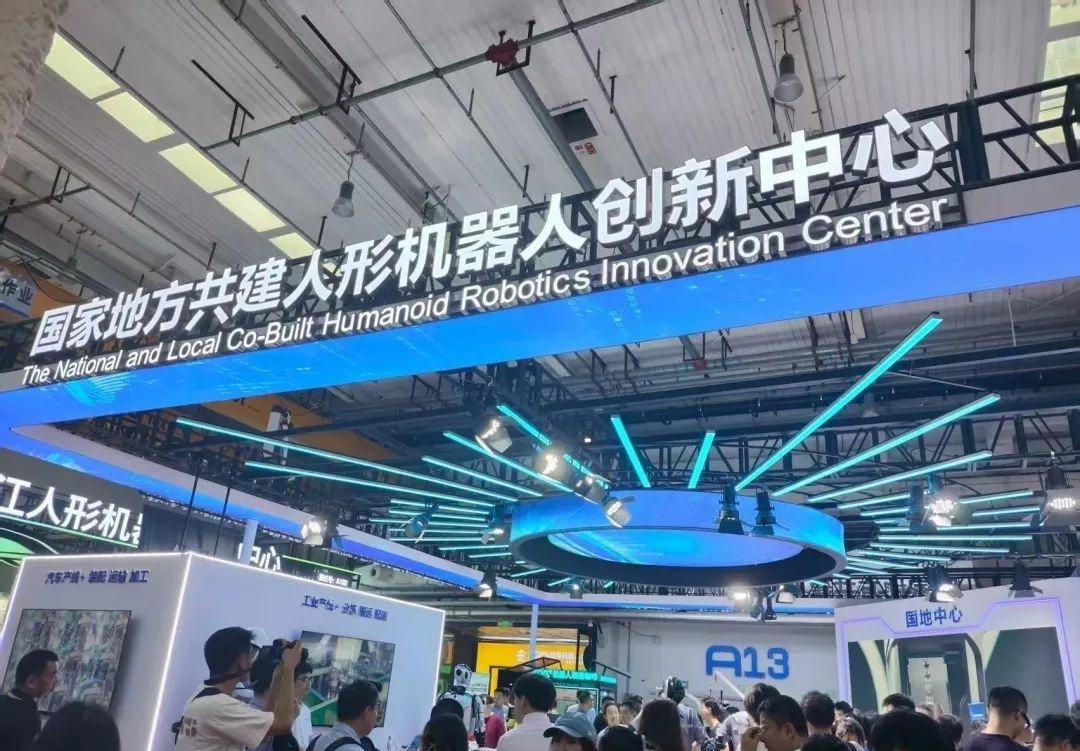
The Beijing Humanoid Robot Innovation Center presented its general-purpose robot, “TianGong.” In April this year, it won the championship at the world’s first humanoid robot half-marathon held in Yizhuang, Beijing.
This time, however, instead of running a marathon, TianGong is handling sorting tasks. Its dual arms can lift up to 16 kg each. Visitors can interact with it by placing five workpieces on a conveyor belt in any arrangement; TianGong will effortlessly sort and organize them.
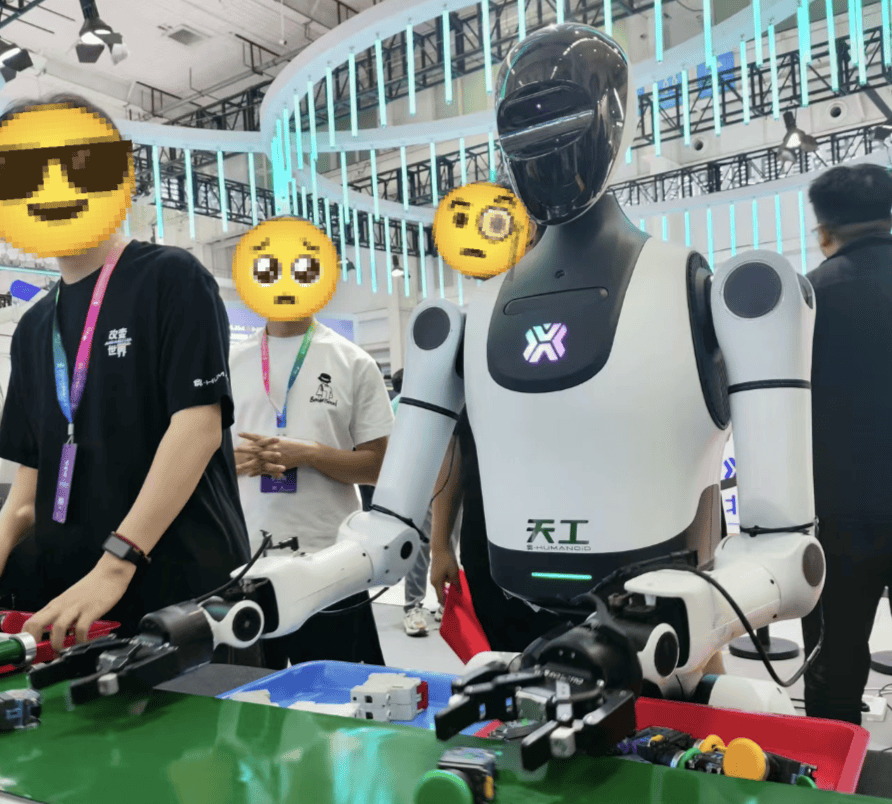
My sense is lifting capacity is a hardware spec, but sorting accuracy in unstructured environments remains an AI reliability challenge. What concerns me is that enterprises must verify if the 16 kg limit includes dynamic load factors during rapid movement.
Critical Infrastructure and Supply Chain Integration
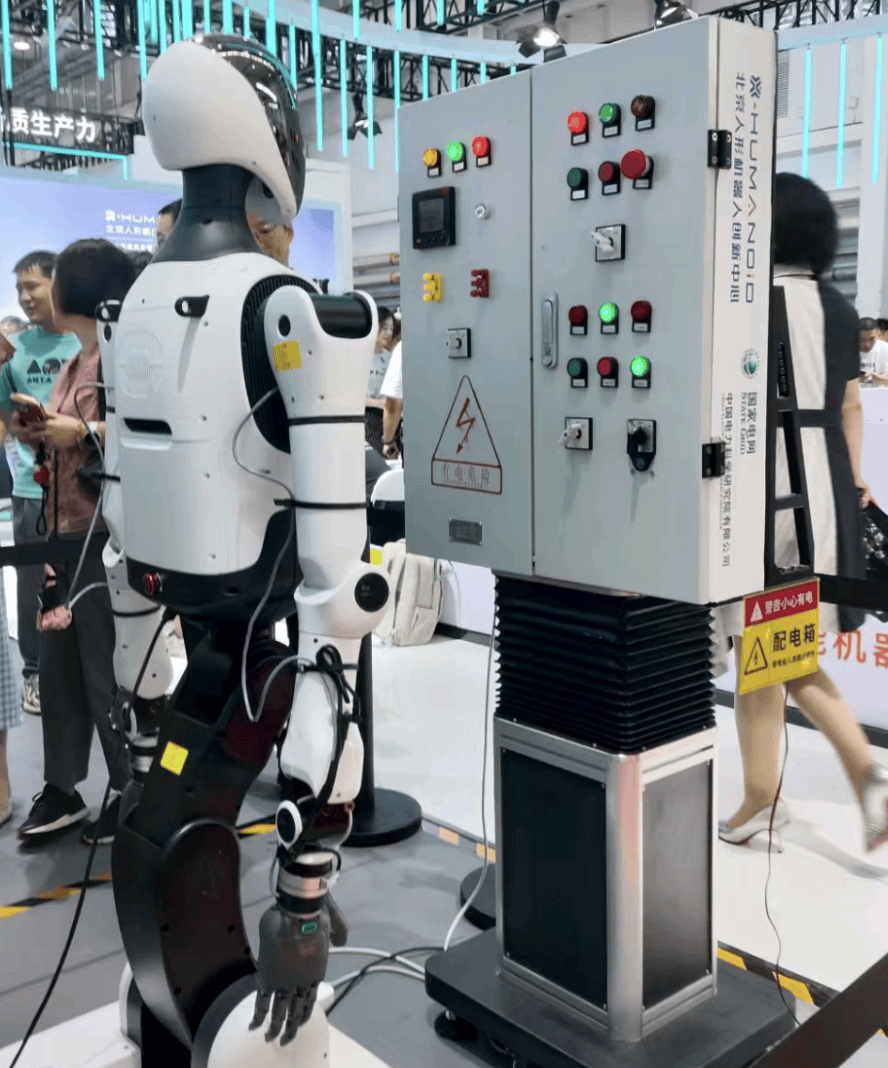
Safety in high-risk sectors is being addressed through remote operation protocols. The State Grid Corporation of China jointly showcased the TianYi 2.0 high-voltage power line inspection robot, which allows remote operation via VR headsets or a cockpit interface, ensuring human safety during inspections.
As the conference’s “Exclusive Global Strategic Partner,” JD.com leveraged its supply chain advantages to display a wide variety of robot products at its booth. JD has already embraced the era of robotics, promoting the slogan: “Buy robots on JD.” Indeed, robots have entered the retail age.
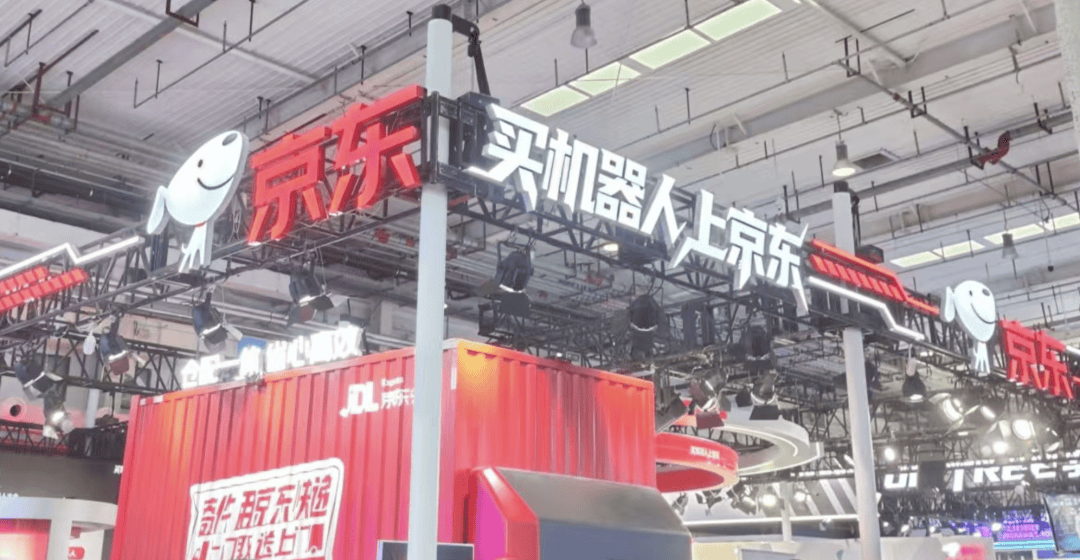
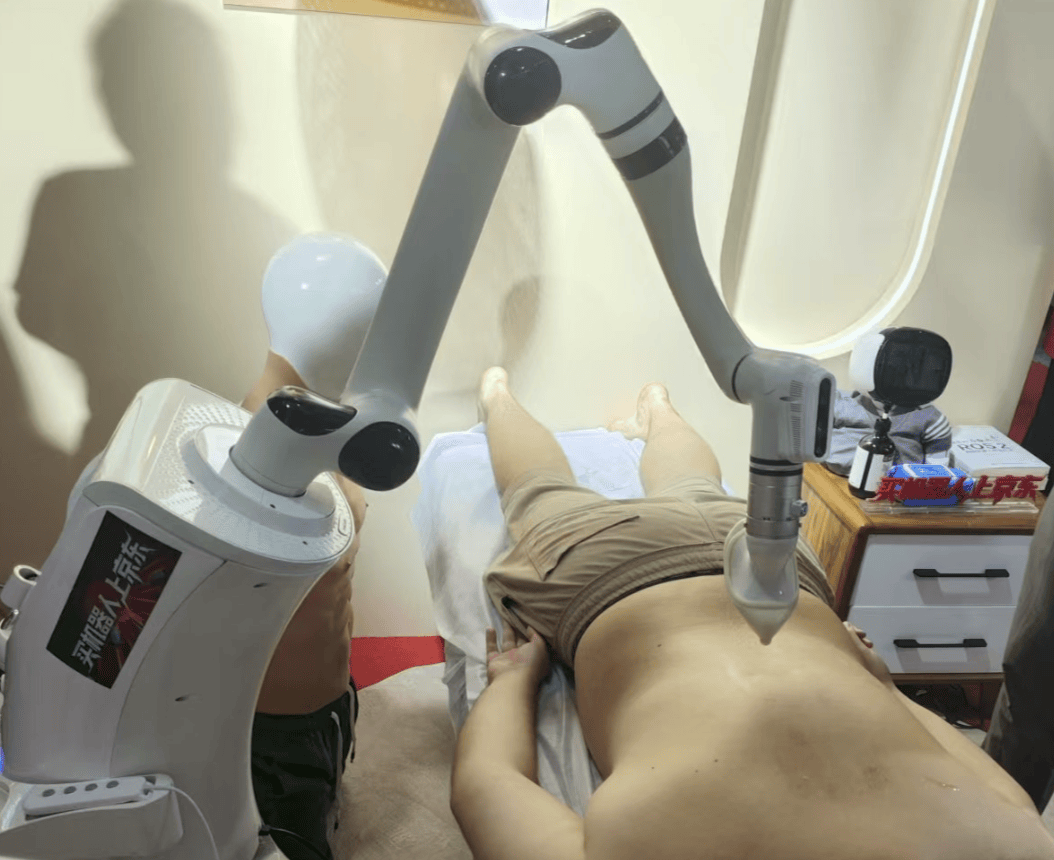
For instance, the Reelman massage robot, a favorite among foreign enthusiasts, utilizes flexible force control in its robotic arm. Its technique rivals that of a master masseur with ten years of experience—truly authentic!
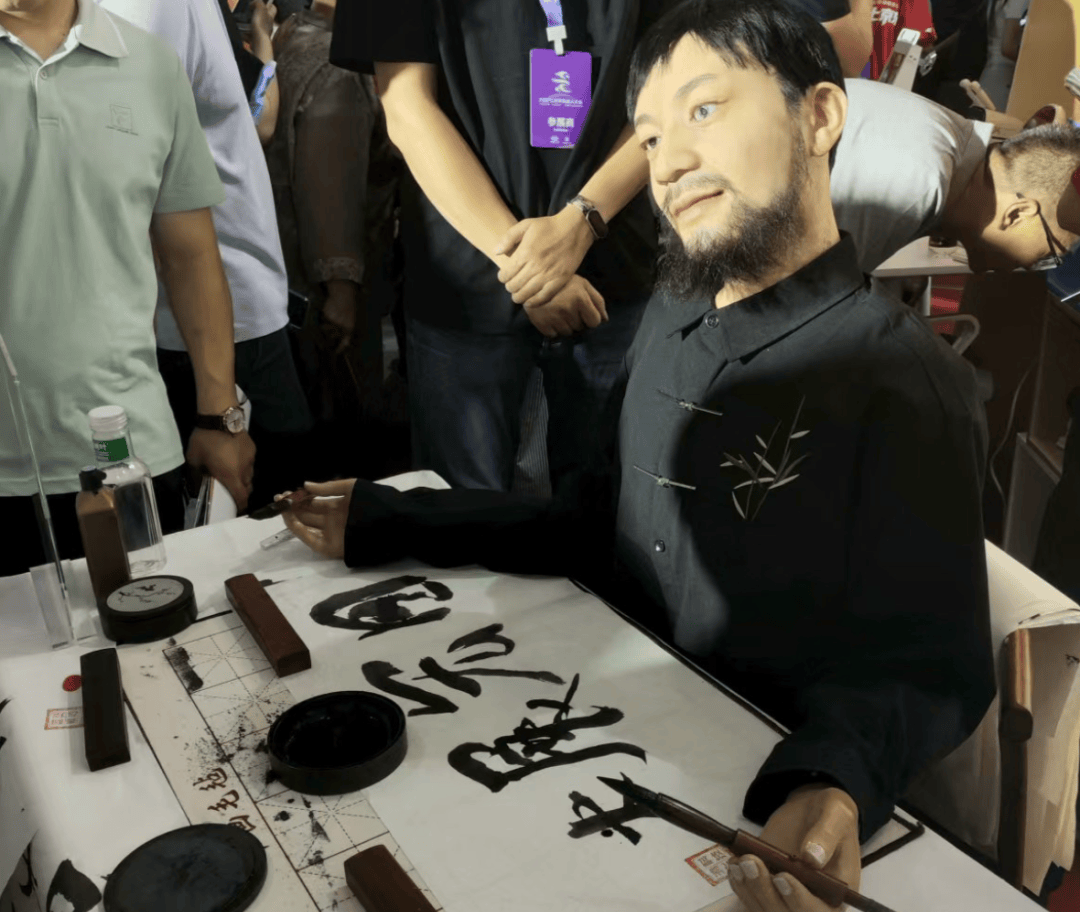
The Qingfei Technology bionic robot, capable of learning human calligraphy and painting creation, elegantly wrote four large characters: “Grand Prospects.”
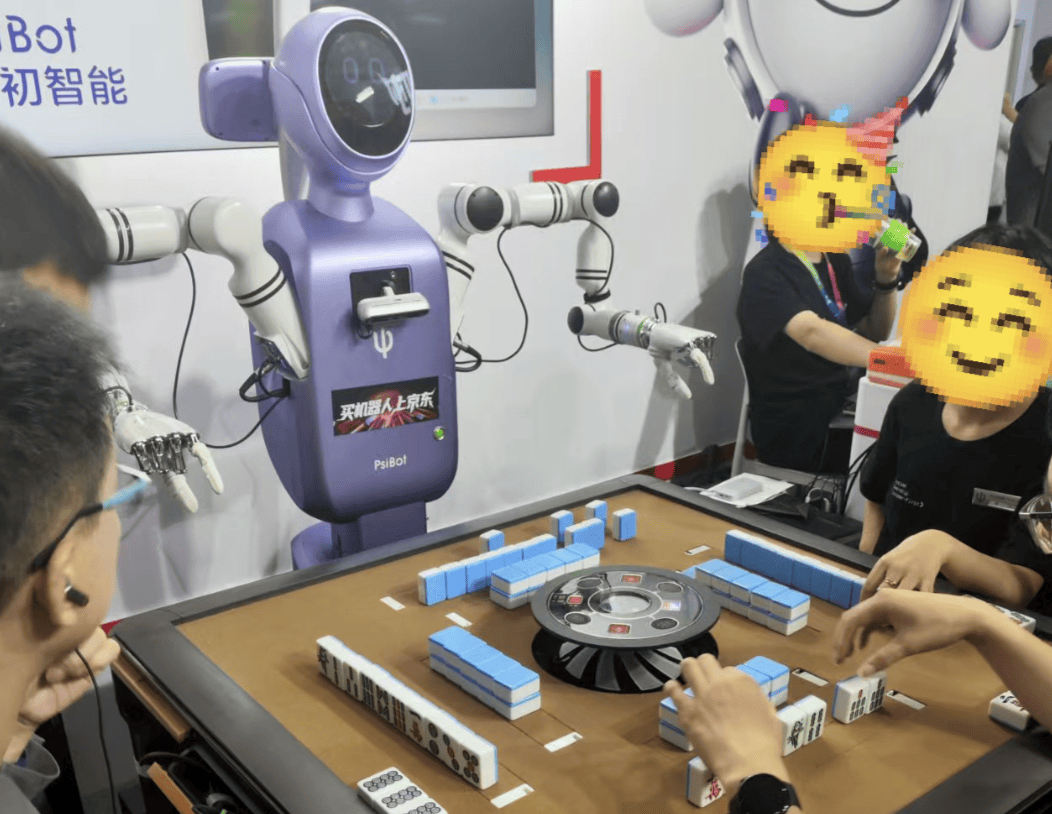
How about playing mahjong with a robot? Lingchu Technology brought a mahjong table to the site, randomly selecting lucky audience members to compete against it.
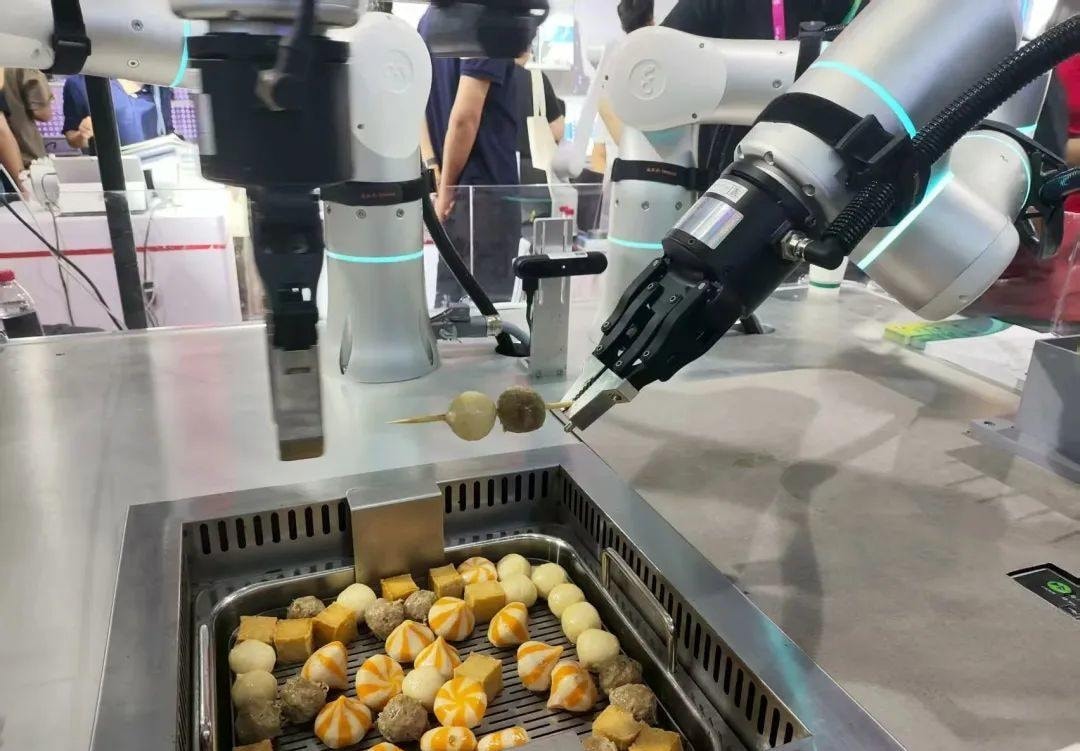
There were also robots making pancakes and skewering meatballs… No wonder the JD.com exhibition area, easily the most well-funded in the venue, offered a dazzling array of robots that left visitors overwhelmed.
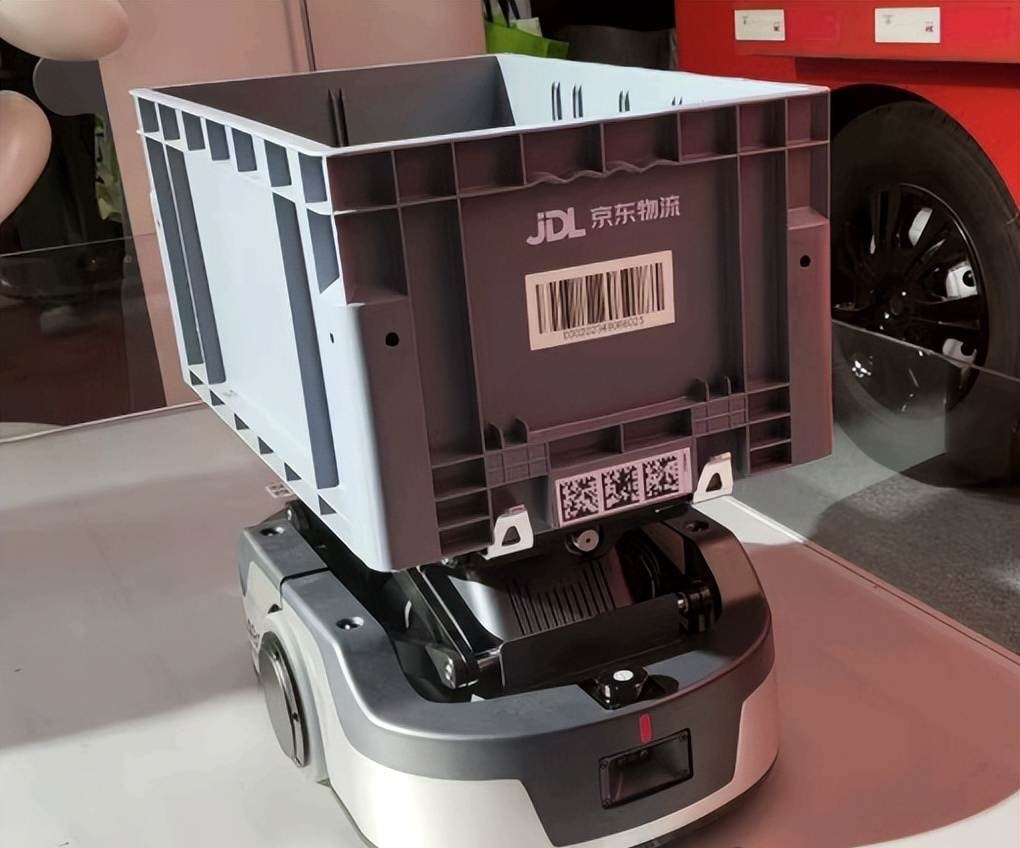
We also saw JD.com bring its own logistics robot, “Zhi Lang” (Smart Wolf), including material handling robots and stair-climbing robots. These can navigate freely between shelves in standard bin storage environments with heights under 12 meters.
Look up! It’s the “Fei Lang” JDX-20 drone, with a maximum payload of 10 kg and a maximum flight range of 24 km. It can effortlessly cover an entire city all day long.
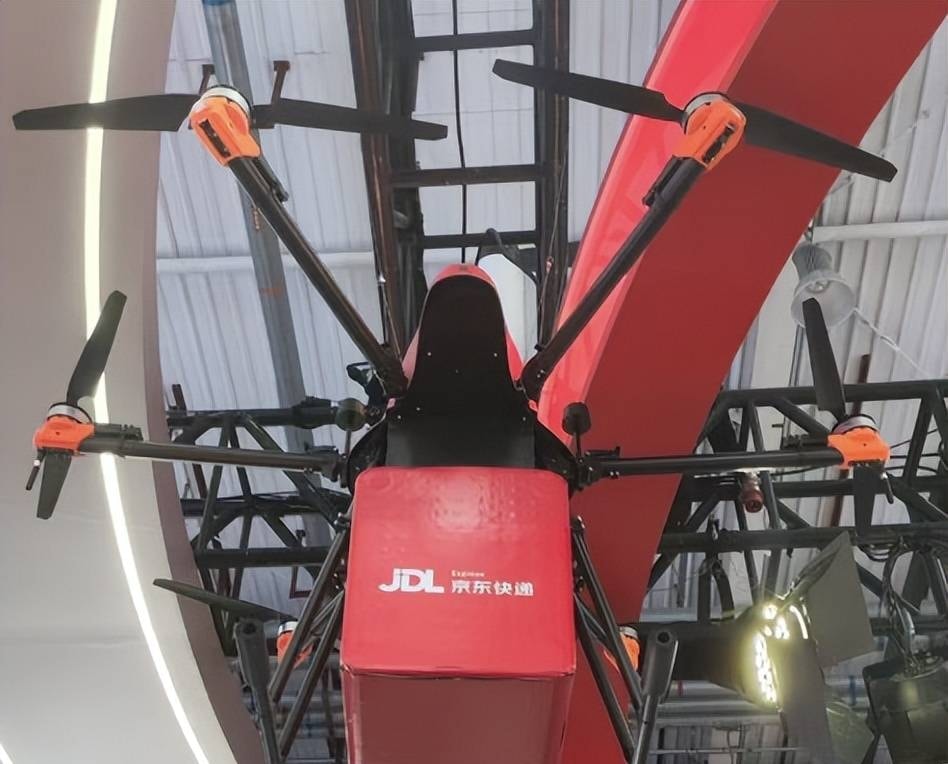
I think drone flight ranges of 24 km raise immediate questions about airspace integration and BVLOS (Beyond Visual Line of Sight) regulations. My sense is retail robotics marketing often obscures the high maintenance costs of flexible force control systems in consumer settings.
Collaborative Zones and Specialized AI Agents
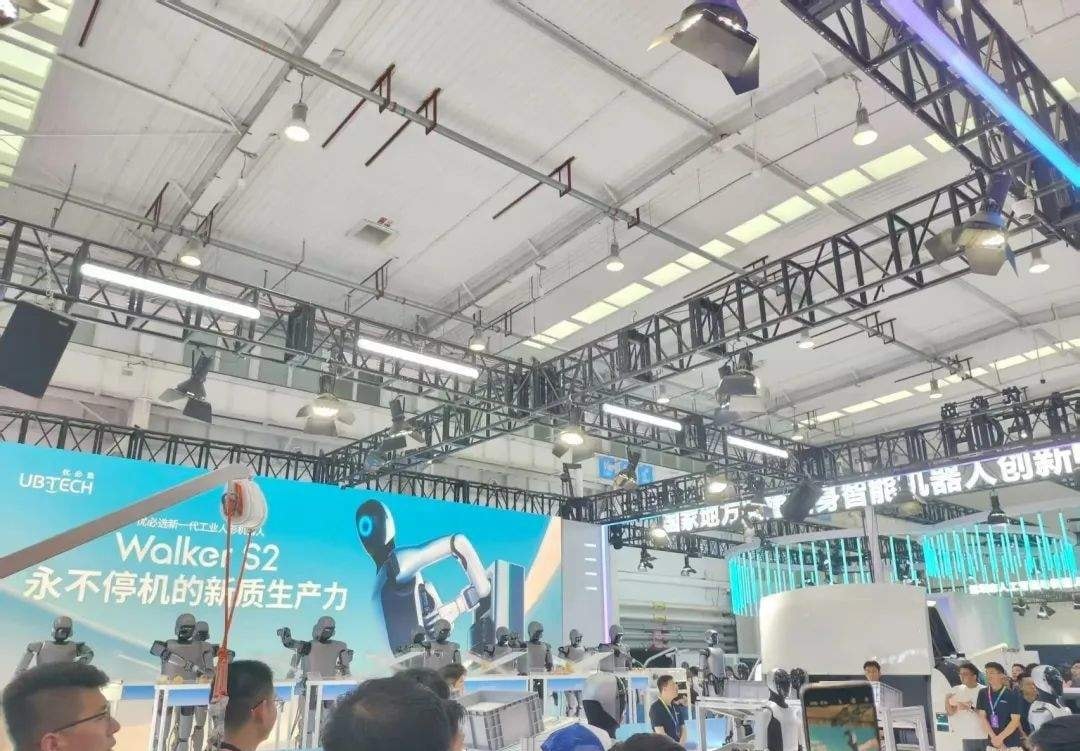
Over at the neighboring UBTECH booth, a matrix of 11 Walker S1 robots performed a factory brick-moving demonstration on-site, coordinating to complete assembly line sorting. This highlights the shift toward multi-agent coordination in structured industrial tasks.
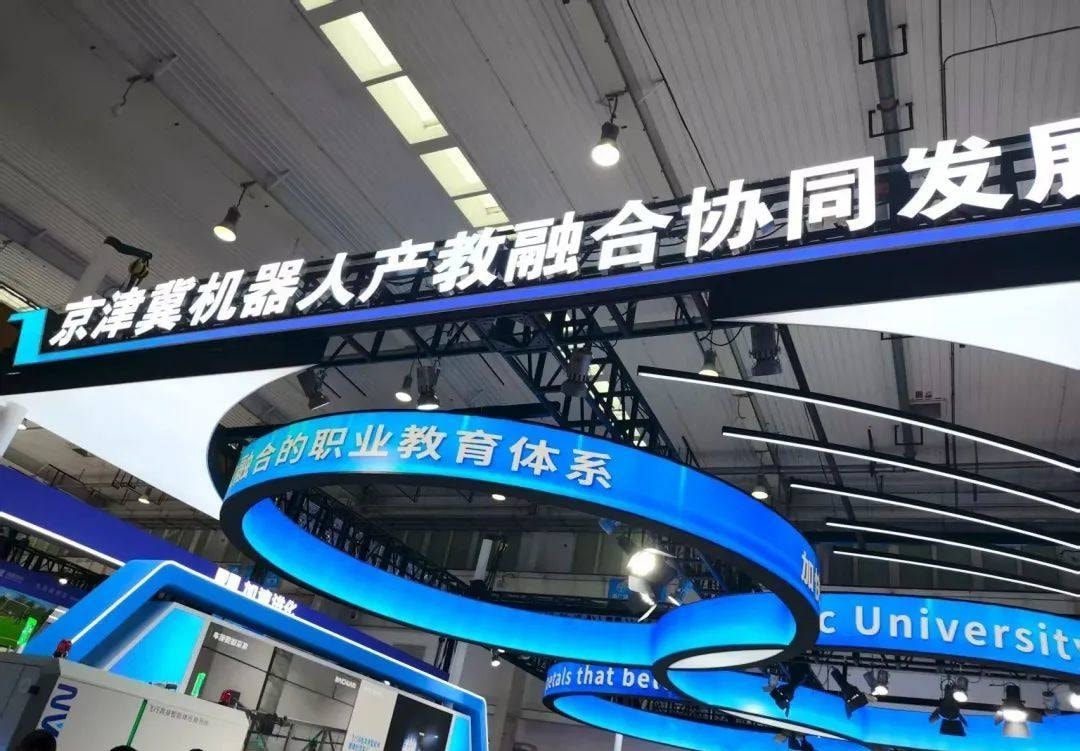
In the Beijing-Tianjin-Hebei Robot Collaborative Development Zone, high-tech enterprises incubated by multiple universities were gathered together. Among them, Tangshan Baichuan Intelligent Robotics, specializing in rail transit, brought an autonomous inspection flying embodied AI agent. It can meet the needs of various special scenarios, such as narrow spaces under high-speed train chassis or bridges over mines at high altitudes.
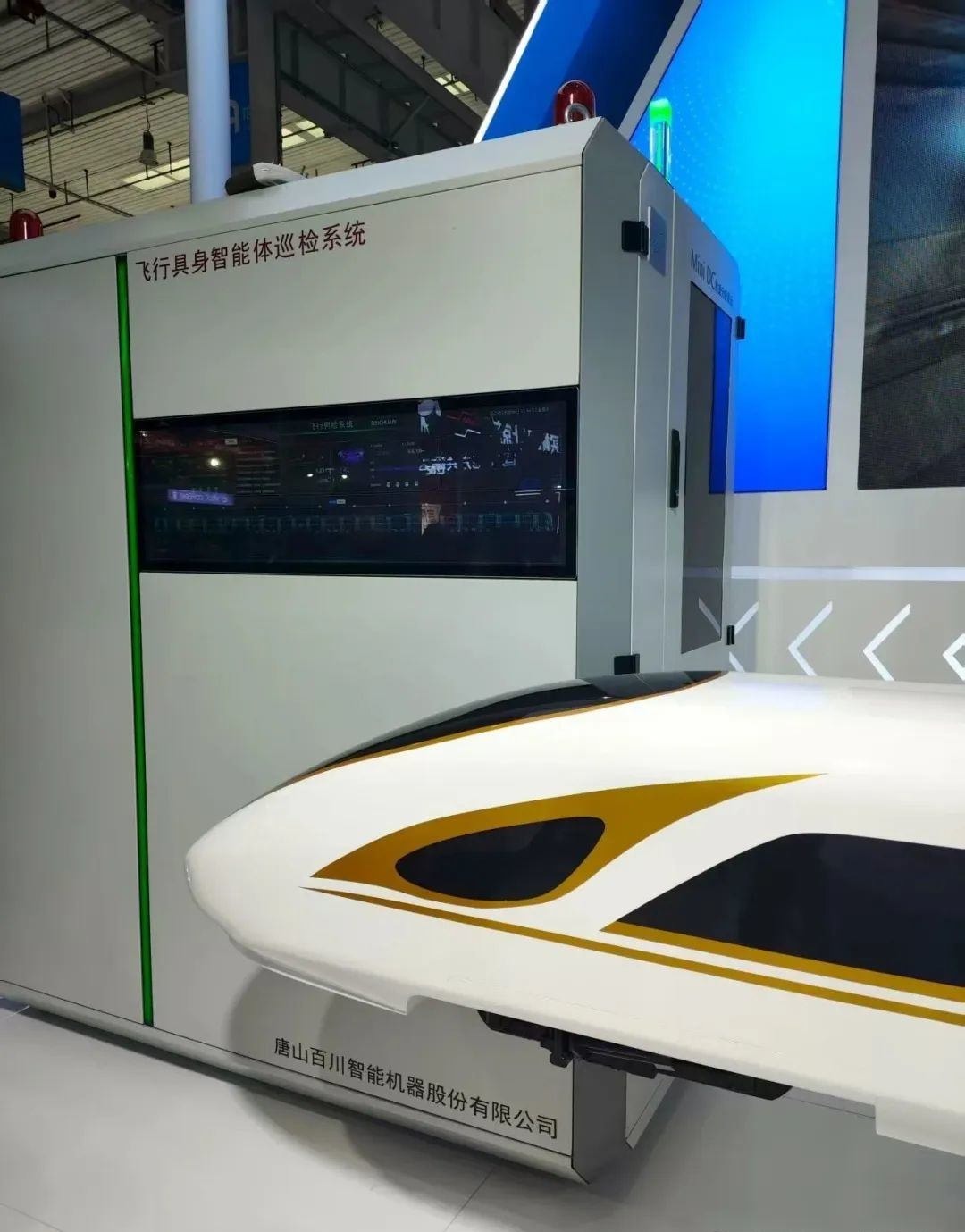
What concerns me is that embodied AI in confined spaces like train chassis requires rigorous fail-safe mechanisms that are rarely disclosed in demo videos. I think university-incubated startups often lack the operational resilience required for critical infrastructure maintenance contracts.
The Heavy Lifters: Governance Gaps in Industrial Robotics
My sense is unitree’s public boxing demo prioritizes spectacle over safety certification transparency. What concerns me is that enterprises must verify who holds liability when autonomous systems fail in unstructured environments. I think we need clearer standards for human-robot interaction in shared industrial spaces.
The narrative at the World Robot Conference shifted from novelty to capability, but the burden of proof remains on manufacturers to demonstrate reliability beyond the exhibition floor. While crowds were thinning, the technical depth of the remaining exhibits revealed a sector racing toward deployment without fully addressing governance frameworks.
Unitree emerged as the standout exhibitor, leveraging its G1 humanoid robot to capture attention. Standing 130 cm tall and weighing 35 kg, the G1 performed a boxing routine that showcased dodging, blocking, and side kicks. The demonstration was designed to highlight shock resistance and hardware-software coordination under physical stress.
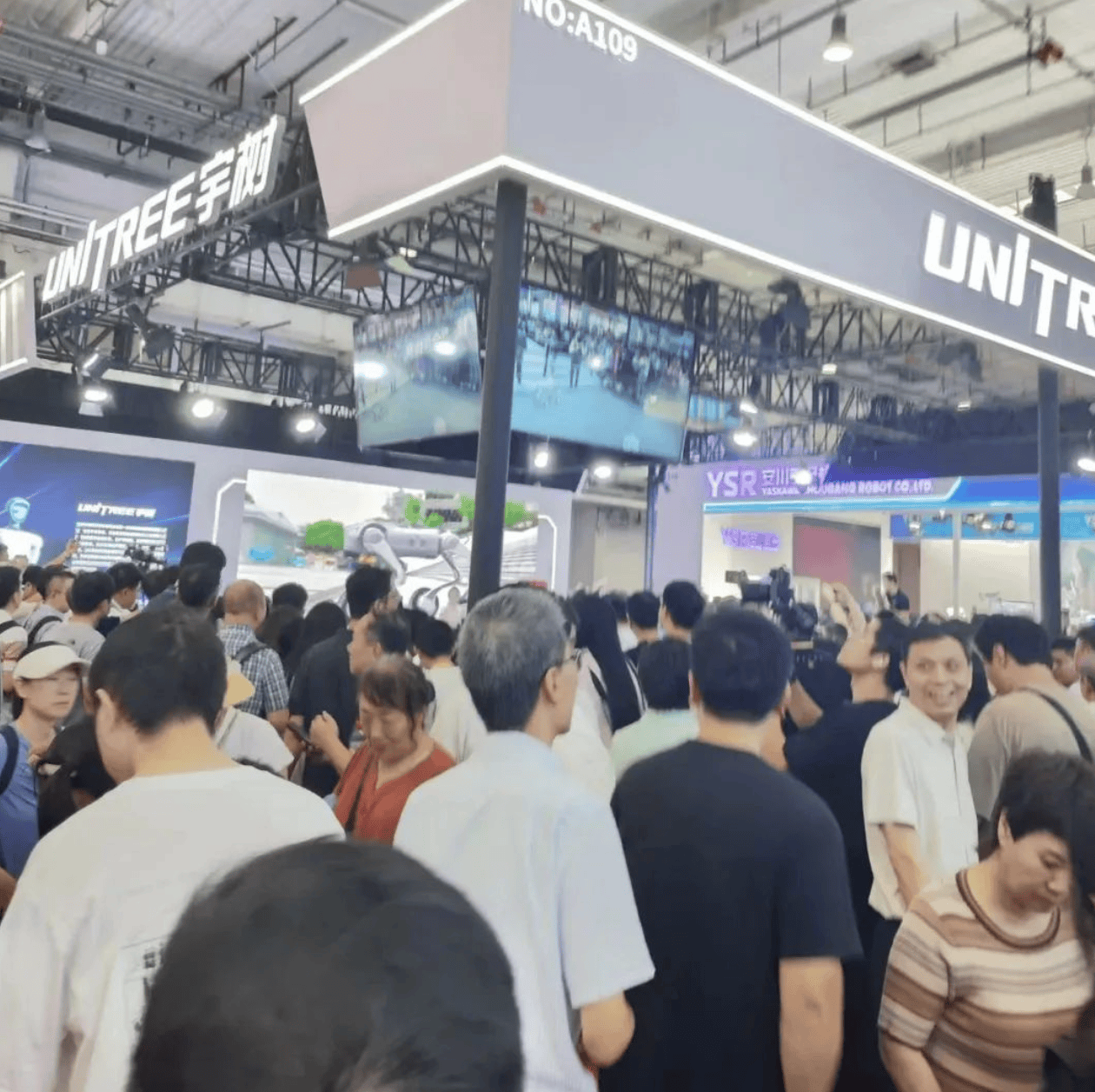
Complementing the humanoid was a quadruped robot navigating steep slopes and complex terrains. Notably, this iteration included models specifically engineered for fire and emergency rescue scenarios, signaling a move toward high-risk operational environments.
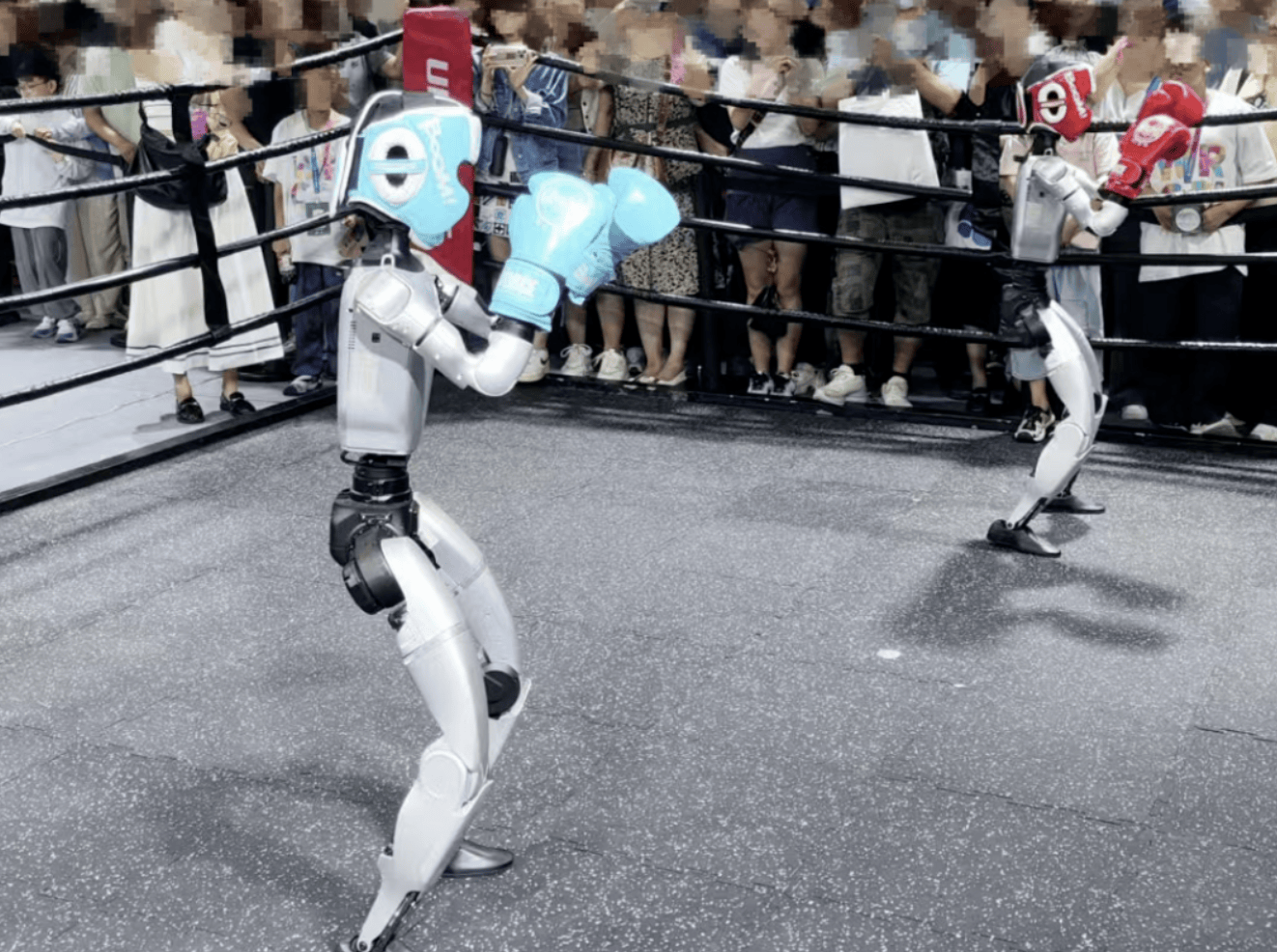
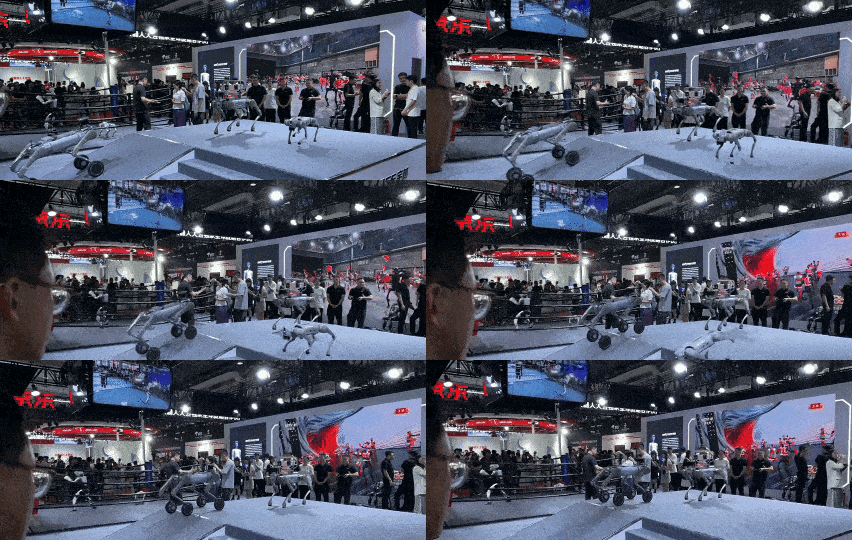
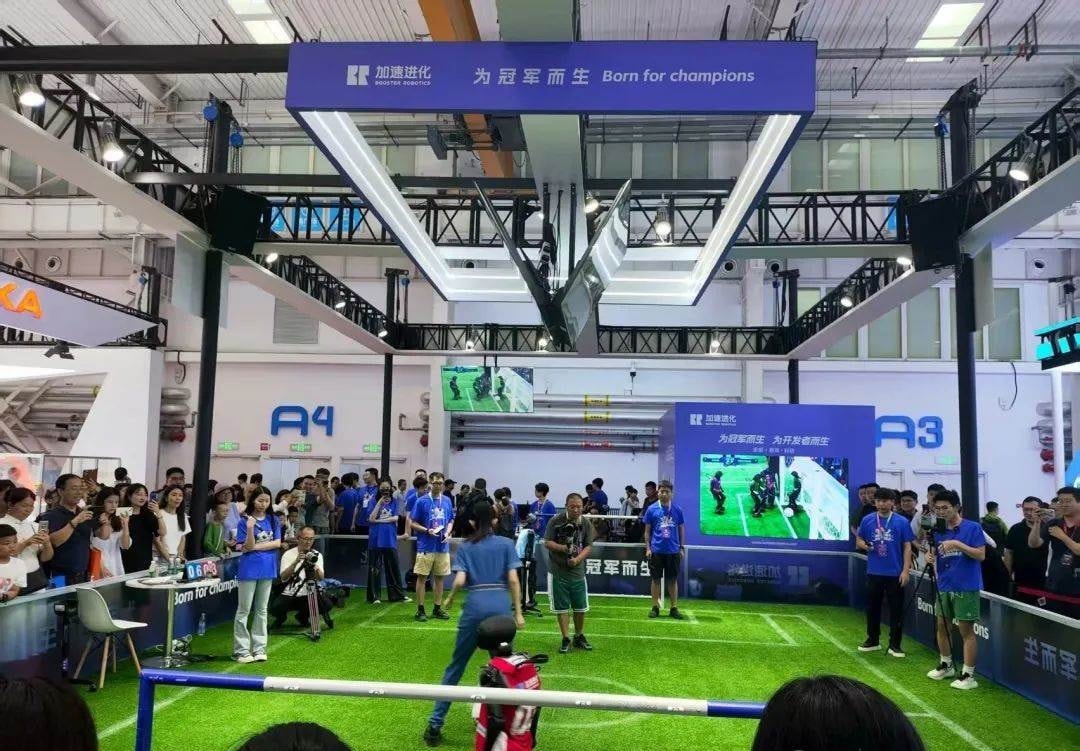
Acceleration Evolution introduced its T1 robot following its Football World Cup championship win. The company hosted exhibition matches allowing audience participation, a tactic that blurs the line between controlled testing and public engagement.
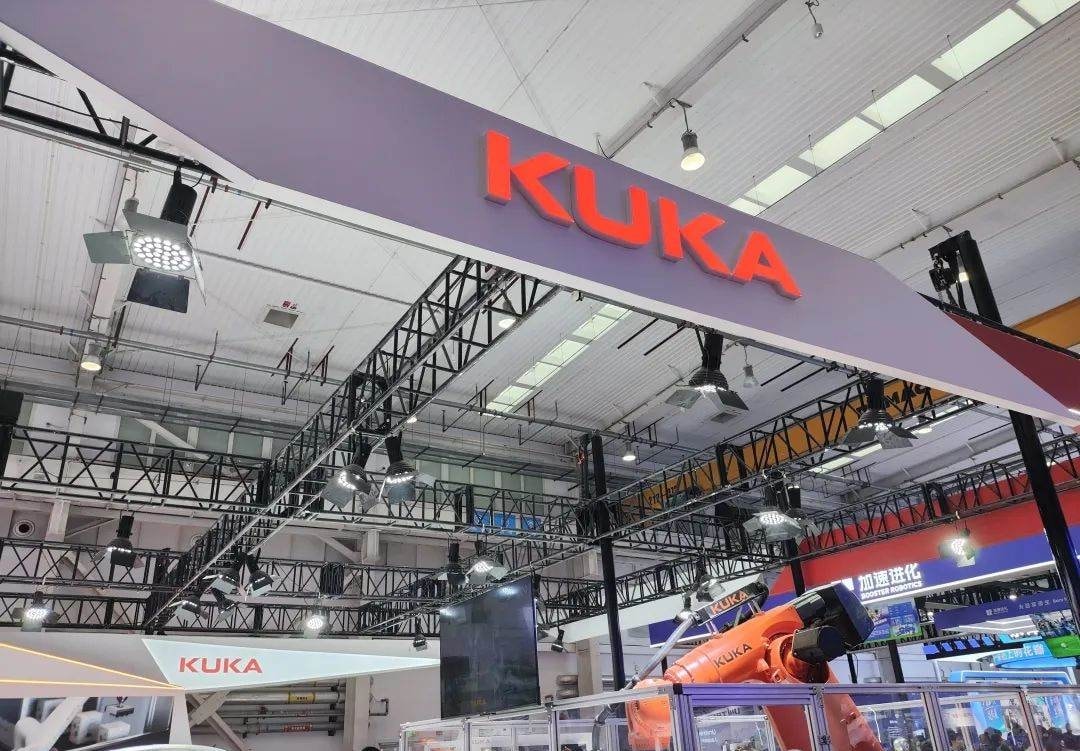
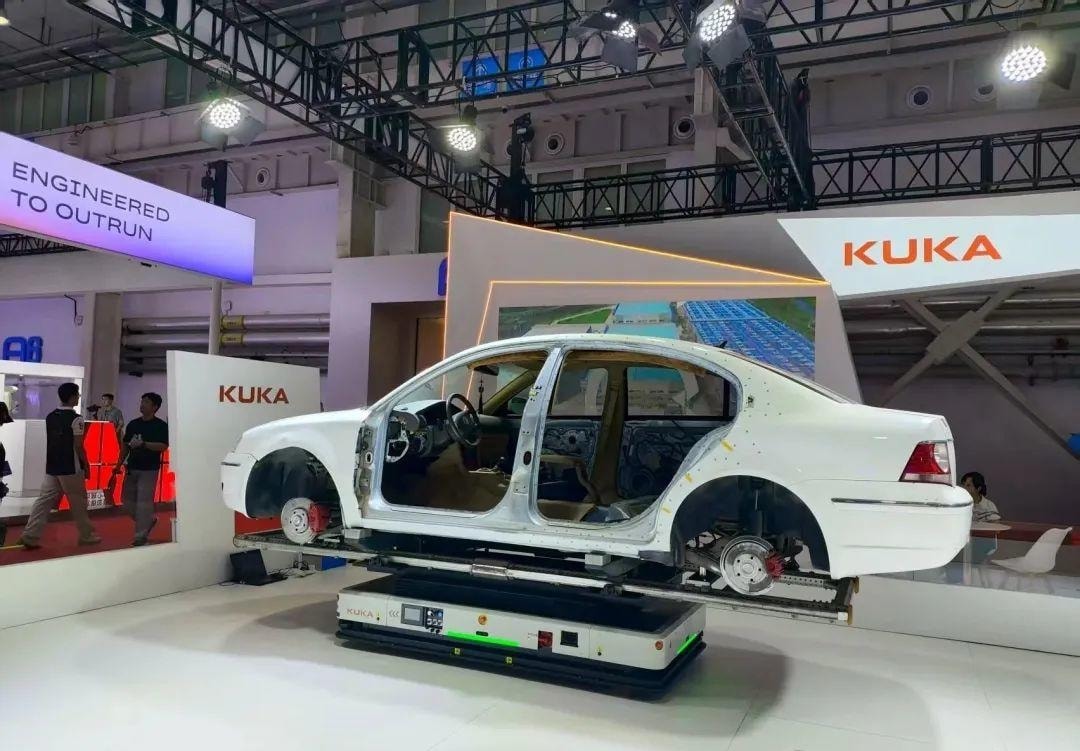
In the industrial sector, KUKA presented a heavy-load handling workstation featuring a 250 kg gripper and a 650 kg pallet. The system demonstrated capabilities in machine tool loading/unloading, milling, and screwing, emphasizing precision in high-stress manufacturing processes.
To visualize load capacity, a car frame was placed prominently in the exhibition area’s prime position. This visual aid served to intuitively demonstrate the power and stability of high-load mobile robots.
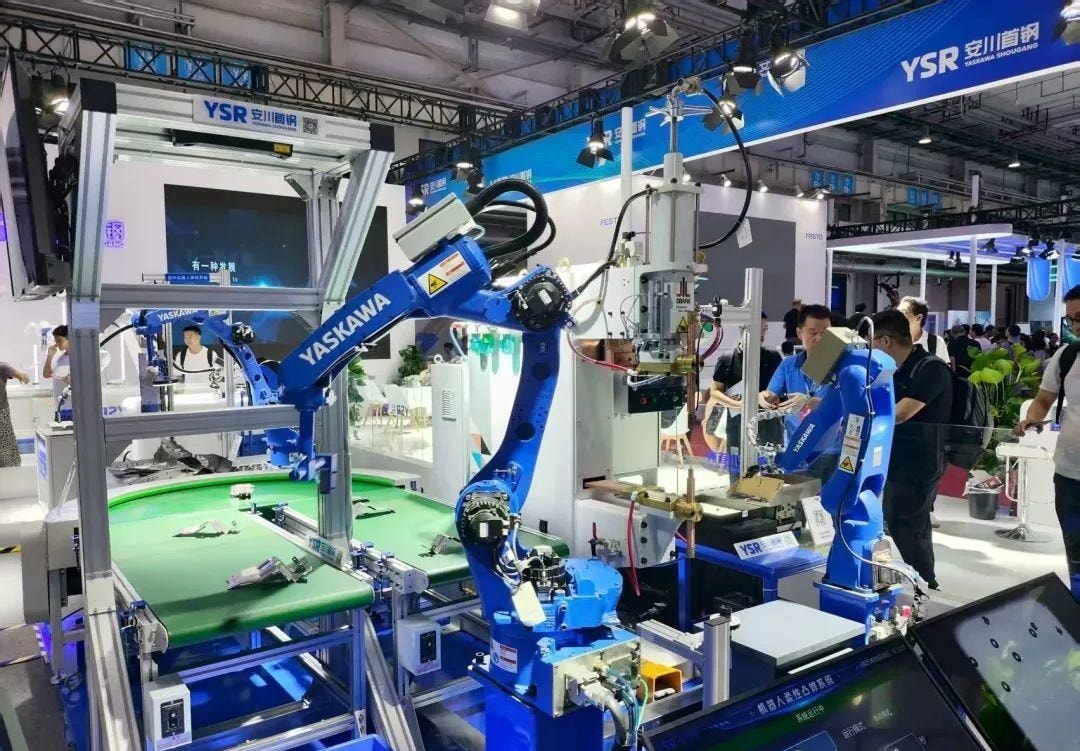
Yaskawa Shougang displayed a flexible robot convex welding system. The process involved a GP12 robot using 3D vision to pick workpieces from a conveyor, followed by secondary positioning via 2D vision for loading. A subsequent GP7 robot handled nut loading, with a convex welding machine completing the cycle.
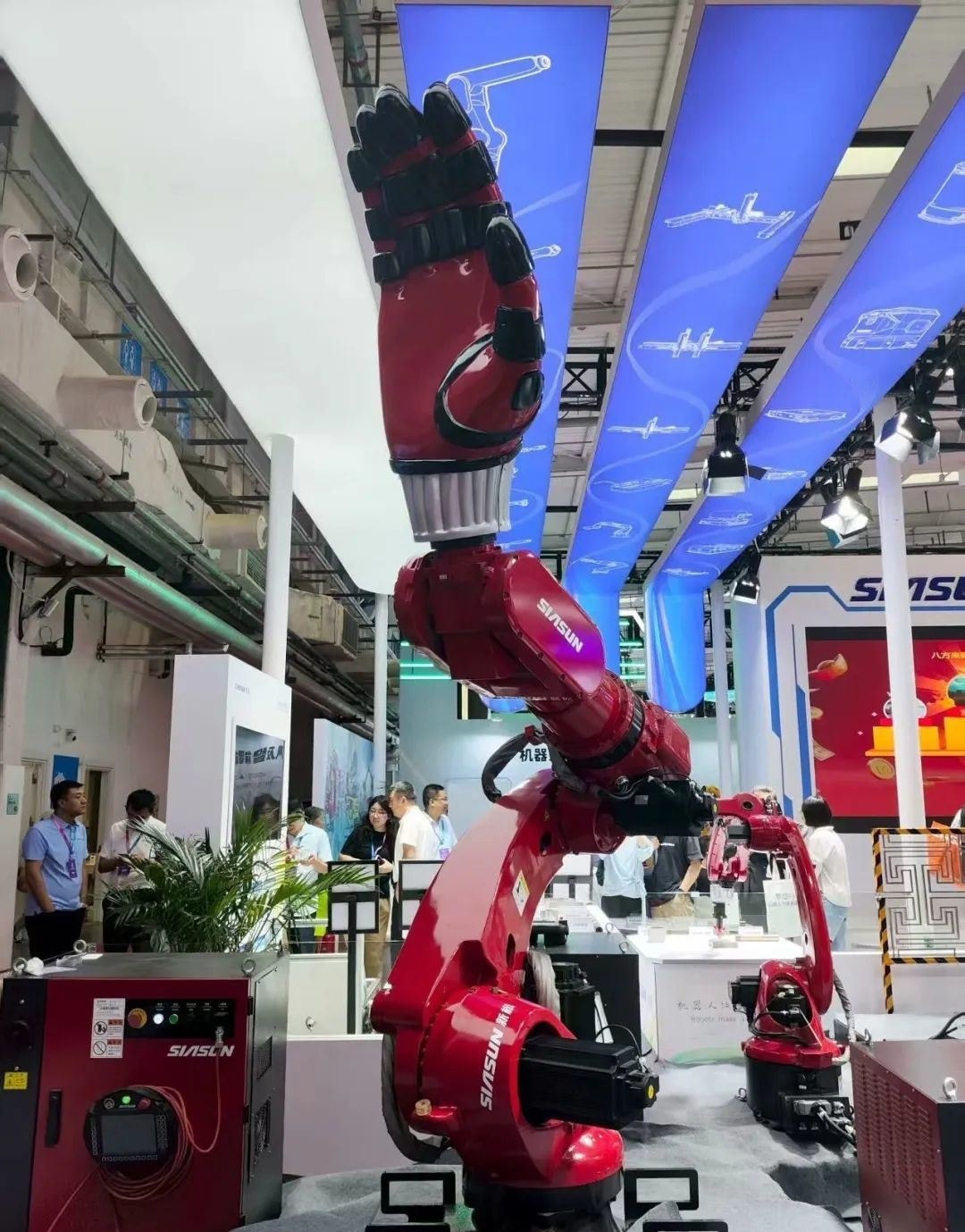
SIASUN showcased its SR270A-270/2.70 industrial robot, a versatile unit used in automotive manufacturing. The robot’s prominence was further amplified by its appearance at CCTV’s Dragon Boat Festival Gala earlier this year, where it danced alongside human performers.
The Songyi wheeled robot proved to be one of the most active exhibits, accurately identifying various item shapes and continuously transporting material bins. Its performance highlighted advancements in autonomous navigation within dynamic warehouse environments.
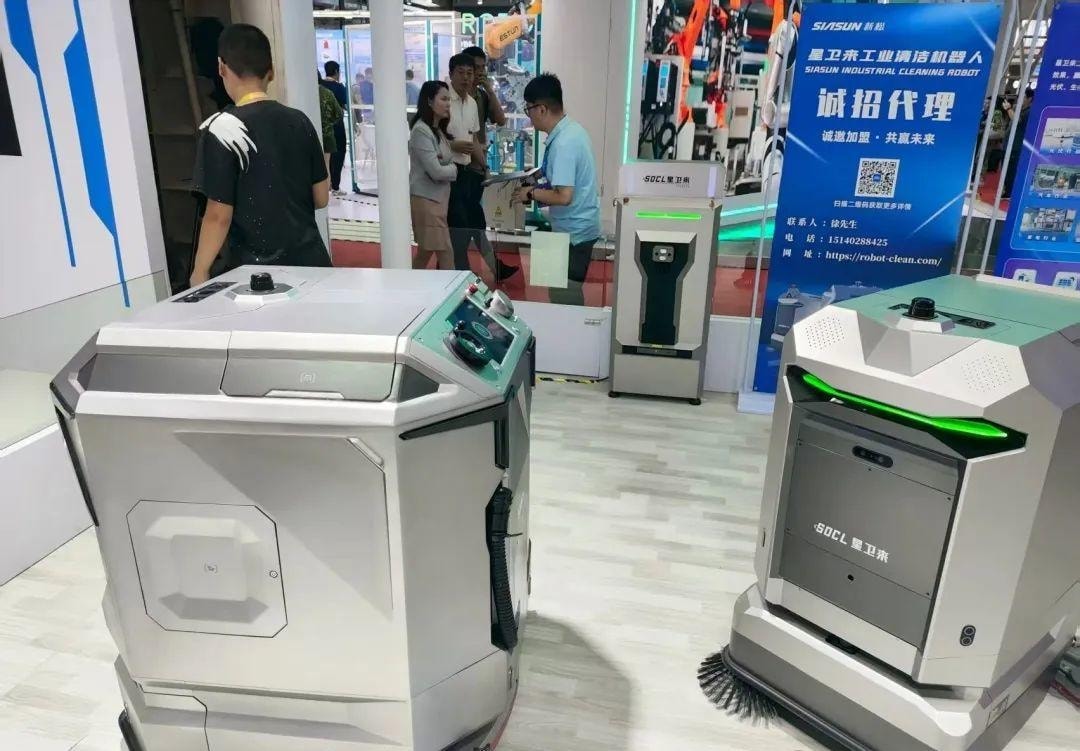
Xingwei introduced a “Snail Girl” style robot vacuum featuring 360-degree all-angle protection. The device operates quietly in the background, ensuring comprehensive coverage of cleaning tasks without human intervention.
ABB made its global debut with the PoWa high-speed collaborative robot, tailored specifically for the Chinese market. The system is designed for compact environments where speed and efficiency are critical, raising questions about safety protocols in tight human-machine workspaces.
SMC focused on low-carbon sustainable development, presenting a series of energy-saving and environmentally friendly products. This aligns with broader corporate governance trends emphasizing sustainability in industrial operations.
At the Zhi Pingfang booth, the Aibao general-purpose robot performed diverse tasks, including cheering as a fan, drumming, acting as a coffee shop owner, and working as manual laborer. The versatility demonstrated raises significant questions about AI role-playing boundaries and user expectation management.
Zhi Pingfang also announced joint research with Peking University on embodied intelligence. Their system uses visual-tactile sensing to obtain tactile images of fabric textures, accurately identifying materials such as silk, cotton, or cashmere. This level of sensory integration requires rigorous validation for industrial application.
The China Ordnance Industry Automatic Research Institute presented quadruped robots designed for police and firefighting use. These systems represent a critical intersection of public safety technology and autonomous decision-making, areas where regulatory oversight is currently evolving.
Navigating the Robot Expo: Governance Gaps in Embodied AI
Despite their charming exteriors, these robots have already proven their presence at high-stakes venues like the Zhuhai Airshow, raising immediate questions about safety protocols and liability when autonomous systems operate in public or semi-public spaces. As an Enterprise AI & Governance Editor, I view this not just as a showcase of engineering, but as a stress test for regulatory frameworks that are currently lagging behind deployment speeds.
Dobot’s Interactive Art: Prompt Liability
Dobot’s Magician E6 robot invited audience members to draw on-site. By leaving some line sketches and describing their imagined scenes, users could have the robotic arm complete the artwork based on those prompts.
My sense is this user-generated content model shifts liability for output errors onto the end-user. Enterprises must define clear boundaries for autonomous manipulation in public-facing demos.
GAC Group’s Humanoid: Real-World Pilots vs. Marketing
As an automaker, GAC Group has also entered the robotics field, debuting its embodied intelligent humanoid robot, Gomate. According to on-site managers, the model currently displayed is the third generation, which has already been piloted in Guangzhou Metro. Visitors can look forward to the release of a new generation this year.
What concerns me is that piloting in a metro system implies rigorous safety certifications that we rarely see for general-purpose humanoids. We should verify if these pilots meet industrial-grade compliance standards.
Elder Care Robots: High Risk, Low Regulation
Also present were the second-generation embodied intelligent passenger-carrying wheel-legged robot GoMove and the embodied intelligent service robot GoSide, both aiming to create comprehensive robotic services for elderly care and health scenarios.
I think deploying autonomous mobility aids in healthcare settings without clear liability frameworks is a significant risk. Governance boards must demand rigorous failure-mode analysis before adoption.
Hexagon’s Industrial Humanoid: VR as a Safety Buffer?
Hexagon introduced its first humanoid robot designed for industrial applications. It can accurately identify industrial components, and VR headsets were provided on-site to allow visitors an immersive experience.
My sense is using VR for immersion suggests the physical interaction is still being validated. Enterprises should treat such demos as controlled experiments rather than ready-for-production solutions.
Changxing Power Robotics: Unproven Medical Claims
Changxing Power Robotics launched a healthcare robot. According to introductions, the robot can perform “moxibustion,” although it has not yet been fully deployed for practical use.
What concerns me is that performing medical procedures like moxibustion without full deployment raises serious regulatory red flags. We must insist on clinical validation before any healthcare integration.
Startups: The Accountability Void
Many startup teams also showcased their embodied robots. For example, PNDbotics displayed its general-purpose humanoid robot, aiming to build a foundational technology platform for such machines. Lingsheng Technology, founded in 2023, showcased its embodied intelligent robot serving popcorn to children at the event.
I think startups with minimal track records pose higher governance risks due to limited resources for compliance. Enterprises should conduct deeper due diligence on their financial and legal stability before partnerships.
Agile and Cool: Watch Robots Dance in Hall B
If there is one booth that drew the most attention in Hall B, it was undoubtedly ZQ Robotics’ combat robot display. The ENGINEAI T800 sat on an iron throne, chains wrapped around its hands—who wouldn’t think it looked cool? There was also a large exhibition area showcasing the robots’ mobility capabilities in full detail. (The image below features ZQ Robotics’ ENGINEAI PM01, which stands 1.7 meters tall and has at least 23 degrees of freedom across its body.)

The exhibits in Hall B were dazzling to the eye. Honestly, it would take an entire afternoon just to thoroughly explore every corner of Hall B. Leju Robotics showcased its general-purpose humanoid robot, KUAVO-MY (Kuafu). Featuring an end-to-end universal brain architecture, it supports applications such as exhibition hall navigation and industrial manufacturing. Standing approximately 1.47 meters tall, the robot has 40 degrees of freedom across its body.
- , appearing quite agile. Additionally, there are wheeled-arm robots better suited for industrial production and assembly line operations.
My sense is the “universal brain” claims need independent verification before enterprises trust them with critical infrastructure tasks.
LimX Dynamics had LimX Oli (165cm tall, with 31 degrees of freedom in its body) dance on site. Whether classical or trendy moves, they handled it with ease. One wasn’t enough to watch? Pacini Technology set up an entire zone for synchronized robot dancing. Stardust Intelligence’s S1 danced with a vibe that felt like a shy person finally letting loose.
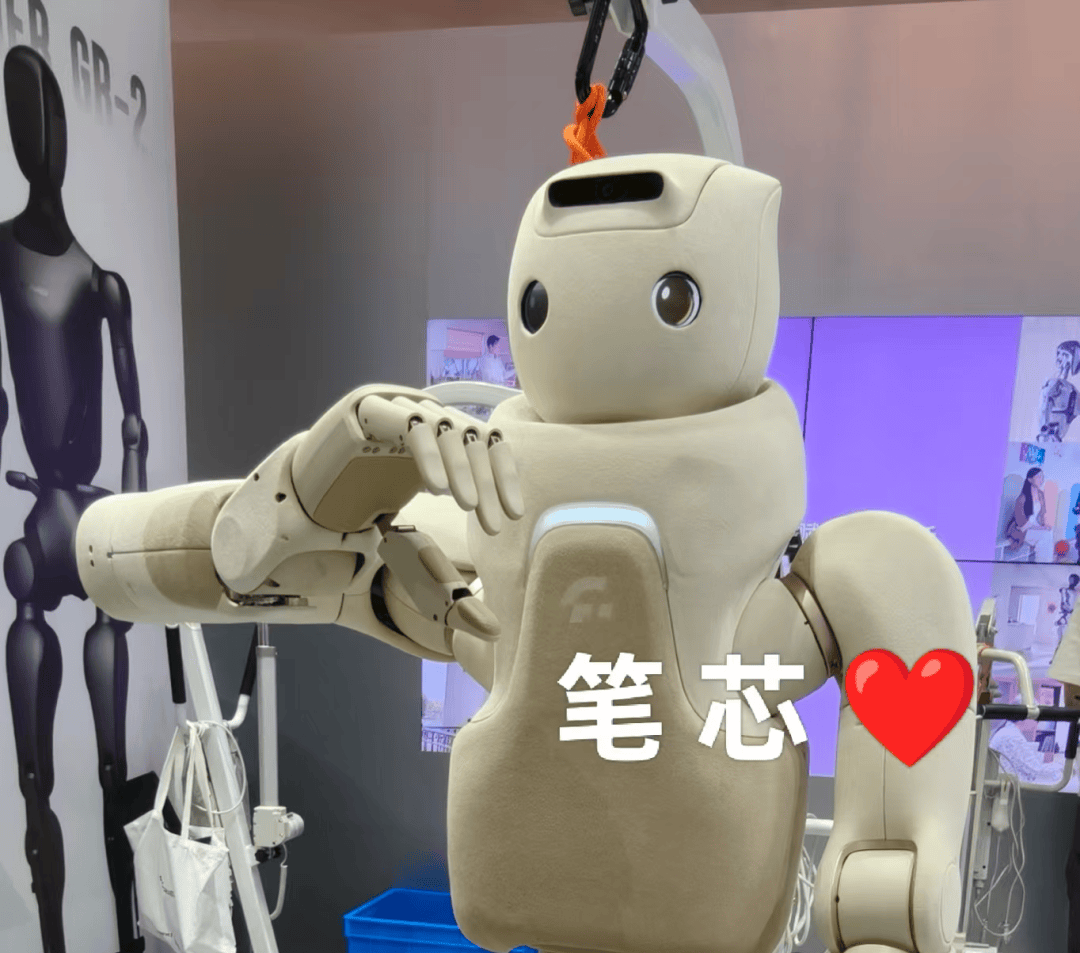
Officer! I want to report Fourier Intelligence for employing child labor (doge emoji). It’s actually the open-source robot N1, standing 130cm tall with 23 degrees of freedom across its body. The newly released companion robot GR-3 was also present at the event. I got to touch it, and the texture feels really nice!
What concerns me is that companion robots introduce unique privacy risks; enterprises must audit data collection protocols before deployment in shared spaces.
Star Map paired R1 with an operator, allowing for a clear view of real-time feedback (it’s hard to tell who is being played with). Meanwhile, Songyan Dynamics brought China’s first high-degree-of-freedom, immersive interactive bionic robot… head. Using self-developed bionic skin and high-precision actuators, it can recognize and mimic complex human emotions such as anger, smiling, surprise, and sadness in real time. The facial features are customizable and can be detached without damage; you can have it look exactly how you like. (What a perfect cyber-girlfriend [doge emoji])
The beauty in the center of the photo below was even singing on site. Star Motion Era’s little sprite, Star Motion Q5, is equipped with a “Star Motion Spirit Hand” the size of a human hand. Its 11 degrees of freedom enable micro-force control joints that automatically grip back upon contact with a human hand.
After shaking hands, it even made a heart shape for everyone. Keenon Robotics’ XMAN-R1 is equipped with 11 multimodal sensors and integrates self-developed 3D reconstruction technology. Although its primary role is as a waiter (e.g., in restaurants), it also showed off some cute antics at this year’s Robot Conference.
I think high-end social robotics are still novelty acts; their ROI for enterprise use cases remains unproven.
iFlytek mainly showcased robot accessories such as intelligent voice packages at the conference. Once connected, these allow robots to possess communication capabilities. However, when it comes to companion robots, humanoid form is not the only option—they can also be robotic dogs. For example, Vita Dynamics’ robotic dog is cute and well-behaved. This robotic dog is equipped with a 360° LiDAR specifically designed for robots by Hesai Technology, enabling reliable obstacle avoidance in all scenarios. Magic Atom’s robotic dog moves very similarly to a real puppy.
Industrial robots designed to improve productivity present another mode of application. The Institute of Automation, Chinese Academy of Sciences demonstrated precise and highly generalized delicate tasks on site, such as flexible cable plugging. Robots from Galbot showed us that when it comes to industrial logistics and intelligent sorting, wheels are indeed much faster than legs. For instance, Yuanluo Technology’s Monte series performed live demonstrations of multi-robot collaborative operations, completing long-range, precision tasks such as wastewater production, sample pre-processing, and monitoring analysis. Zibian Robot’s Quantum No. 1 (a general-purpose wheeled dual-arm robot) was kept busy non-stop
Navigating the Robot Expo: A Governance Editor’s Walkthrough
The sheer volume of hardware on display at this year’s conference shifted the burden of proof from “can it move?” to “is it safe and compliant?” As an editor focused on enterprise AI governance, I found myself less impressed by the spectacle and more concerned with the liability frameworks behind these machines. Who is accountable when a 135 kg humanoid drops a load? Which vendor holds the insurance for a care robot’s failure?
Kuawei Intelligence showcased robots acting as baristas, preparing coffee on-site. It was a simple demonstration of precision, but it raised immediate questions about food safety protocols and liability in automated service environments.
Benmo Technology, specializing in direct-drive precision power systems, displayed various wheeled robots, some of which are capable of carrying passengers. The presence of passenger-carrying units introduces significant regulatory hurdles regarding transport safety standards that many exhibitors had not yet addressed publicly.
Meanwhile, Yunji Technology presented numerous box-shaped robots designed for factory logistics and transportation. In industrial settings, the integration of these autonomous mobile robots (AMRs) requires rigorous risk assessments to ensure they do not collide with human workers or disrupt established safety zones.
In the medical and assistive robotics sector, the Embodied Intelligence Smart Elderly Care Community exhibited a wide array of intelligent care devices. This sector is heavily scrutinized; any failure in elderly care robots can lead to severe physical harm and substantial legal repercussions for providers and manufacturers alike.
At the Zhiyuan Research Institute, visitors could experience China’s first consumer-grade exoskeleton, the Tasan series, which integrates AI gait prediction and torque adaptive technology. Consumer health devices must navigate strict medical device regulations; I followed the release notes closely to see if they had cleared the necessary safety certifications for public use.
Aosha Intelligence’s exoskeletons are designed not only for flexibility but also for a sleek, stylish appearance. Aesthetics do not mitigate risk; enterprises deploying these must verify that the “stylish” design does not compromise structural integrity or user safety during prolonged wear.
In the latter half of Hall B, four booths attracted the largest crowds. The density of attention here highlighted where market interest is currently concentrated, but also where compliance scrutiny will likely intensify as these products scale.
The most prominent was SenseTime’s Yuanluobao AI chess-playing robot. With AlphaGo (fun fact: “Go” is the English name for the game) coming to life, wouldn’t you want to challenge it? While primarily a demonstration of computational power, the underlying AI models used in such interactive systems must be audited for bias and decision-making transparency if deployed in broader customer-facing roles.
Next was Kepler’s humanoid robot K2 Bumblebee. Standing 175 cm tall and weighing 135 kg, this robot features 52 degrees of freedom, can lift 30 kg with both arms in coordination, and offers an operational endurance of up to eight hours. A machine of this mass and strength requires robust emergency stop mechanisms and clear liability definitions for industrial deployment.
My sense is high-mass humanoids without visible safety interlocks pose a significant physical risk in shared workspaces.
Then there was the Mars Beauty Robot at the Elephant Antai booth. This series is primarily designed for reception and guiding scenarios, featuring realistic human-like appearances. Notably, both the mobile and fixed versions of this series are priced below 80,000 yuan. The low price point may encourage rapid adoption in retail, but it also raises concerns about data privacy if these robots capture biometric or behavioral data from customers.
What concerns me is that cheap consumer-facing AI must still comply with strict data protection laws regardless of hardware cost.
Also focusing on reception and guidance duties were robots from Pangolin Robotics. Similar to the previous example, their deployment requires clear policies on how visitor interactions are recorded and stored.
Finally, the Elephant Robot booth featured “metaCat” (Mi Ta Mao), a robotic cat beloved by children. With realistic animal aesthetics and a focus on companionship, it is priced at just 989 yuan. Child-facing AI devices demand the highest level of safety certification and content filtering to prevent inappropriate interactions or data exploitation.
I think companion robots for children require rigorous ethical oversight and parental consent mechanisms.
Outside these main booths, Lexiang Technology’s robot, which resembles WALL-E from the movie WALL-E, also drew significant attention from attendees. It is part of Lexiang Technology’s W-Bot series of tracked robots. The novelty factor often overshadows the need for due diligence in tracking where such units operate and what data they collect.
Companies such as the 21st Research Institute of China Electronics Technology Group Corporation, Ligong Huahui, Galileo, and Ubot also exhibited their own quadruped and humanoid robots. The diversity of form factors suggests that standardization in safety protocols is lagging behind innovation, creating a fragmented compliance landscape for enterprises.
(Unfortunately, no operational demonstrations were observed at that time.) This lack of live testing makes it difficult to assess real-world reliability and safety margins, forcing buyers to rely on vendor claims rather than empirical evidence.
Manufacturers including Juxie Intelligence, Fangzhou Yuanqi, Ligong Huahui, and Inks showcased their end-effectors (dexterous hands, grippers), as well as other robotic components. The supply chain for these critical components is often opaque; enterprises must verify the provenance and safety standards of sub-components to ensure overall system integrity.
There were many more exhibition areas, each showcasing not just a single product. The complexity of modern robotics means that governance cannot be an afterthought; it must be embedded in the procurement process from the start.
It was impossible to see everything; there really was too much to explore. For enterprises, this abundance requires a disciplined approach to vendor assessment, focusing on compliance and risk management rather than just technological novelty.
My sense is procurement teams must prioritize vendors with transparent safety records over those with the flashiest demos.
From Robotic Special Forces to Precision Components: Hall C of Heavy Industry
The narrative in Pavilion C shifted sharply from consumer entertainment to industrial utility. While earlier sections highlighted novelty, this area bore the weight of operational readiness. Enterprises must now scrutinize which entities are liable for deployment failures in high-stakes environments like firefighting or medical diagnostics. The burden of proof lies with manufacturers demonstrating robustness under stress.
Beyond solo performers, the expo featured a “robot band” that drew considerable audience interest. This was Hangzhou Haichuang’s creation tailored for entertainment venues…
The Xuan Robot Band has achieved high-level synergy among lightweight robotic arms, high-speed dexterous hands, and musical instruments. Capable of reading sheet music independently, the band can now skillfully perform over 60 songs.
In addition to these displays, a striking sight graced the exhibition floor.
A team of robotic dogs shuttled between various pavilions, their rhythmic footfalls seemingly reminding attendees to make way. However, if you stopped to greet them, these mechanical pups would wave back at you—before promptly continuing on their route.
This is actually the ZSL-1 “Steel Coin” robot dog from ZhiShen Technology. Featuring a high-strength skeleton structure and 360-degree surround protection, it can reach a maximum speed of 3.7 meters per second.
Following this team into Pavilion C, visitors were immediately greeted by an array of specialized robots.
CITIC Heavy Industries showcased the RXR-MC120BGD fire-fighting and reconnaissance robot. With its imposing mechanical aesthetic and robust design, it represents a class of medium-to-heavy-duty robots capable of navigating complex environments such as firefighting, rescue operations, reconnaissance missions, and various industrial settings.
Lingtian Intelligence also brought its “robot family bucket” for diverse safety scenarios to the site. The large unit on the left is a multi-functional fire rescue, bomb disposal, and reconnaissance robot.
Shenhao Technology presented train inspection robots, the F100 wheeled patrol robot, and inspection drones.
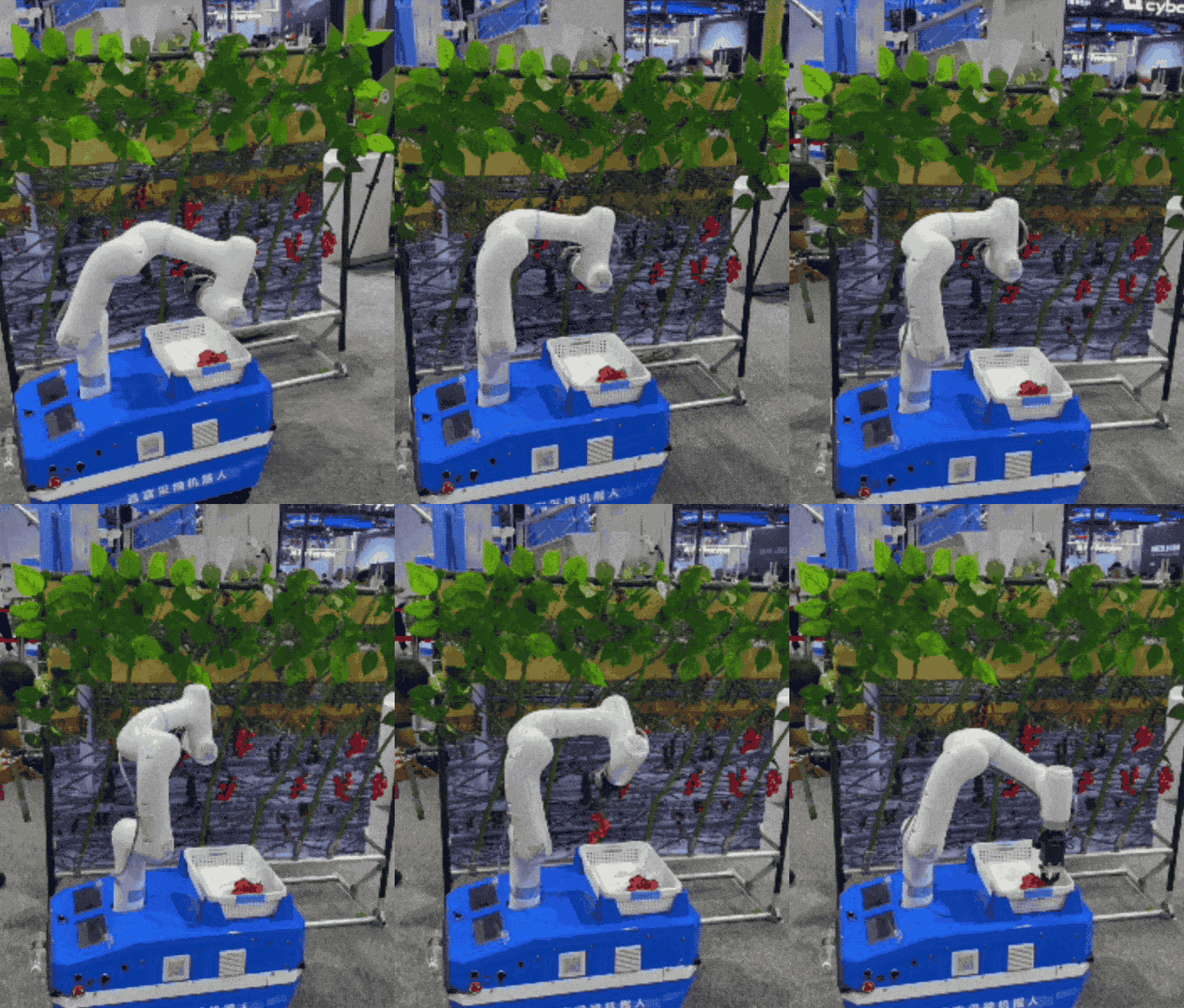
Agricultural robots from the National Engineering Research Center for Agricultural Intelligent Equipment drew significant attention, with visitors eagerly capturing photos as a flexible greenhouse picking robot demonstrated tomato harvesting on-site.
Bionic robots from Digital Huaxia mimicked human appearances and even micro-expressions, prompting gasps over the level of detail. Beyond their visual realism, they are equipped with electronic skin capable of sensing human hand temperature.
Multi-scenario application bionic robots from Qingbao Intelligence were praised for their impressive aesthetics.
Hanvon Technology displayed the Golden Eagle Bionic Flapping-Wing Aircraft, weighing approximately 630 grams with a cruising speed of up to 7 m/s and capable of carrying reconnaissance payloads. On-site staff demonstrated its exceptionally smooth wing-flapping motion.
Staff members noted that their intelligent bionic aircraft product line began R&D in 2016 and entered operational use in 2019.
Cyborg showcased a robot resembling a “small hill,” which became an instant viral photo spot at the event.
The Hangzhou Humanoid Robot Innovation Center introduced “Panda,” a small, fuzzy, family-companion robot with blinking eyes and an adorable child-like voice for interaction.
Both Hanvon Technology and Zhongjian Technology brought robotic dogs designed for various safety scenarios, including police patrol quadruped robots and fire rescue robot dogs.
It is reported that Zhongjian Technology’s proprietary production line achieved an annual output of over 10,000 units in 2025.
Medi Optical, a subsidiary of Yizhuang Holdings, presented a series of robots for the medical and biotechnology sectors, including ultra-depth-of-field optical microscopes and robotic arms. On-site information indicated that microscope production had exceeded 10 million units.
A tour of Pavilion C revealed that dexterous hands were the most prevalent component among smaller exhibits.
Companies such as Lingxin Qiaoshou, BrainCo, Yinshi Robotics, Ottobock China (Note: “Ao Yi” usually refers to Ottobock or similar, but literal translation is Ao Yi Tech), and Ruiyan Intelligence showcased their various models of dexterous hands.
When the dexterous hands start moving, it feels a bit like “cyber fortune-telling”… (doge).
Many of these products featuring “hand commerce” are equipped with sensors from Tashan Technology.
Speaking of sensors, after viewing the vibrant and diverse robot exhibition area, let’s turn our attention to the componen
What concerns me is that liability for autonomous navigation errors in crowded venues remains legally ambiguous. I think enterprises must verify sensor redundancy before deploying robots in medical settings. My sense is high-volume production does not guarantee compliance with emerging safety standards.
Inside the Supply Chain: The Quiet Power Behind the World Robot Conference
By Priya Sharma, Enterprise AI & Governance Editor
The narrative of robotics often fixates on the final form factor—the humanoid standing tall or the autonomous vehicle navigating traffic. But at the World Robot Conference’s Hall C exhibition zone, the reality is far more granular and critical to enterprise governance: the foundational components. Upon entering, you immediately notice the absence of robots flashing their screens everywhere. Instead, there are only unassuming drivers, sensors, joint modules, and batteries.
This shift in focus highlights a crucial supply chain vulnerability. If we cannot guarantee the integrity of the magnetic encoders or the torque sensors, the final AI-driven product is built on sand. At this exhibition, companies such as Weijing Motor, Leaderdrive, Jingang Technology, SLAMTEC, Omnispace, Nuoshi Robotics, Qianghe Motor, and Kemeng Innovation displayed various precision robot accessories, including magnetic encoders, sensors, and roller screws.
In terms of drivers, Damiao Technology presented motor drivers and development kits applicable to robotic arms and humanoid robots. Regarding sensors, BlueDot Touch showcased their joint torque sensors, six-axis force sensors for humanoid robots, and universal six-axis force sensors. Raycus Intelligent Light and RobSense exhibited two mainstream visual perception solutions: LiDAR and AI cameras.
Hanwei Electronics integrated tactile sensing with the aforementioned perceptual technologies to form a full-chain perception solution.
If drivers are the muscles of a robot and sensors are its eyes, then joints and energy input are what truly bring the robot to life. Kinco and Yiyou presented their core joint motion control component solutions specifically designed for robots. EVE Energy and Grepow introduced their comprehensive battery solutions for robots, covering wheeled, quadruped, humanoid, and industrial robot scenarios.
Alright, fellow virtual tour companions, this “cloud exhibition tour” is coming to an end! From the precision operational workflows of industrial robots to the human-machine interaction logic of companion robots, we can feel that robotics are gradually moving from production lines into our daily lives. Although this “cloud tour” allowed everyone to see the highlights without jostling for a front-row spot, it is undoubtedly worth visiting in person. In Yizhuang, you can interact directly with various robots and experience the latest developments in technology~
What concerns me is that component traceability must be as rigorous as the final AI model’s audit trail. I think battery safety standards need to keep pace with humanoid robot energy demands. My sense is enterprises should verify supplier compliance before integrating these core modules.
Comments
Sign in to join the discussion and leave a comment.
Sign in with Google