Who wins when AI models finally learn to reason across modalities? The creators do—if they can license the output without friction. But if the underlying training data lacks provenance, we’re just automating bias with better math. I see this as a pivotal moment for multimodal workflows, yet the licensing landscape remains murky.
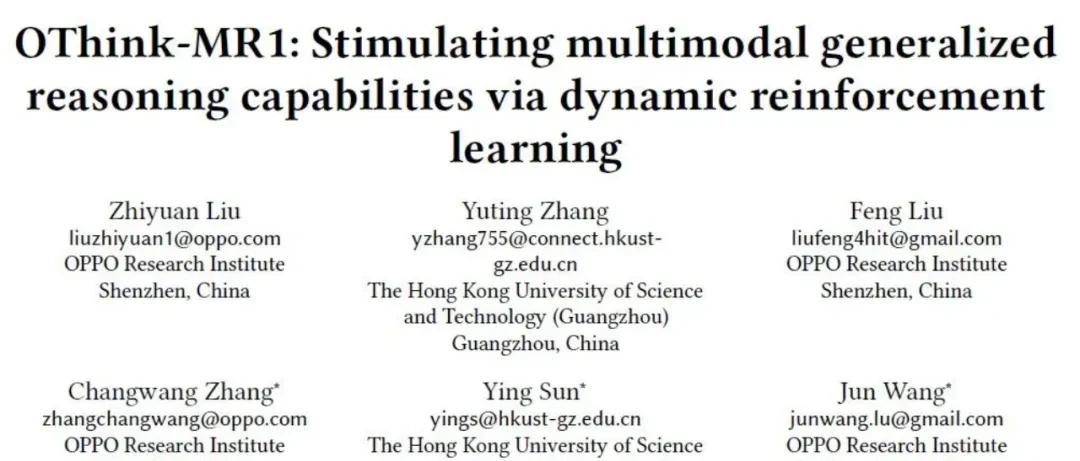
Researchers from OPPO Research Institute and The Hong Kong University of Science and Technology (Guangzhou) have proposed a new technology called OThink-MR1, which extends reinforcement learning to multimodal language models, helping them better handle various complex tasks and new scenarios.
The researchers stated that this technology enables the industry to break through the generalized reasoning capabilities of multimodal models.
As is well known, while multimodal large models can process various types of input data and generate relevant outputs, their performance often falls short when faced with complex reasoning tasks.
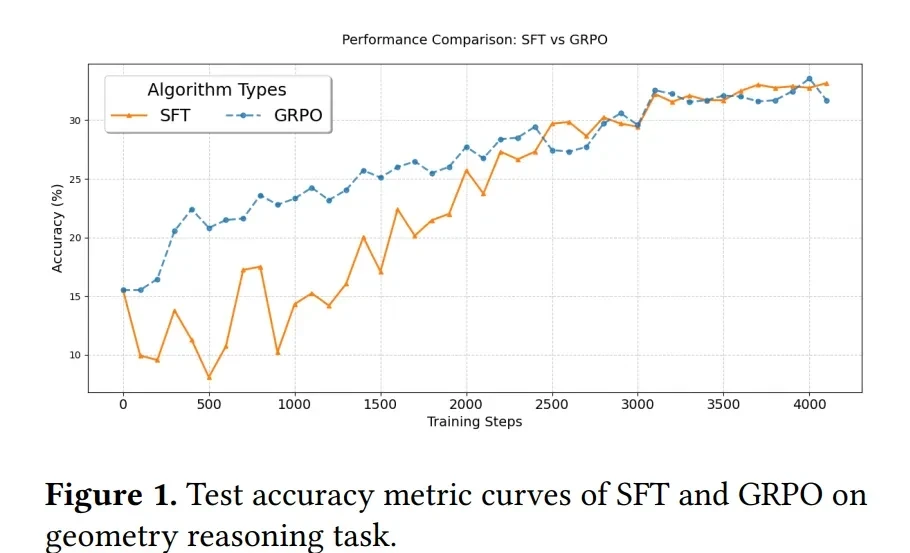
Currently, most multimodal models are primarily trained using Supervised Fine-Tuning (SFT).
SFT is akin to a teacher highlighting key points for students, guiding them to learn in fixed patterns. Although this method can yield good results on specific tasks, it struggles to cultivate essential general-purpose reasoning abilities.
Meanwhile, Reinforcement Learning (RL), as an alternative training approach, has begun to attract attention.
RL is like allowing students to learn through trial and error, offering rewards for correct actions and “criticism” for mistakes. Theoretically, this method can make models more flexible in handling various tasks and enhance their reasoning capabilities. However, it faces issues such as insufficient exploration of general capabilities in multimodal tasks and suboptimal bottlenecks caused by training constraints.
Thus, the OThink-MR1 technology was born.
So, how does it enable multimodal models to break through generalized reasoning capabilities?
Based on Dynamic Reinforcement Learning
OThink-MR1 is a framework and model based on dynamic reinforcement learning that supports fine-tuning of multimodal language models.
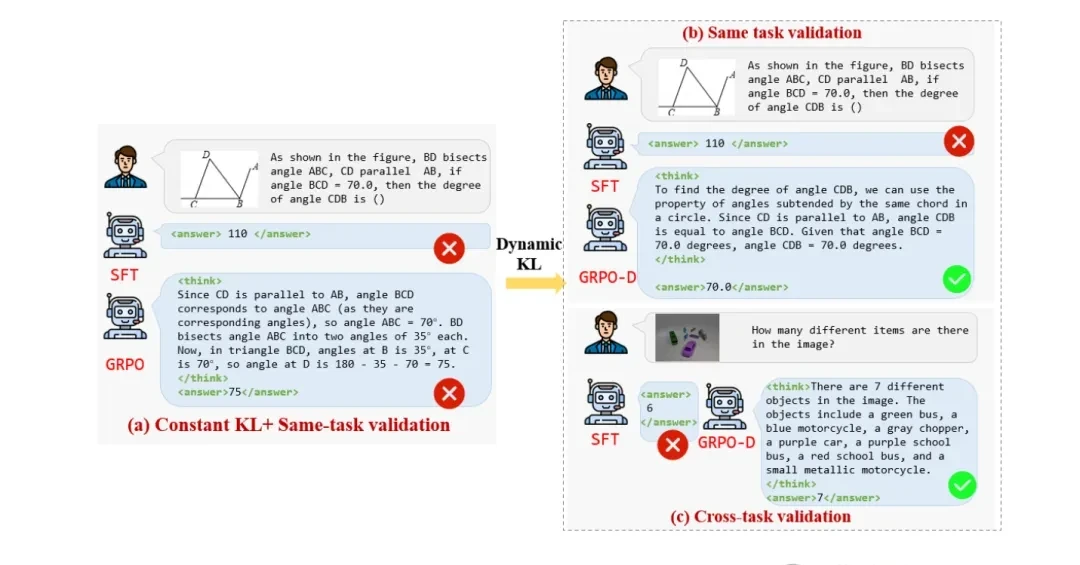
Its core “techniques” are twofold: a dynamic KL divergence strategy (GRPO-D) and a carefully designed reward model. Working in tandem, these components significantly boost the model’s learning efficiency and reasoning capabilities.
First, let’s look at the dynamic KL divergence strategy.
In reinforcement learning, exploring new strategies and leveraging existing experience are two crucial aspects. However, previous methods struggled to balance these two, often either wasting too much time in the exploration phase or relying too early on established experiences.
The dynamic KL divergence strategy acts like an “intelligent navigator” for the model, dynamically adjusting the balance between exploration and exploitation based on training progress.
To put it simply, during the initial stages of training, it encourages the model to act like a curious child, boldly exploring various possible strategies. As training progresses, it guides the model to gradually leverage previously accumulated experience, proceeding along more reliable paths.
This allows the model to learn more effectively and avoid getting stuck in local optima.
Next is the reward model. In OThink-MR1, the reward model serves as the grading standard used by teachers for students.
For multimodal tasks, researchers designed two types of rewards: one for verification accuracy and another for format compliance.
For example, in a visual counting task where the model must count objects in an image, it receives a verification accuracy reward if the count is correct. Additionally, if the model’s response adheres to the required format (e.g., writing down the answer in a specified structure), it earns a format reward.
These combined rewards are like a teacher evaluating students from multiple perspectives, helping the model understand where it excels and where improvements are needed, thereby facilitating more targeted learning.
Experimental Results
I followed the release from OPPO Research and HKUST(GZ) to see how OThink-MR1 actually performs under pressure. The researchers didn’t just claim improvements; they ran a series of experiments designed to stress-test generalization reasoning. What stood out to me was their focus on dynamic reinforcement learning rather than static fine-tuning alone.
Reward Weights and KL Divergence
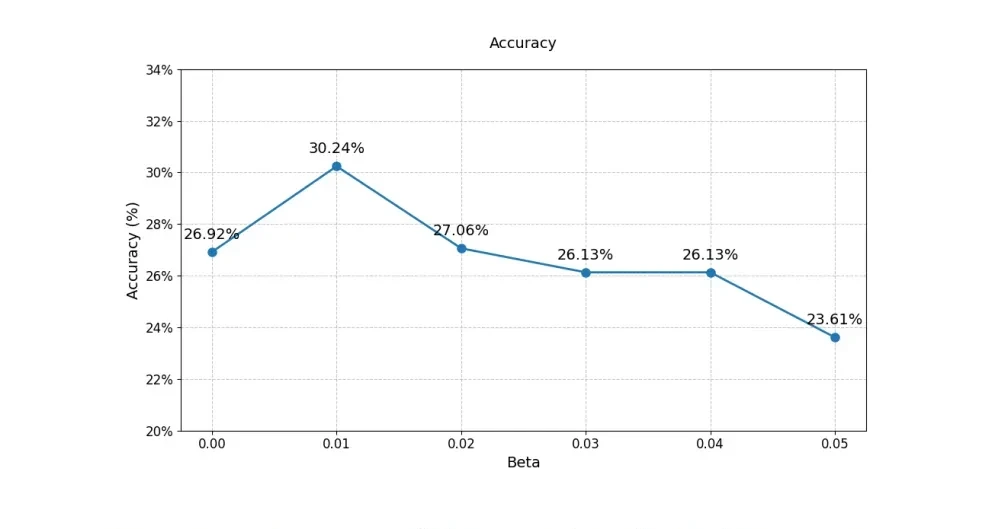
In the first experiment, I watched them adjust reward terms and KL divergence within original GRPO during validation. In geometric reasoning tasks, they tweaked the format reward weight and found that model performance improved significantly when the format reward weight was non-zero. This reminded me of grading student essays: correct content matters, but clear formatting often earns those crucial extra points that boost overall scores.
Simultaneously, I noted their findings on KL divergence weights. They discovered that the model performed best with moderate weights; both excessively high and low weights led to decreased performance. It’s a delicate balance—too much constraint stifles creativity, while too little leads to chaos.
Cross-Task Evaluation: The “Final Exam”
The second experiment served as a true cross-task evaluation, representing a rigorous final exam for the model. Previous studies mostly evaluated generalization across different data distributions within the same task type. This experiment, however, directly challenged models with entirely different types of tasks, which is where many multimodal systems usually crack.
Researchers selected visual counting and geometric reasoning tasks, varying in difficulty and demanding distinct capabilities from the AI.
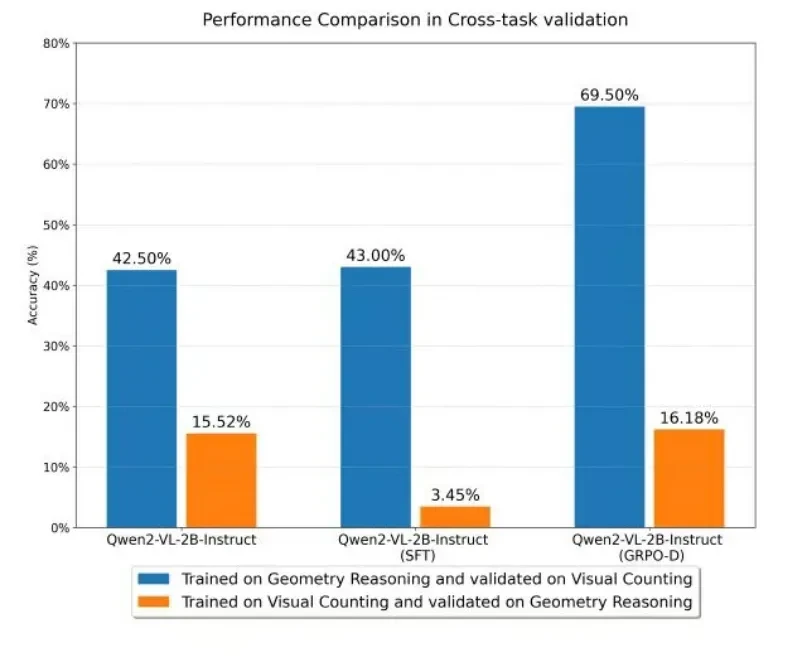
In this cross-task validation, models trained with supervised fine-tuning performed poorly. It was like a student who only knew how to solve one specific type of problem; upon encountering a different format, they were completely lost.
In contrast, models trained with GRPO-D excelled. In generalization experiments moving from reasoning tasks to understanding tasks, their scores improved significantly compared to untrained models. Even in the more difficult generalization experiments moving from understanding tasks to reasoning tasks, they achieved notable progress. This adaptability is akin to a student who not only excels in mathematics but can also quickly master language arts knowledge.
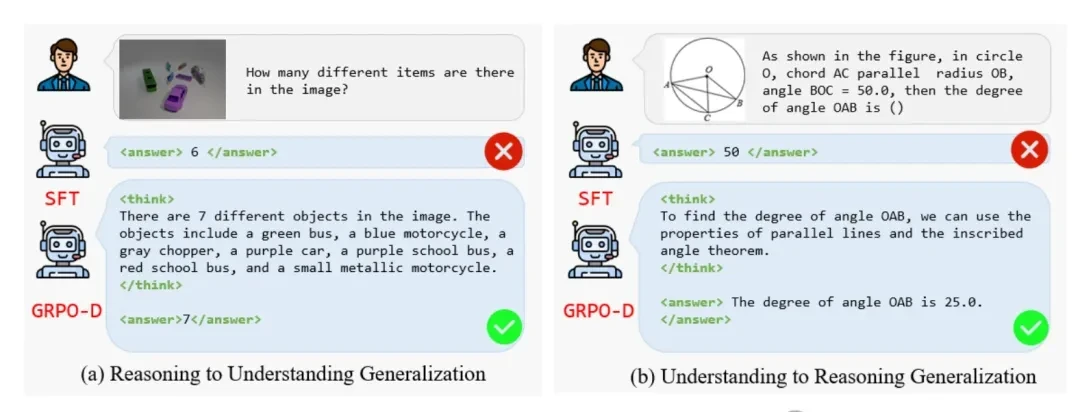
I think dynamic RL methods may reduce the need for manual prompt engineering by creators. For creators, better generalization means fewer custom adapters needed for niche creative workflows.
Same-Task Performance
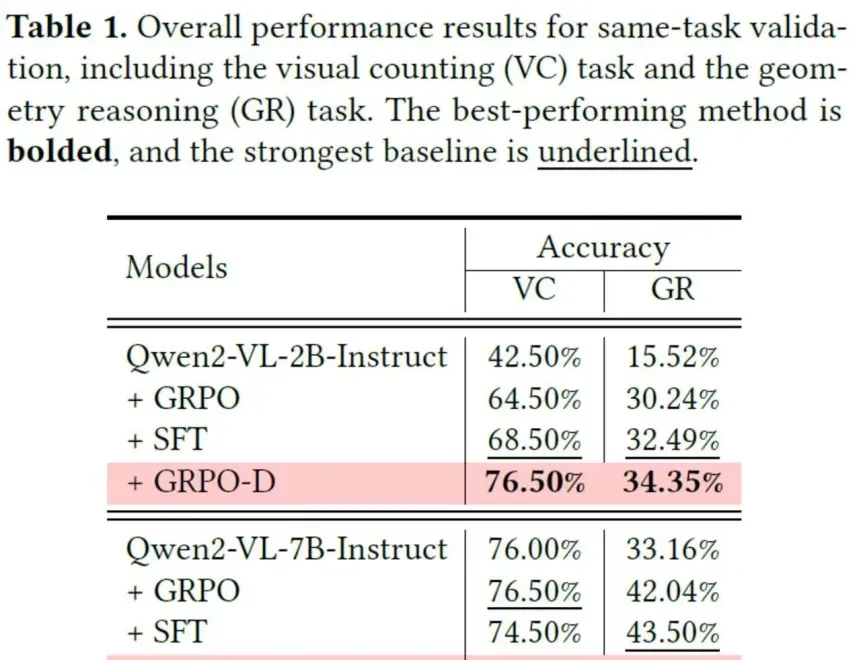
The third experiment focused on same-task evaluation to see if the new method held up against traditional baselines. Experimental results showed that in same-task validation, the GRPO method using fixed KL divergence underperformed compared to supervised fine-tuning. However, I was pleased to see that the GRPO-D within OThink-MR1 managed to turn the tables.
It outperformed supervised fine-tuning in both visual counting and geometric reasoning tasks. This is like a student with average grades who, after finding a suitable learning method, saw their scores skyrocket, directly surpassing peers who relied solely on rote memorization.
On licensing, efficient training loops could lower the barrier for independent developers to fine-tune models. I think stronger reasoning reduces hallucination risks in automated content generation pipelines.
Conclusion
Overall, I see the emergence of OThink-MR1 as paving a new path for the development of multimodal language models. It highlights the immense potential of dynamic reinforcement learning in enhancing model reasoning and generalization capabilities. In the future, technologies like OThink-MR1 are expected to play significant roles across more domains.
Paper Link: https://arxiv.org/abs/2503.16081
• Title: OThink-MR1: Stimulating multimodal generalized reasoning capabilities through dynamic reinforcement learning • Authors: Liu Zhiyuan¹, Zhang Yuting², Liu Feng¹, Zhang Changwang¹, Sun Ying², Wang Jun¹ • Affiliations: 1. OPPO Research Institute, 2. The Hong Kong University of Science and Technology (Guangzhou)
Comments
Sign in to join the discussion and leave a comment.
Sign in with Google