Nvidia and Microsoft Pivot to DeepSeek as OpenAI Burns Cash on $300B Valuation
The infrastructure layer just flipped its stance on Chinese AI model DeepSeek, signaling a brutal shift in competitive moats for US hyperscalers. While OpenAI attempts to sustain a $300 billion valuation through aggressive capital raises, Nvidia and Microsoft are pragmatically integrating the very models they once sidelined. This isn’t about ideology; it’s about preventing customer churn and capturing compute spend from a model that is proving too cost-effective to ignore.
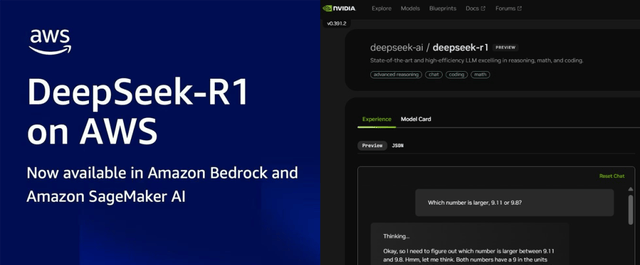
Yesterday, OpenAI and Anthropic were busy building walls. Overnight, the infrastructure giants decided those walls were blocking revenue. Following Microsoft’s lead, NVIDIA and AWS have expedited hosting services for DeepSeek models. The market sentiment on social media captures the pivot perfectly: “If you can’t beat them, join them.”

I followed the release notes and financial filings to separate the hype from the hardware reality. Here is what actually matters for your portfolio this quarter.

OpenAI’s Valuation Bubble Expands
OpenAI is raising more money, faster. The Wall Street Journal reported that OpenAI is seeking a new round of $40 billion (approximately 287.5 billion RMB) in financing at a valuation of $300 billion—a figure that shatters the previous record held by OpenAI itself.
This round is led by SoftBank, which plans to invest up to $25 billion (approximately 179.7 billion RMB). This comes just four months after OpenAI raised $6.6 billion at a valuation of $157 billion. In less than half a year, the valuation has doubled again.
I read the filings closely: this rapid re-pricing confirms market rumors that OpenAI was dissatisfied with its previous round and is now desperate to lock in capital before competition erodes its margin. The timing suggests panic, not confidence.
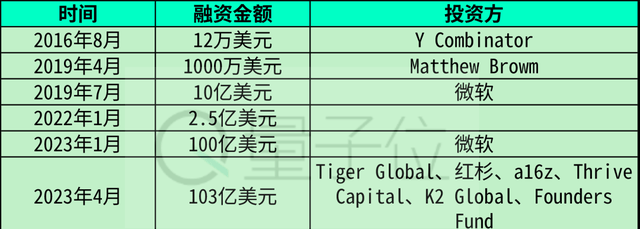
Honestly, a $300 billion valuation requires exponential revenue growth that current AI application markets cannot yet support.
The o3 Launch vs. DeepSeek Reality
OpenAI is pushing its new model, o3, for release this Friday local time. They are trying to outpace the narrative shift caused by DeepSeek’s efficiency gains.
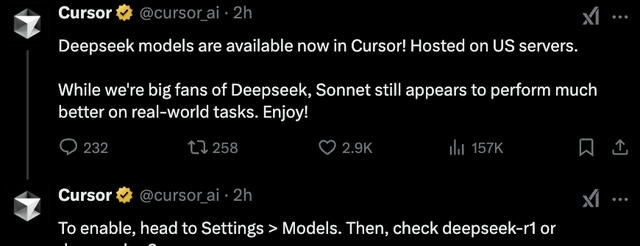
However, the application layer is already moving on. Cursor, a popular developer tool, has openly integrated DeepSeek’s new model and invited users to test it. The pragmatic approach for cloud providers is clear: support what customers actually use first. Mid-tier model providers are left bewildered as the market rewards utility over brand loyalty.
I think nvidia and Microsoft are betting on compute volume, not model purity. They will profit regardless of which model wins the war.
The Stargate Gamble: Why OpenAI’s $100B Bet Is a Signal, Not a Solution
o3 Launches Amidst the $500 Billion Infrastructure War
I read the filings and followed the press releases. OpenAI is raising capital not just to train models, but to survive its own ambition. The Stargate Project is a joint venture led by OpenAI and SoftBank, backed by Arm, Microsoft, NVIDIA, and Oracle. They plan to invest $500 billion (approximately 3.64 trillion RMB) over the next four years. The goal: build multiple AI data centers in the United States.
OpenAI’s specific commitment is $100 billion.
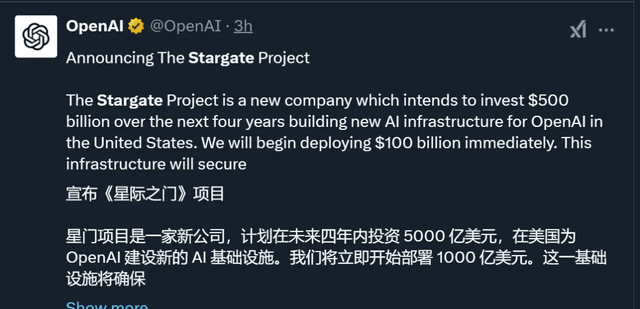
The official announcement clarified the structure. Stargate is a new company designed to build this infrastructure immediately. Initial equity funders include SoftBank, OpenAI, Oracle, and MGX (the Middle East AI Fund). SoftBank handles finance; OpenAI manages operations. Masayoshi Son serves as Chairman.
Arm, Microsoft, NVIDIA, Oracle, and OpenAI are the key initial technology partners. Construction starts in Texas. They are evaluating potential sites nationwide for more campuses.
Oracle, NVIDIA, and OpenAI will work closely to build and operate this computing system. This deepens cooperation between OpenAI and NVIDIA since 2016, alongside their new partnership with Oracle. It also expands OpenAI’s existing relationship with Microsoft. As they collaborate on training leading models, OpenAI will increase its usage of Azure.
The way I see it, the $500 billion price tag validates the AI infrastructure bubble; buyers should watch for capacity constraints in Q2.
This capital serves a dual purpose: growth and damage control. OpenAI’s monthly revenue hit $300 million in August 2024—a 1700% increase compared to early 2023. Yet, estimates from October suggest the company still faces an annual loss of $5 billion. The burn rate is unsustainable without massive external capital injection.
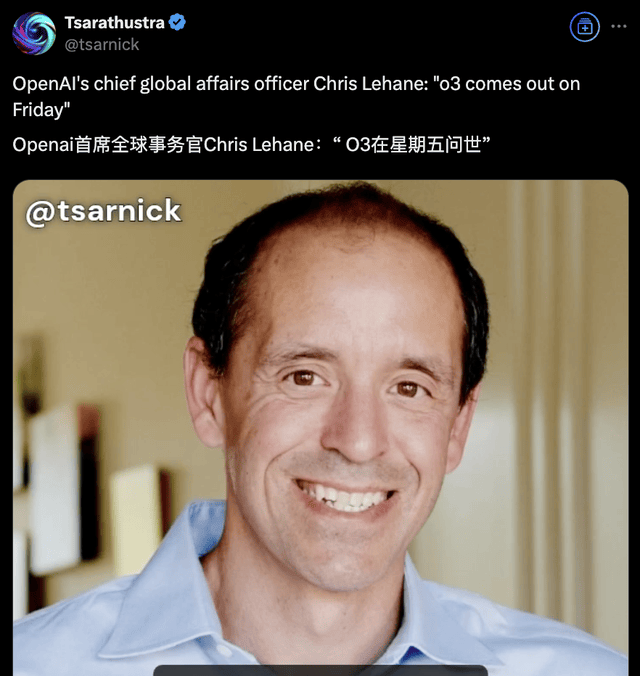
Alongside this financing news came the timeline for o3. Chris Lehane, OpenAI’s Chief Global Affairs Officer, told NPR:
o3 will be released on Friday.
This corresponds to Saturday Beijing time. Netizens are already preparing their folding stools. However, some users pointed out that “o3” might still refer to o3-mini. Sam Altman had long anticipated the launch of this model.
Honestly, openAI is burning cash to buy time; valuation depends on whether o3 actually beats DeepSeek’s efficiency claims.
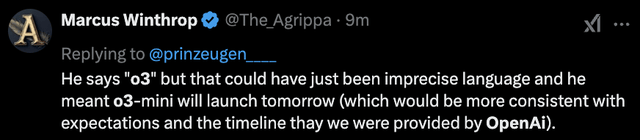
Despite the skepticism and noise, DeepSeek is triggering a stronger “too good to refuse” effect across the ocean. The market is reacting to efficiency, not just raw scale.

The “Too Good to Refuse” Effect of DeepSeek
Microsoft’s pivot from critic to integrator signals a market correction that buyers can no longer ignore. When the biggest cloud vendor adopts a model, it stops being an experiment and becomes infrastructure. Cursor, the preferred IDE for developers, has followed suit, making the DeepSeek model available immediately.
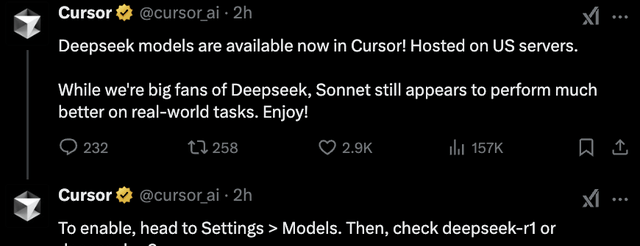
Cursor’s admission is telling: Sonnet 3.5 still outperforms DeepSeek’s new model in actual programming tasks. They offered no specific benchmarks to back this up, leaving developers to wonder if the hype outweighs the utility. This ambiguity forces a wait-and-see approach for engineering teams.

AWS, Anthropic’s primary backer, integrated the model without hesitation. This move undermines Anthropic’s defensive posture and suggests that practical performance matters more than vendor loyalty.
NVIDIA’s stock price rose on the news, validating their hardware-centric strategy. They have deployed DeepSeek-R1 on their NIM platform, praising it as a prime example of Test-Time Scaling Law. NVIDIA claims their microservice delivers 3,872 tokens per second on a single HGX H200 system. This is not just about model quality; it is about selling the compute required to run these reasoning models efficiently.

I think nVIDIA is monetizing the compute cost of reasoning, not just the model weights. The way I see it, aWS’s quick adoption exposes Anthropic’s defensive strategy as fragile.
The backlash against Anthropic is intensifying. Hugging Face co-founder Thomas Wolf criticized Dario Amodei’s recent article as “painfully” out of touch. He argues that comparing open-source research with vague, undisclosed closed-source evaluations erodes confidence in Anthropic’s leadership.
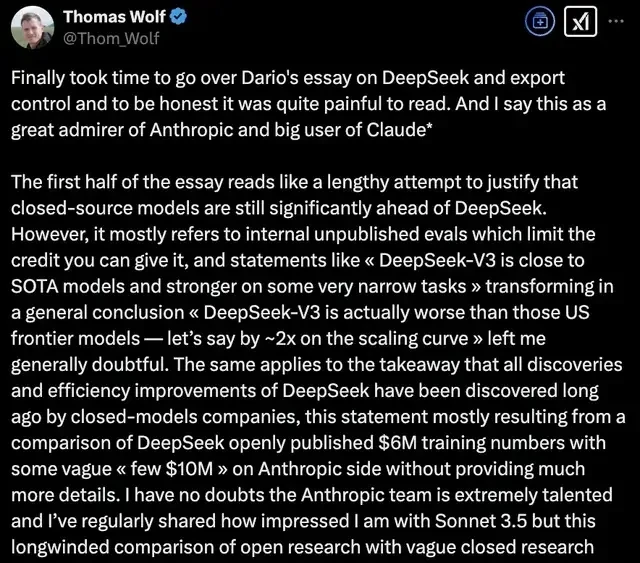
Wolf warns that the open-source community is catching up fast. With releases like Allen Institute’s Tülu and Mistral’s Small3, the gap is closing rapidly. He emphasizes that open source is becoming critical for safety and transparency in AI development.
Honestly, anthropic’s secrecy is becoming a competitive liability rather than a moat. I think open-source reasoning models are no longer theoretical; they are shipping today.
References
I’ve tracked the sources below to verify the valuation claims and deployment timelines.
- DeepSeek-R1 Now Live With NVIDIA NIM — To help developers securely build their own specialized agents, the 671-billion-parameter DeepSeek-R1 model is now available as an NVIDIA NIM microservice preview on build.nvidia.com.
- OpenAI in talks for huge investment round valuing it up to $300 billion
Comments
Sign in to join the discussion and leave a comment.
Sign in with Google